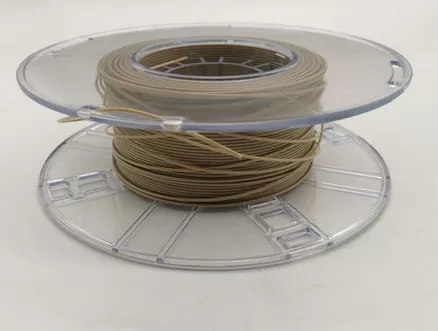
PEEK (Polyether Ether Ketone) is one of the few engineering plastics that performs reliably across extreme temperatures. Its unique semi-crystalline structure allows it to maintain strength, dimensional stability, and chemical resistance whether exposed to high heat or deep cold. Understanding the PEEK temperature range is essential for selecting the right grade for demanding environments.
≈ 143°C (standard grades)
Some modified grades reach up to 170°C
Below Tg, PEEK is rigid and strong. Above Tg, it softens but continues to carry load due to high crystallinity.
≈ 341–343°C
This high melting point enables PEEK to maintain integrity far beyond the limits of most polymers.
250–260°C
This is the true long-term working range for PEEK parts operating under steady thermal conditions.
Up to ~300°C
PEEK can withstand brief high-temperature spikes without losing structural stability.
Functional range typically down to −40°C to −50°C
At lower temperatures, stiffness increases while impact strength decreases. For cryogenic applications, unfilled grades are preferred.
PEEK's strength retention at elevated temperatures is one of its biggest advantages.
Maintains mechanical properties well above 150°C
Resists thermal creep better than most plastics
Filled grades (GF30, CF30) retain stiffness even closer to 200–250°C
This makes PEEK ideal for components near engines, heaters, compressors, or semiconductor tools.
While famous for heat resistance, PEEK also performs reliably in cold environments.
Maintains dimensional stability in freezing conditions
Electrical and chemical performance remains consistent
Brittle behavior increases below −40°C, so impact-loaded parts require validation
Applications include aerospace hardware, deep-sea connectors, and cold-environment sensors.
PEEK also requires high processing temperatures:
Melt processing: 360–400°C
Mold temperature: 160–200°C
Drying at 150°C to prevent moisture defects
This high processing range corresponds directly to its exceptional material temperature range.
| Temperature Category | Value / Range | Meaning |
| Glass Transition (Tg) | ~143°C | Polymer softens but remains strong |
| Melting Point (Tm) | ~343°C | Full crystalline melt |
| Continuous Service | 250–260°C | Long-term working limit |
| Short-Term Peaks | Up to ~300°C | Brief exposure tolerance |
| Low Temperature Limit | −40°C to −50°C | Functional, lower toughness |
In short, PEEK offers one of the broadest usable temperature windows of any polymer - from extreme cold to near-metal high temperatures - making it a top choice for high-performance and safety-critical applications.
Copyright © PEEKCHINA | Taizhou Ark International Trade Co.,Ltd. All Rights Reserved |
Sitemap
| Powered by



 EN
EN