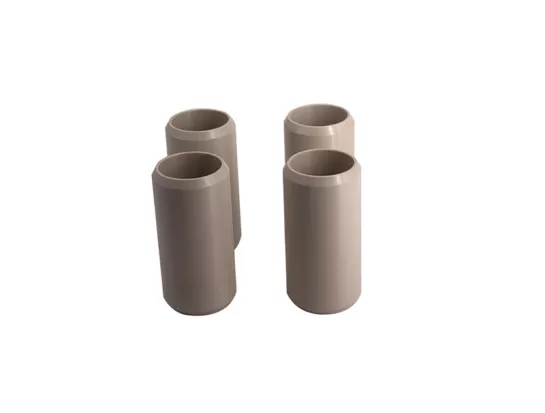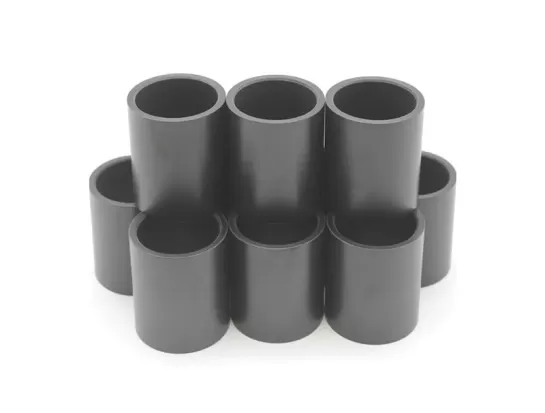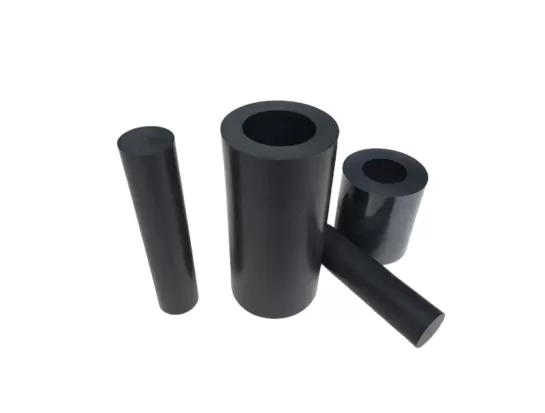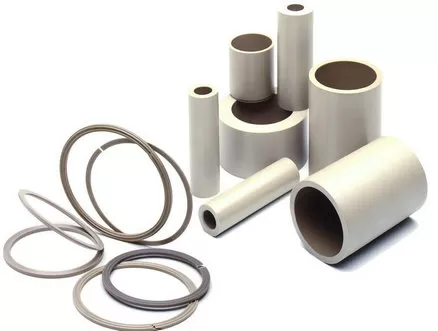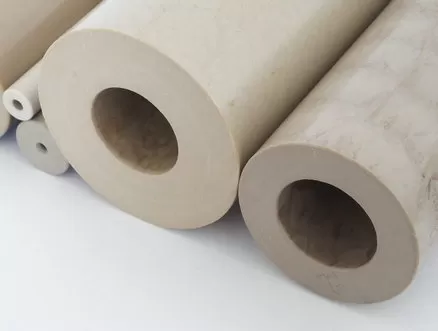
Common plastics deform and age above 100°C, and metals easily oxidize and fail at high temperatures. In contrast, PEEK and PI are known as the “kings of heat resistance.”
PEEK offers a continuous service temperature of 250°C, can withstand short-term exposure up to 310°C, and maintains stable performance between −50°C and 260°C.
PI performs even better, with long-term service temperatures above 260°C, a melting point over 360°C, and the ability to remain stable even in −269°C liquid helium. Its thermal decomposition temperature is ≥500°C.
Whether in the high-heat aviation engine compartment or the harsh thermal cycling of semiconductor processing, these materials remain exceptionally stable.
Traditional metals are easily corroded by acids, alkalis, and solvents; common plastics swell and crack in chemical environments.
PEEK withstands almost all chemical agents and can operate stably in high-pressure steam.
PI offers outstanding corrosion and oxidation resistance, making it ideal for chemical equipment and auxiliary components in nuclear reactors.
Both materials also excel in radiation resistance and fatigue resistance, minimizing long-term structural degradation and reducing maintenance costs significantly.
Metals provide high strength but have high density (e.g., steel at 7.85 g/cm³), resulting in increased equipment weight and energy consumption. Plastics are lightweight but lack strength.
PEEK (1.32 g/cm³) and PI (~1.4 g/cm³) weigh less than one-fifth of metal while delivering metal-like mechanical performance.
PEEK has high tensile strength and excellent wear resistance, ideal for bearings and gears.
PI retains exceptional rigidity at high temperatures, with tensile strength reaching 100–400 MPa, second only to carbon fiber.
This “light yet strong” combination enables aerospace systems to reduce weight and enhance efficiency, and allows new-energy vehicles to extend driving range—solving the long-standing contradiction of traditional materials.
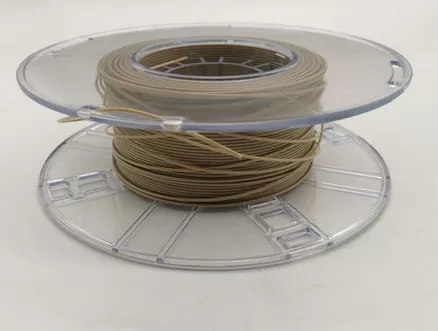
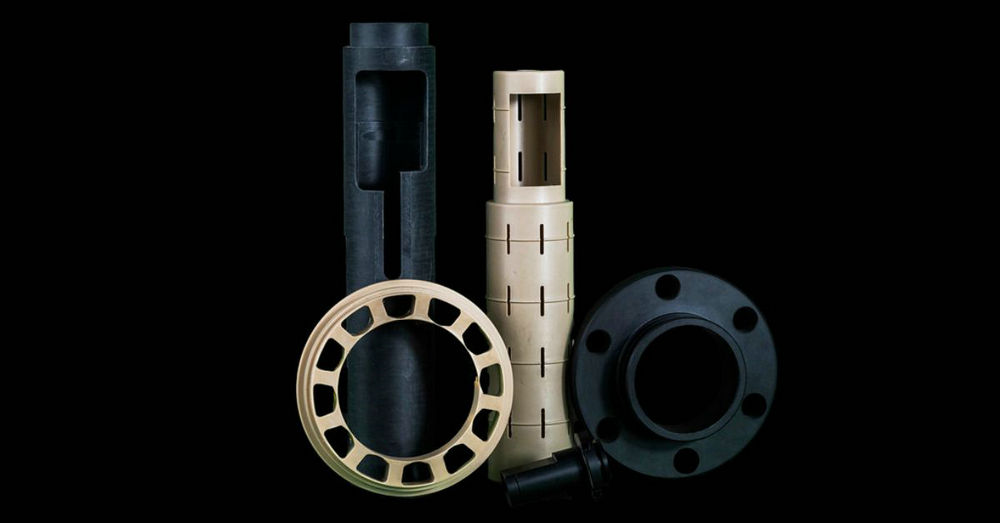
Excellent manufacturability: Good flow properties allow injection molding, extrusion, 3D printing, and more, enabling complex structural parts and higher production efficiency than PI or other engineering plastics.
Outstanding biocompatibility: Meets ISO 10993 standards with no toxicity or sensitization.
Exceptional dimensional stability: Extremely low water absorption prevents deformation in humid environments.
Superior insulation performance: Low dielectric constant and low dielectric loss, maintaining stable electrical insulation even in high-temperature and high-humidity environments.
Stronger extreme-environment resistance: In addition to temperature resistance, PI offers excellent radiation resistance and inherent flame retardancy.
Mechanical strength retained at high temperature: Maintains strong rigidity and mechanical strength at 260°C, far outperforming PPS, LCP, and other engineering plastics.
| Material | Long-Term Temp | Key Weaknesses | Advantages of PEEK/PI |
| Common Plastics (PP/ABS) | ≤100°C | Poor heat resistance; low mechanical strength | 2× higher temperature resistance; vastly superior strength and stability |
| Traditional Metals (Steel/Aluminum) | Oxidize without coating | Heavy, corrosive, difficult to process | 70%+ weight reduction; corrosion-free; easier forming |
| Other Engineering Plastics (PPS) | ≤200°C | Limited heat resistance; insufficient toughness | Higher heat resistance, more balanced mechanical properties, wider application |
| Fluoropolymers (PTFE) | 260°C | Low mechanical strength; poor processability | Far higher strength; can form complex structures; more balanced overall performance |
Note: These are typical values, not guaranteed specifications.
PEEK and PI, as representatives of high-performance engineering plastics, are rapidly replacing traditional materials in advanced manufacturing. Their superiority is not just about leading performance data but about solving long-standing industry contradictions such as "lightweight vs. high strength" and "extreme resistance vs. ease of processing".
Copyright © PEEKCHINA | Taizhou Ark International Trade Co.,Ltd. All Rights Reserved |
Sitemap
| Powered by



 EN
EN