Polyetheretherketone (PEEK) is one of the most advanced high-performance engineering plastics available today. Due to its excellent mechanical strength, high temperature resistance, chemical stability, and outstanding machinability, PEEK is widely supplied in semi-finished product forms for further machining into precision components.
PEEK semi-finished products serve as the foundation for manufacturing critical parts used in aerospace, medical, semiconductor, oil & gas, and analytical instrumentation industries. This article explores the main types of PEEK semi-finished products, their key applications, and important considerations when selecting and using them.
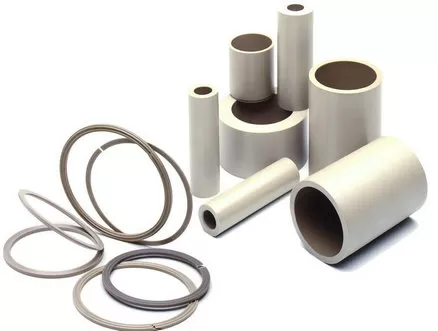
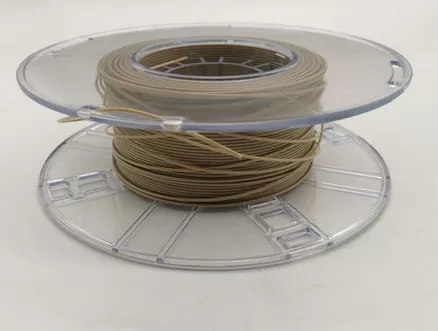
PEEK semi-finished products refer to extruded or compression-molded PEEK materials that are supplied in standardized shapes and sizes. These materials are not final parts; instead, they are intended for CNC machining, turning, milling, or secondary processing to produce custom components such as seals, bearings, gears, and structural parts.
Compared with injection-molded PEEK parts, semi-finished PEEK products offer greater design flexibility, tighter tolerances, and better suitability for low-volume or high-precision applications.
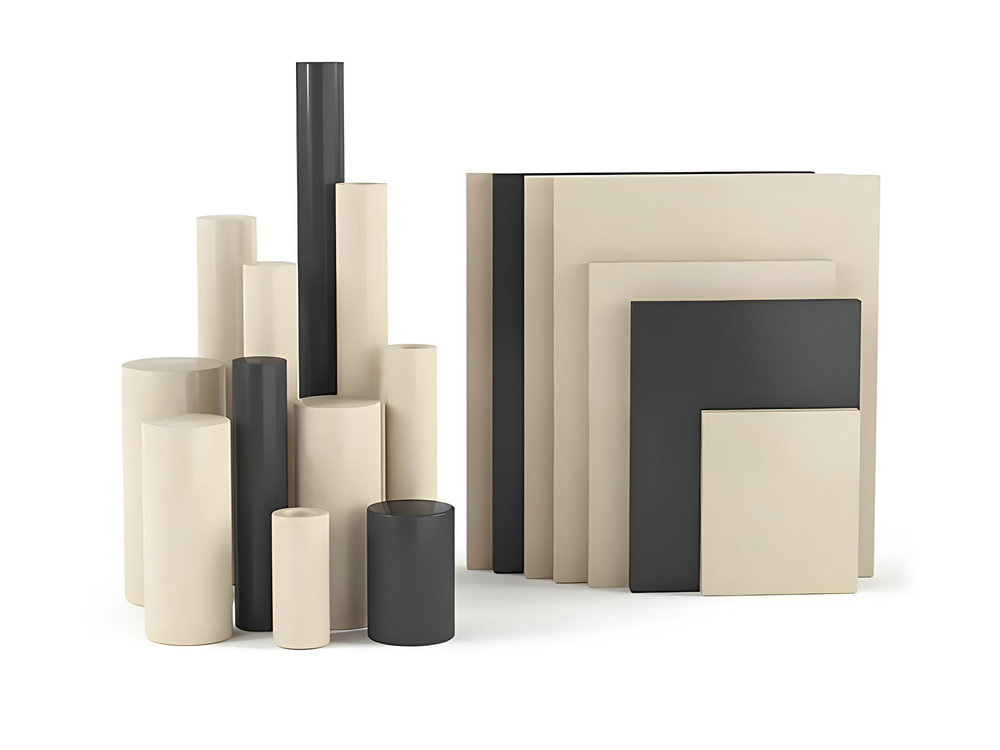
PEEK semi-finished materials are available in several common forms to meet different machining and application requirements.
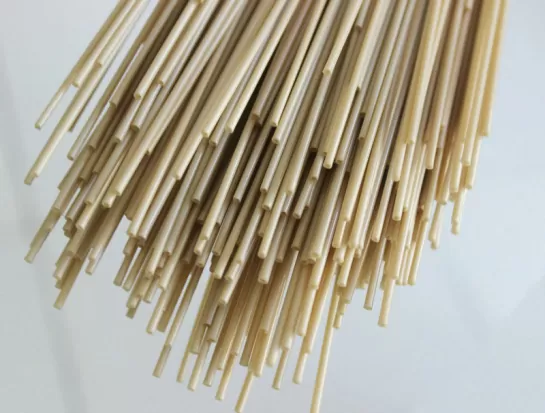
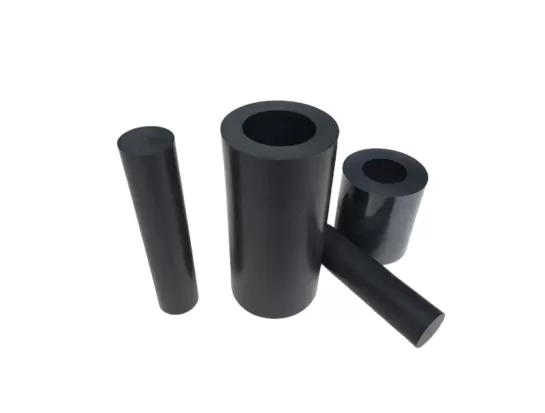
PEEK rods are one of the most widely used semi-finished forms. They are typically used for turning operations and are ideal for manufacturing:
Bushings and bearings
Valve components
Insulating parts
Structural machined components
PEEK rods are available in natural, black, and reinforced grades such as CF30 PEEK or GF30 PEEK, depending on mechanical and wear requirements.
PEEK sheets and plates are supplied in flat formats and are mainly used for CNC milling or water-jet cutting. Typical applications include:
Sealing plates and wear pads
Medical and orthopedic components
Semiconductor fixtures
High-temperature structural panels
Sheets are often preferred when dimensional stability and flatness are critical.
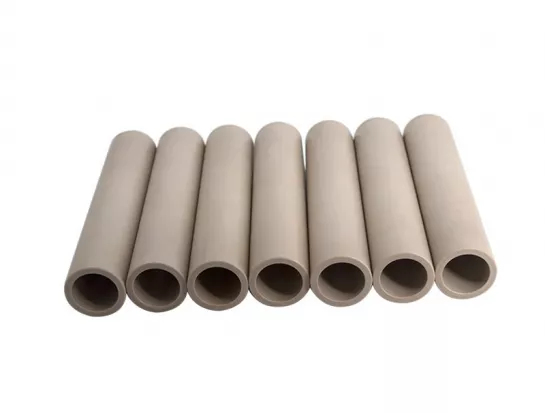
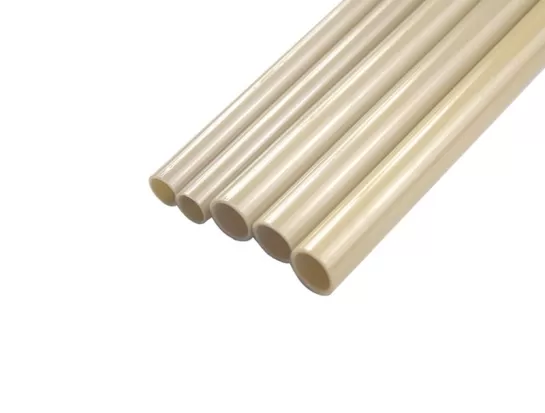
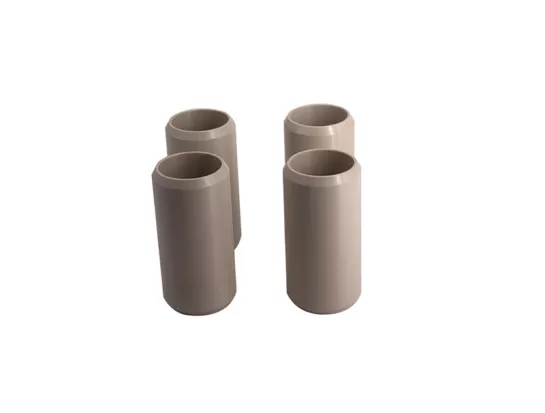
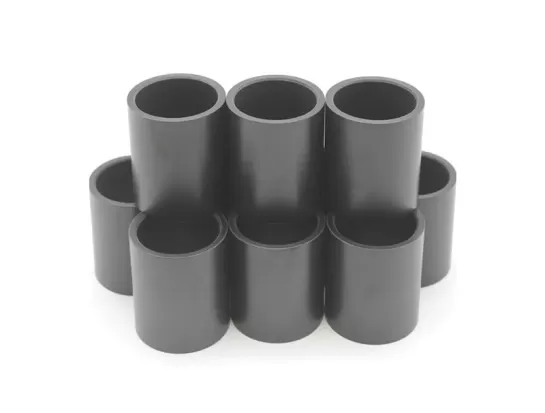
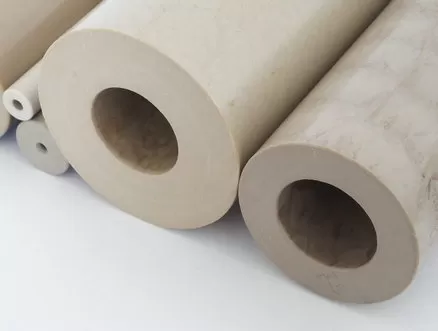
PEEK tubes are produced by extrusion or machining and are widely used for:
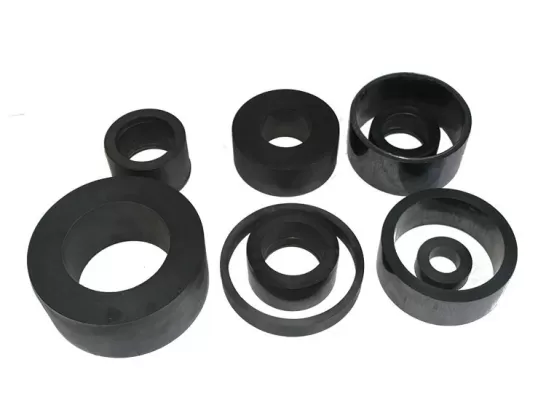
Machining PEEK rings and seals
High-pressure fluid connectors
Analytical instrument components
Chemical-resistant tubing parts
Due to extrusion limitations, available sizes may be restricted, making custom machining from solid rods common for larger diameters.
In addition to standard shapes, customized PEEK blanks—such as thick plates, large-diameter rods, or special profiles—are often produced for specific industries requiring unique dimensions or performance characteristics.
PEEK semi-finished materials are essential in industries where performance reliability and precision are critical.
Aerospace & Aviation: Lightweight structural components, brackets, and high-temperature insulation parts
Medical & Healthcare: Implantable and non-implantable devices, surgical tools, diagnostic equipment parts
Oil & Gas: Seals, backup rings, and valve components resistant to chemicals and high pressures
Semiconductor & Electronics: Wafer handling parts, insulating fixtures, and cleanroom components
Analytical & Industrial Equipment: HPLC fittings, pump components, valve parts, and wear-resistant elements
Because PEEK semi-finished products can be machined to tight tolerances, they are especially suited for custom and small-batch production.
Although PEEK offers exceptional performance, several factors should be considered to ensure optimal results.
Different applications require different PEEK grades:
Unfilled PEEK: Best for chemical resistance and purity
Carbon Fiber Reinforced PEEK (CF-PEEK): Enhanced stiffness, wear resistance, and dimensional stability
Glass Fiber Reinforced PEEK (GF-PEEK): Improved strength and thermal performance
Selecting the wrong grade may lead to premature wear or over-engineering.
PEEK semi-finished products often require annealing before or after machining to reduce internal stresses, improve dimensional stability, and minimize warping—especially for thick sections.
PEEK machining requires appropriate cutting speeds, sharp tools, and controlled cooling. Improper machining conditions can cause surface defects, excessive heat buildup, or dimensional inaccuracies.
Large-diameter rods, thick plates, and long PEEK tubes may have longer production lead times or limited availability due to manufacturing constraints. Early planning is essential for critical projects.
PEEK semi-finished products play a vital role in modern high-performance manufacturing. With forms such as rods, sheets, plates, and tubes, they provide engineers with the flexibility to create precision components for demanding environments.
By understanding the available product types, application requirements, and processing considerations, manufacturers can fully leverage the advantages of PEEK and achieve long-term performance, reliability, and cost efficiency.
Copyright © PEEKCHINA | Taizhou Ark International Trade Co.,Ltd. All Rights Reserved |
Sitemap
| Powered by



 EN
EN