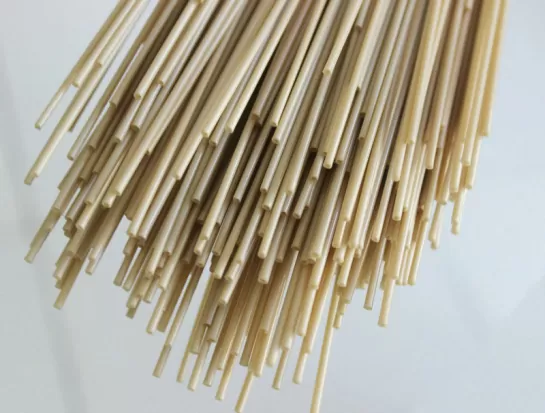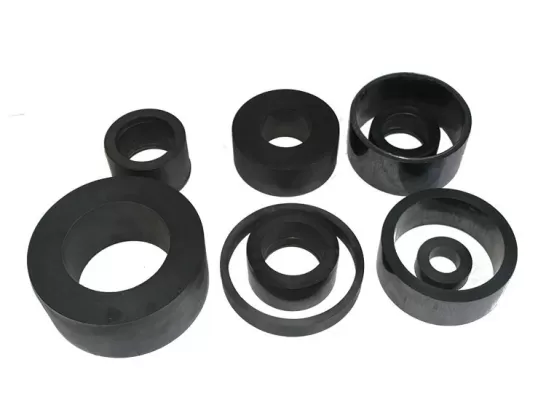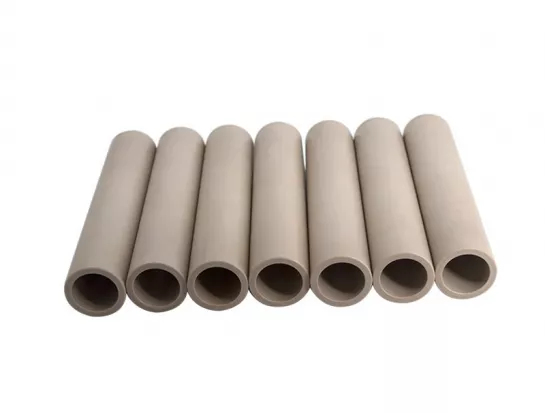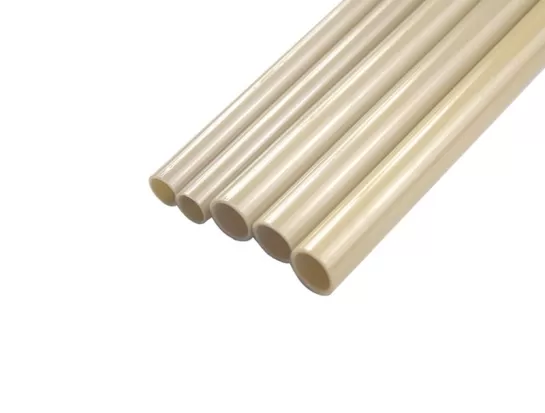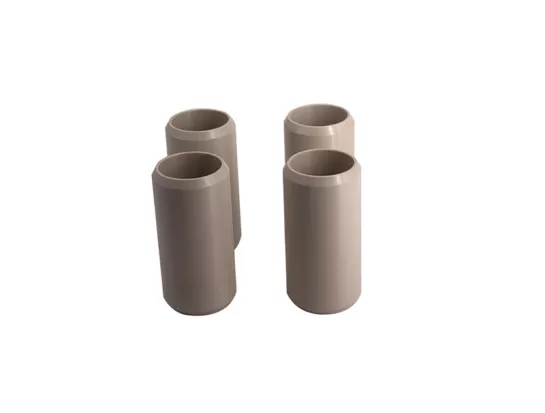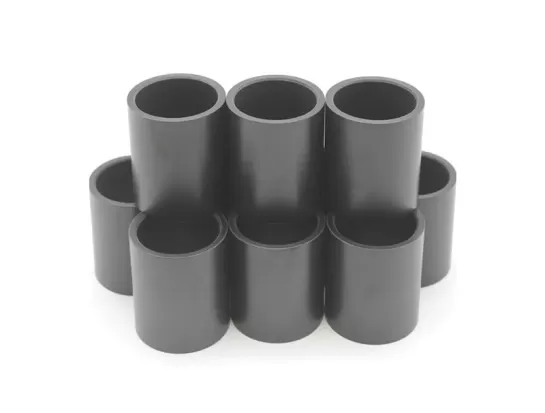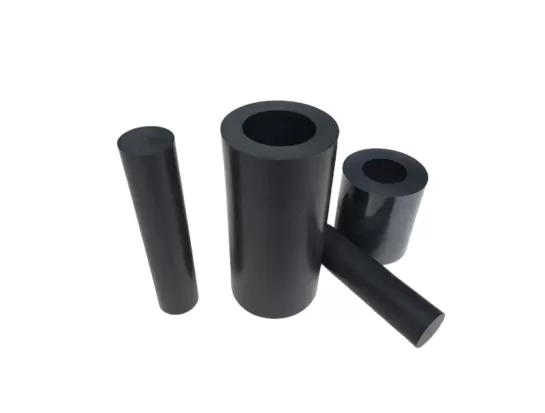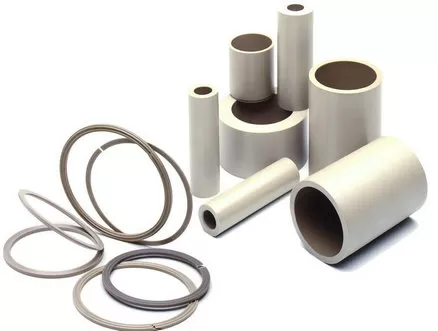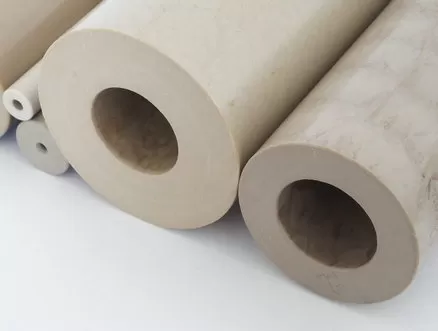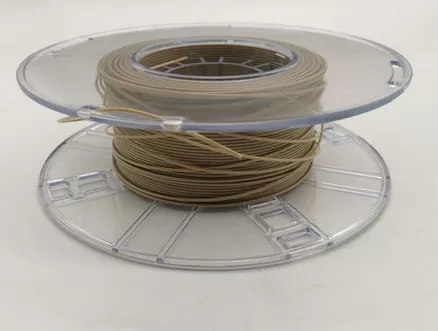
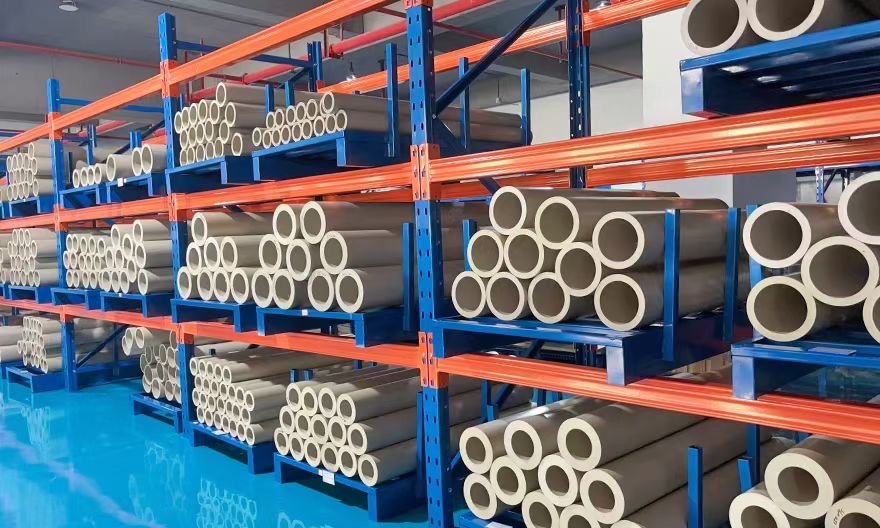
Polyether Ether Ketone (PEEK) is widely used in high-performance engineering applications due to its excellent thermal stability, mechanical strength, and chemical resistance. While PEEK rods and sheets are commonly available on the market, PEEK pipe (also referred to as PEEK tube) is comparatively less common, especially in a wide range of dimensions.
This is not a coincidence. The production and stocking of PEEK pipe present specific technical and economic challenges, and its use is closely tied to particular machining and design requirements. This article discusses why PEEK pipe is difficult to manufacture, where it is typically used, and why it is often the most material-efficient choice for annular components.
PEEK pipe is typically manufactured through precision extrusion, a process that requires far tighter control than extrusion of conventional thermoplastics.
From a manufacturing perspective, the main difficulties include:
PEEK pipes are specified by outer diameter, inner diameter, and wall thickness. Unlike rods or sheets, even small dimensional changes require dedicated extrusion dies.
Because customers often request highly specific dimensions, the number of potential size combinations increases rapidly.
PEEK has a narrow processing window and high melt viscosity. During extrusion, it is challenging to maintain:
Stable melt flow
Uniform wall thickness
Good concentricity
Low internal stress
Achieving consistent dimensional accuracy over long extrusion runs requires advanced process control and experienced operation.
Due to high raw material cost and relatively low demand for standardized sizes, many manufacturers choose to produce PEEK pipe only on demand.
As a result, long lead times and limited size availability are common in the market.
PEEK pipe is rarely used as a fluid-conveying tube in the traditional sense. Instead, its primary value lies in machined components, especially annular and circular parts.
Common applications include:
PEEK rings
High-pressure or high-temperature PEEK seals
Backup rings
Valve seats
Other rotationally symmetric components
In these applications, the pipe serves as a near-net-shape semi-finished material, optimized for turning or boring operations.
One of the key technical advantages of PEEK pipe is material utilization efficiency.
When machining rings or seals from solid PEEK rod, a large amount of material must be removed from the center, resulting in:
High material waste
Longer machining time
Increased tool wear
Using PEEK pipe as the starting geometry allows manufacturers to:
Minimize removed material
Reduce machining cycles
Improve cost control for high-value PEEK material
For applications where the final component is inherently annular, PEEK pipe is often the most rational material form.
Despite its advantages, the adoption of PEEK pipe is often limited by size availability rather than performance.
Because each dimension requires a dedicated die, many suppliers offer only a small selection of standard sizes or avoid stocking PEEK pipe altogether. This can force end users to revert to solid rods even when pipes would be more efficient.
From an engineering and procurement standpoint, access to a broad range of pipe dimensions directly affects manufacturing flexibility and material efficiency.
To address the dimensional limitations commonly associated with PEEK pipe, ARKPEEK has developed a broad range of extrusion molds covering many commonly used sizes.
This approach allows:
Greater dimensional coverage
Reduced dependence on custom tooling
Availability of stocked PEEK pipe sizes for machining applications
Rather than positioning PEEK pipe as a general-purpose product, ARKPEEK focuses on machining-oriented pipe geometries intended for rings, seals, and similar components.
PEEK pipe is not widely available not because of limited demand, but because of the technical complexity of extrusion, tooling investment, and inventory risk.
For applications involving rings, seals, and circular parts, PEEK pipe offers clear advantages in material efficiency and machining practicality.
Understanding these factors helps engineers and buyers make more informed decisions when selecting semi-finished PEEK materials — and explains why dimensional availability remains the key differentiator in the PEEK pipe market.
Copyright © PEEKCHINA | Taizhou Ark International Trade Co.,Ltd. All Rights Reserved |
Sitemap
| Powered by



 EN
EN