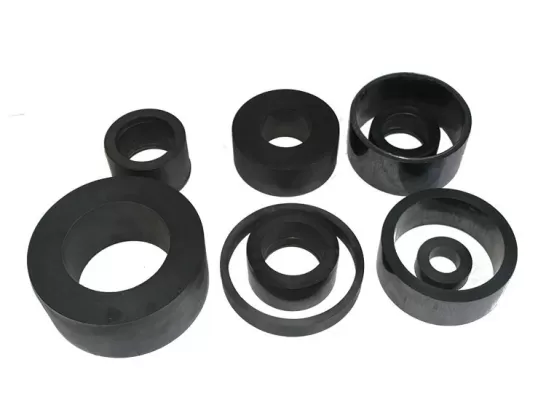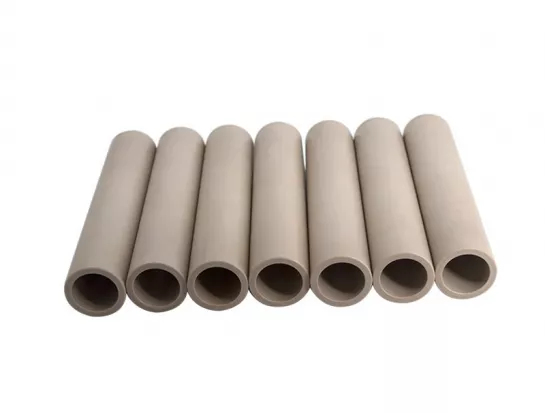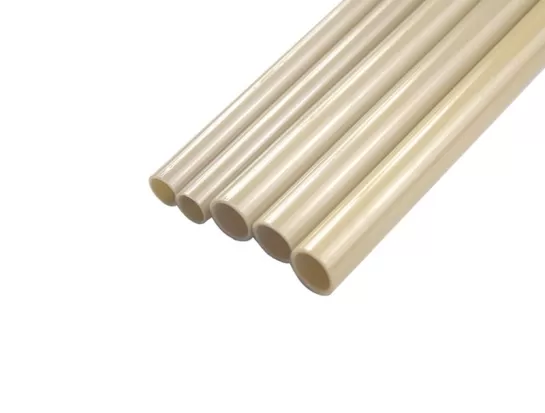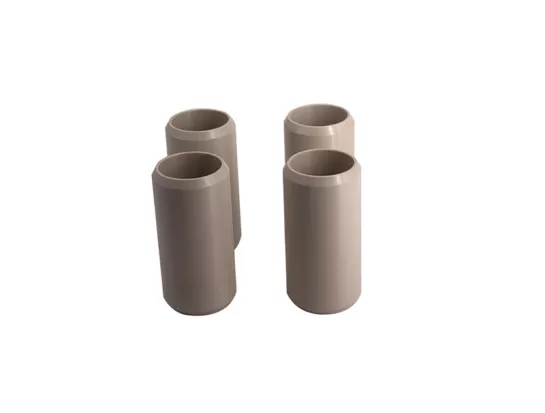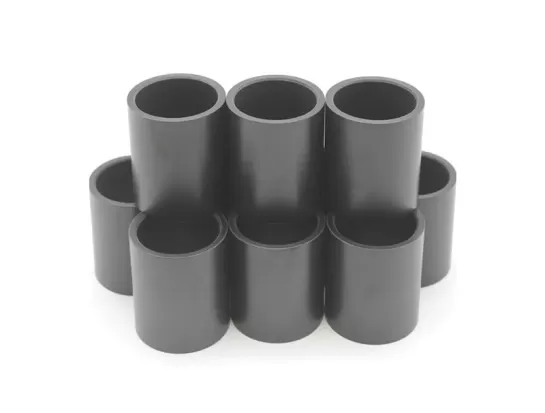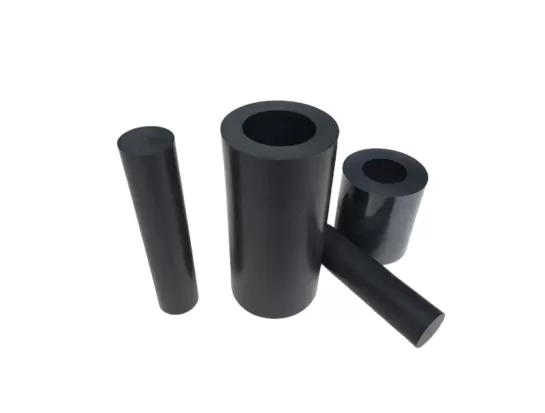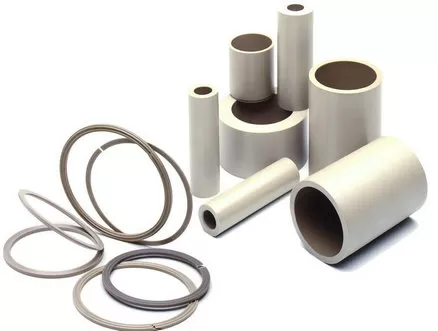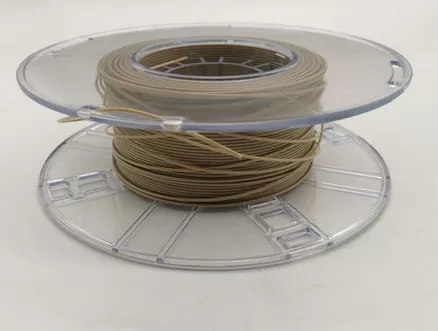
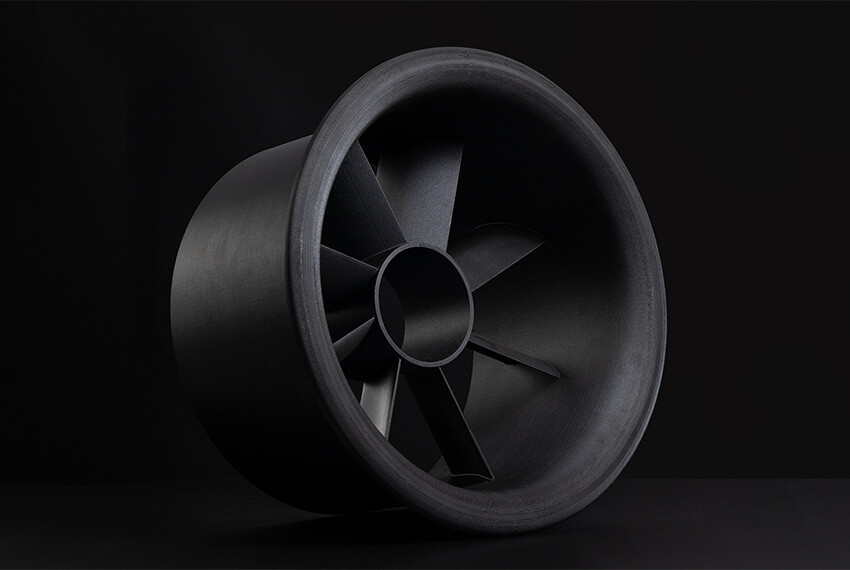
Amid the global push toward lightweight design and advanced manufacturing upgrades, a high-performance material often referred to as “plastic gold” is rapidly gaining attention - carbon fiber reinforced PEEK (CF-PEEK) composites. By combining polyether ether ketone (PEEK) as the matrix with carbon fiber reinforcement, CF-PEEK not only retains PEEK's exceptional heat and chemical resistance but also delivers a dramatic leap in mechanical strength and stiffness. As a result, it has become a critical material in high-end sectors such as aerospace, medical devices, and new energy vehicles.
This article provides a comprehensive analysis of the global CF-PEEK market, covering material performance, market size, product segmentation, industry chain structure, key players, and future trends.
The core advantage of carbon fiber reinforced PEEK lies in its synergistic performance, where "1 + 1 > 2."
As a high-performance thermoplastic, PEEK resin offers a continuous service temperature of 240–260°C, inherent flame resistance, and outstanding resistance to fuels, oils, solvents, and aggressive chemicals. These properties make it ideally suited for extreme operating environments.
Carbon fiber reinforcement forms a rigid load-bearing structure within the matrix, significantly increasing modulus, tensile strength, and flexural strength, while simultaneously reducing creep under long-term loads and lowering the coefficient of thermal expansion.
Depending on fiber content and fiber length, CF-PEEK enables precise metal replacement solutions. For example, 30% carbon-fiber-filled PEEK outperforms unfilled PEEK in strength and thermal stability while remaining far lighter than metals. It can maintain dimensional tolerances as tight as ±0.01 mm over a wide temperature range, making it ideal for precision engineering applications.
From a processing perspective, CF-PEEK is highly versatile. It can be supplied as pellets for injection molding and extrusion, machined into rods and plates, or used as 3D printing filament. By adjusting fiber orientation, mechanical performance can be optimized in specific load directions. Electrical properties can also be tailored - from antistatic to fully conductive - enabling EMI shielding and ESD protection.
Strong performance advantages continue to support steady market expansion. According to QYResearch, global CF-PEEK production is expected to reach 7,700 tons in 2025, with an average price of USD 41,000 per ton and gross margins ranging from 20% to 40%.
Looking ahead, the global CF-PEEK market is projected to reach USD 490 million by 2032, growing at a CAGR of 5.8% from 2026 to 2032.
This growth aligns with the broader PEEK market trend. Data from MarketPublishers shows the global PEEK market expanding from USD 1.5 billion in 2025 to USD 2.14 billion by 2030, with carbon-filled PEEK ranking as the second-largest segment, driven by lightweight demand in aerospace and automotive industries.
China is emerging as a key growth engine. The domestic PEEK market reached RMB 21 billion in 2025 and is expected to exceed RMB 60 billion by 2030, driving downstream industries worth over RMB 300 billion.
CF-PEEK products are classified across multiple dimensions:
By carbon fiber form
Short carbon fiber (SCF) - mainstream due to cost efficiency
Long carbon fiber (LCF)
Continuous carbon fiber (CCF) - used in aerospace for extreme performance
By carbon fiber content
10% CF - balanced toughness and lightweight performance
30% CF - mainstream high-performance grade for robotics and automotive parts
High-content grades (up to 50%) for extreme strength requirements
By processing method
Injection molding
Extrusion (rods, plates, tubes)
3D printing and compression molding
By application
Aerospace
Low-altitude economy (UAVs)
Semiconductor wafer handling components
Medical devices (non-implantable structural parts)
New energy vehicles (motor housings, bearings)
Marine and high-corrosion environments
PEEK resin production has long been dominated by global giants. Victrex (UK) accounts for roughly 60% of global capacity, followed by Syensqo (Belgium) and Evonik (Germany), together controlling over 90% of global output.
In contrast, China's carbon fiber capacity reached 135,500 tons in 2024, providing strong upstream support for CF-PEEK localization. Key intermediates such as DFBP have also achieved breakthroughs, with Chinese suppliers now accounting for over 60% of global supply.
Midstream players focus on formulation development, compounding, pelletizing, and semi-finished product processing. Precise fiber dispersion and customized grades are critical for consistent performance.
Chinese manufacturers are rapidly expanding capacity. Several suppliers have established medical-grade certifications, automotive supply chain integration, and large-scale production lines, significantly improving domestic supply reliability.
CF-PEEK applications span aerospace, medical, semiconductors, and new energy vehicles. A notable growth driver is humanoid robotics. Tesla’s Optimus Gen-2 reportedly reduced weight by 13 kg per unit using CF-PEEK components while cutting costs by 50%.
In the new energy vehicle sector, CF-PEEK is widely used in motor housings and bearings, achieving a 25% CAGR, while aerospace applications are growing at over 80% annually.
Key Growth Drivers
Lightweight metal replacement
Superior performance in extreme environments
Strong policy support and rapid growth in robotics, EVs, and semiconductors
Future Trends
Shift from material supply to integrated application solutions
Higher precision in fiber dispersion and orientation control
Rapid expansion of additive manufacturing (3D printing) with CF-PEEK
International leaders
Victrex, Syensqo, Evonik, Toray, Ensinger Group
Chinese manufacturers
ZYPEEK, WOTE, ARKPEEK, Pengfulong, Jida Special Plastics, Xiamen Keyuan, Suzhou Jutai New Materials
With its unmatched combination of strength, heat resistance, chemical stability, and lightweight performance, carbon fiber reinforced PEEK has become a cornerstone material for advanced manufacturing. As localization accelerates and downstream demand surges, CF-PEEK is set to play a critical role in aerospace, robotics, and new energy industries worldwide.
Copyright © PEEKCHINA | Taizhou Ark International Trade Co.,Ltd. All Rights Reserved |
Sitemap
| Powered by



 EN
EN