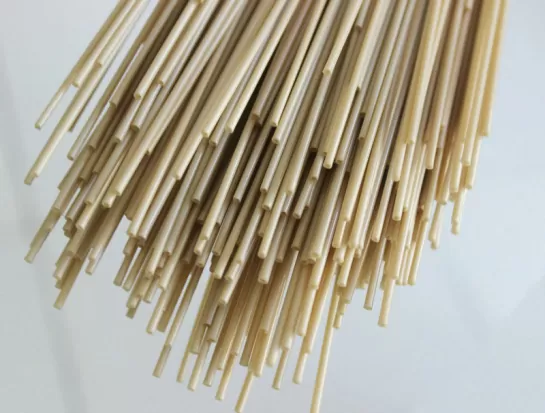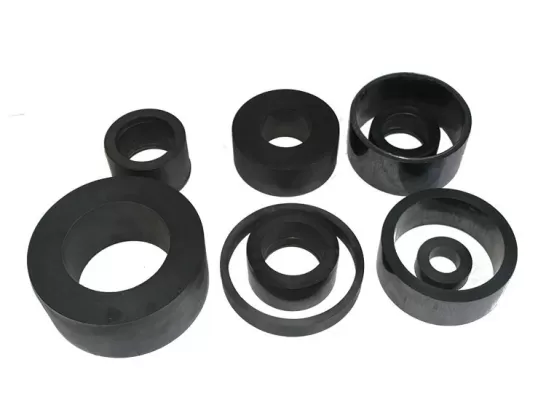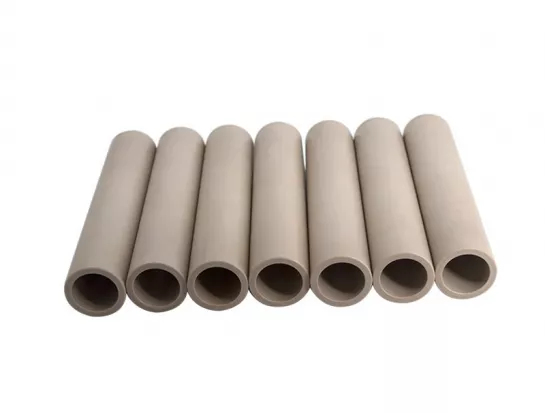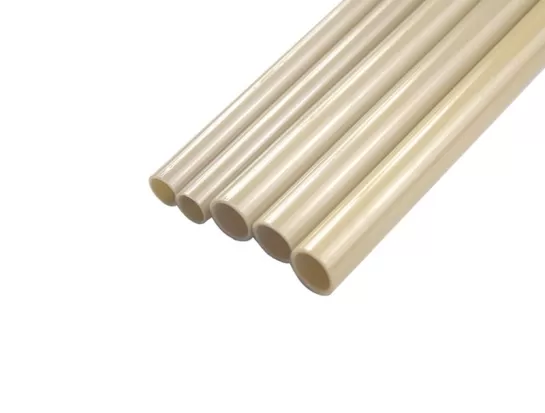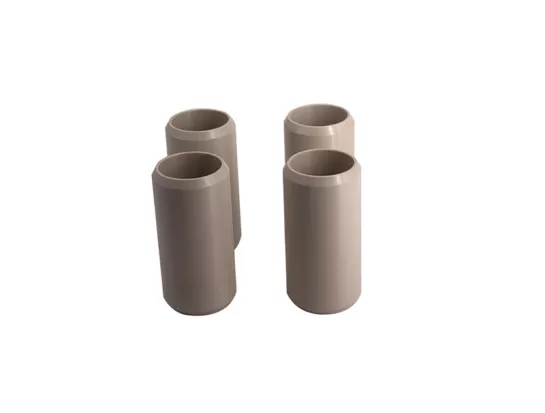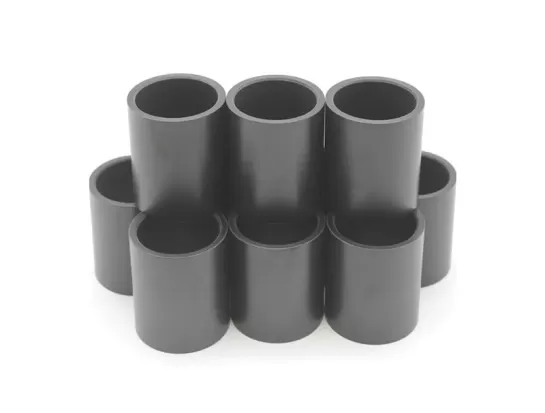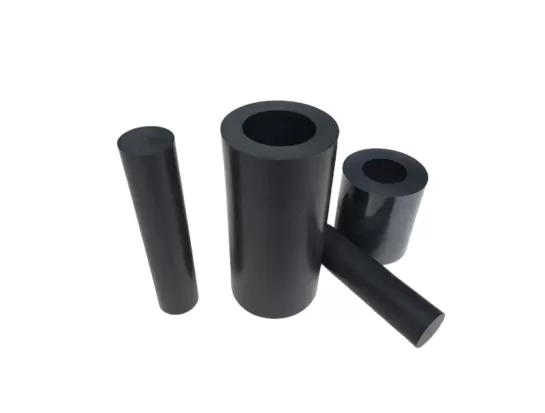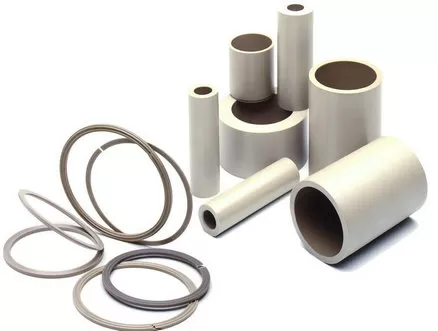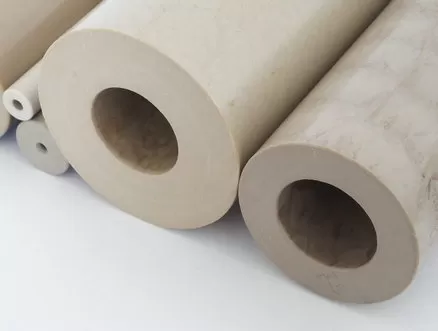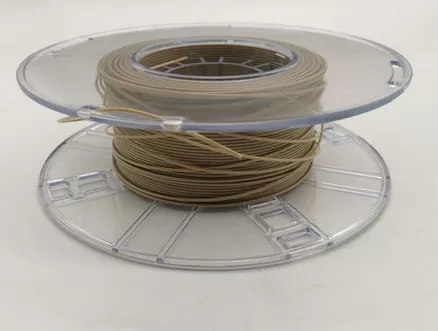
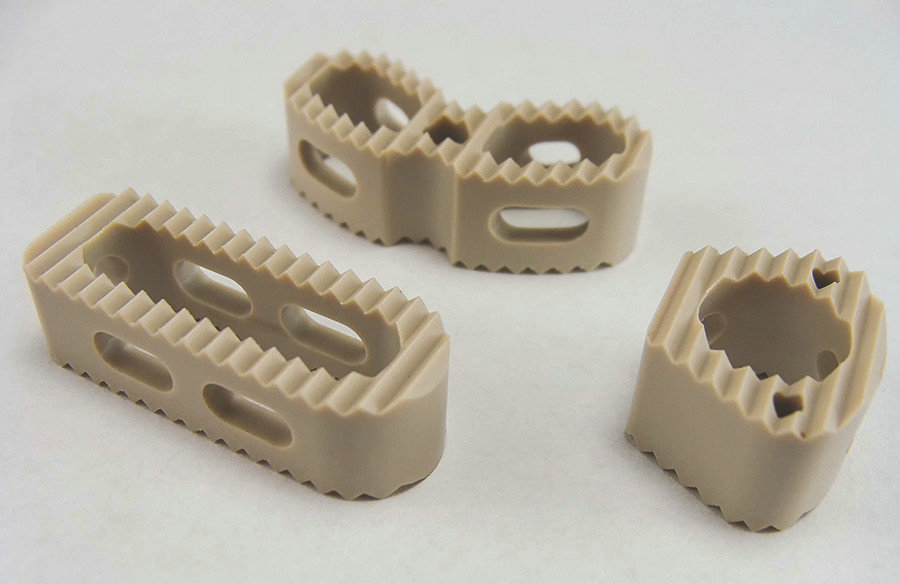
PEEK has rapidly gained popularity in the medical device industry in recent years. From spinal fusion cages and orthopedic implants to insulating components for surgical instruments, an increasing number of medical products are switching from metal to PEEK.
The reasons are practical: excellent biocompatibility, low density, an elastic modulus closer to that of human bone, and radiolucency under X-ray imaging. These properties make PEEK particularly attractive for medical applications where lightweight construction, mechanical performance, and clear postoperative imaging are important.
However, anyone who has sourced PEEK medical parts has probably encountered a frustrating situation: several manufacturers claim they can machine PEEK, but after placing an order, the finished parts may have dimensional deviations, poor surface quality, burrs, or other problems. The parts then need to be remachined, costing both time and money.
The problem is that many machining companies do not proactively explain the challenges involved in PEEK machining before accepting an order.
This guide explains the key challenges and provides several practical questions you can ask during the supplier selection process to determine whether a manufacturer has genuine experience with medical PEEK machining.
PEEK is a high-performance polymer with machining characteristics that are very different from those of common engineering plastics—and it behaves very differently from metals as well.
Some manufacturers approach a PEEK machining job using the same methods they use for materials such as nylon or ABS. They simply reuse conventional tools, cutting parameters, and cooling methods. The results are often far from satisfactory.
One major challenge is PEEK's relatively low thermal conductivity. During cutting, heat can accumulate in the machining zone. As the temperature rises, the material may soften, which can affect dimensional stability.
PEEK is also sensitive to tool wear. Once the cutting tool becomes slightly dull, cutting forces can increase significantly, resulting in deteriorating surface quality, burrs, scratches, and excessive surface roughness.
Manufacturers with extensive PEEK machining experience may use PCD tools or specially coated carbide tools, with cutting parameters specifically optimized for PEEK. Manufacturers without sufficient experience may simply use general-purpose tools and hope for acceptable results.
For precision medical components, that difference in machining experience can have a major impact on the final part.
The PEEK material itself can become the first potential problem.
PEEK raw materials require proper storage conditions and can be affected by moisture. If the material absorbs moisture, exposure to heat during machining may lead to bubbles or other defects, potentially affecting the density and surface quality of the finished component.
For implantable PEEK components, material cleanliness is particularly critical. Contaminated raw material can result in parts being rejected regardless of whether their dimensions meet the drawing requirements.
A professional PEEK machining manufacturer should perform incoming inspection of raw materials. The material should be accompanied by appropriate supplier documentation and grade identification, while storage should be managed under suitable environmental conditions.
By contrast, some general machining companies may purchase PEEK rods from the open market without clearly identifying the material source or grade. In some cases, customers may even pay for medical-grade PEEK while receiving material that does not match the required specification.
When evaluating a supplier, ask:
What grade of PEEK do you use?
Who is the material supplier?
Can you provide a material certificate or Certificate of Conformance?
A manufacturer that can clearly answer these questions generally has a more controlled material management system. If the answers are unclear, this should be treated as a warning sign.
Another issue that many general machining companies overlook is the cutting fluid system.
For medical PEEK machining, an independent cutting fluid system is highly desirable, particularly for implantable components. Cutting fluids used for metal machining can contain metal chips or other contaminants. If the same system is used for PEEK, these contaminants can come into contact with the PEEK surface.
For implantable components, metal contamination can become a serious quality issue.
For the same reason, the machining area for PEEK components should ideally be physically separated from metal machining operations. If the same machine must be used, thorough cleaning and contamination-control procedures are necessary before switching materials.
This is an area where general-purpose machining suppliers may lack awareness. A manufacturer might be able to achieve the required dimensions while still failing to meet the cleanliness requirements of a medical PEEK component.
When selecting a supplier, ask directly:
Where are your PEEK components machined? Do they share machines or cutting-fluid systems with metal parts?
If the manufacturer has no clear answer, its experience with medical-grade PEEK machining may be limited.
PEEK has a lower elastic modulus than most metals. As a result, thin-walled PEEK components can deform during machining if clamping forces or cutting forces are not properly controlled.
After the fixture is released, the component may partially spring back, causing dimensional accuracy to change.
This becomes particularly important for medical components with complex geometries.
For example, medical PEEK components may include:
Serrated surfaces on spinal fusion cages
Thin-walled tubular structures
Complex multi-surface geometries
Precision orthopedic components
These parts can place significant demands on 5-axis machining centers and dedicated fixture designs.
Using a 3-axis machine and repeatedly reclamping a complex PEEK component introduces additional sources of error. The accumulated positioning errors can make it difficult to maintain the required dimensional accuracy.
If your component contains thin walls or complex curved surfaces, make this clear during the quotation stage.
Ask the manufacturer:
What fixture design will you use, and how will you control machining deformation?
A manufacturer with real experience should be able to provide a specific machining and fixturing strategy rather than relying entirely on trial and error.
Coordinate measurement remains important for PEEK components.
A Coordinate Measuring Machine (CMM) can be used to inspect dimensional accuracy, and measurement reports with coordinate data should be considered a basic requirement for precision components.
However, PEEK medical parts have another important consideration that may receive less attention in conventional metal machining: cleanliness.
Before delivery, implantable PEEK components may require cleanliness verification to confirm that the surface is free from unwanted metal residues, cutting-fluid residues, and other contaminants.
Not every machining company has the capability to perform this type of inspection, and not every supplier will proactively mention it.
Therefore, ask:
Do you perform cleanliness inspection before delivering PEEK medical parts?
You can also ask:
What inspection method do you use?
What contaminants are checked?
Can you provide inspection records?
These questions can help determine whether the manufacturer understands the quality requirements associated with implantable PEEK components.
Before placing an order, asking a few targeted questions can quickly help you evaluate a supplier's actual PEEK machining experience.
Ask for actual application cases, sample parts, or inspection reports.
A manufacturer without real PEEK medical machining experience may effectively be using your project as its first trial.
Ask for the exact material grade, supplier information, and material certification.
This helps evaluate whether the manufacturer has a reliable material control system.
This question helps determine whether the manufacturer understands the importance of contamination control.
The answer can reveal how much process experience the manufacturer has with deformation control and precision machining.
This is particularly important when the components are intended for implantable medical applications.
Choosing a manufacturer for medical PEEK parts machining is not simply about finding a company that owns a CNC machine and claims to process PEEK.
PEEK requires dedicated attention to material management, cutting tools, machining parameters, thermal control, contamination prevention, fixturing, deformation control, dimensional inspection, and cleanliness.
The right manufacturer should be able to explain not only whether it can machine PEEK, but also how it controls the specific challenges associated with medical PEEK components.
Before requesting a quotation, ask about previous PEEK medical projects, raw material grades, machining equipment, cutting-fluid management, fixture design, and cleanliness inspection.
These questions can help you distinguish between a manufacturer with genuine PEEK machining expertise and one that simply treats PEEK like another conventional engineering plastic.
Copyright © PEEKCHINA | Taizhou Ark International Trade Co.,Ltd. All Rights Reserved |
Sitemap
| Powered by



 EN
EN