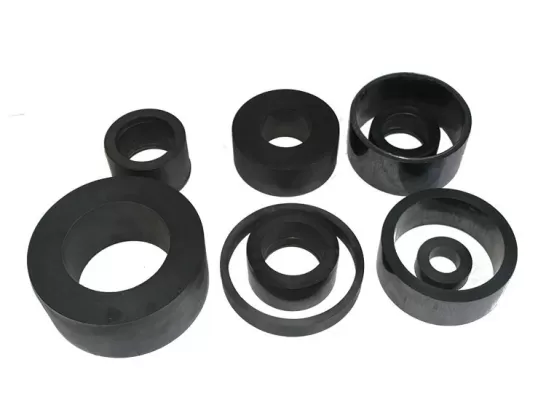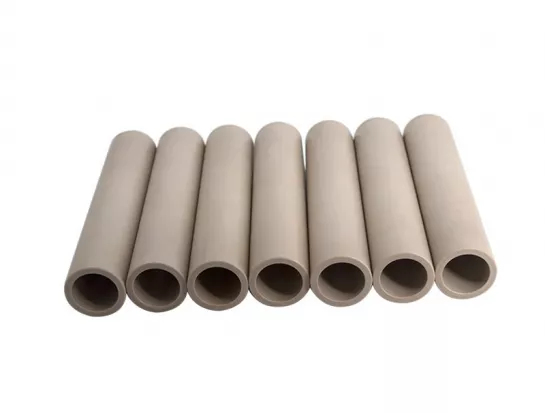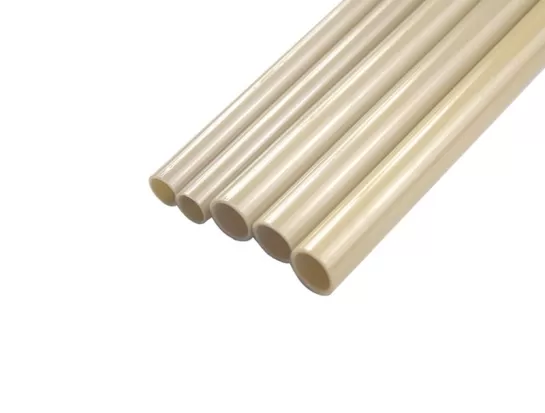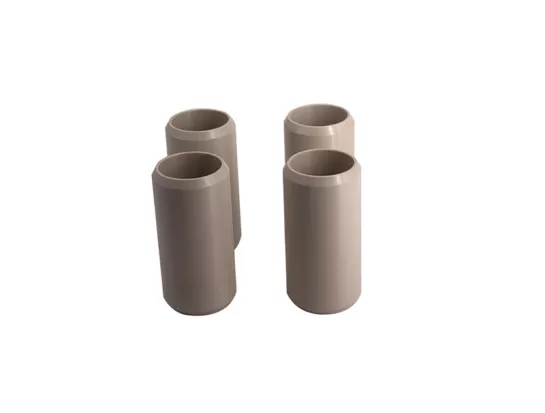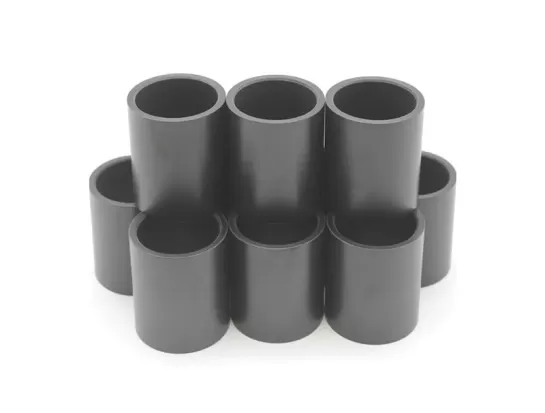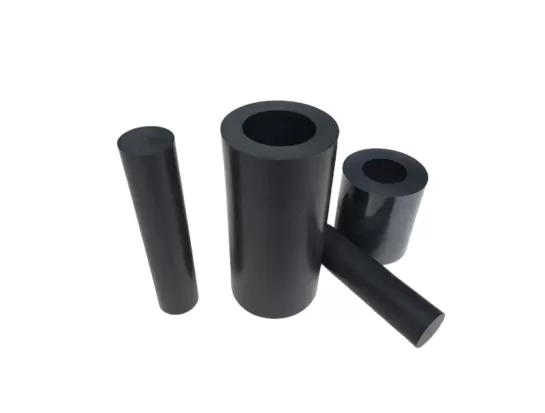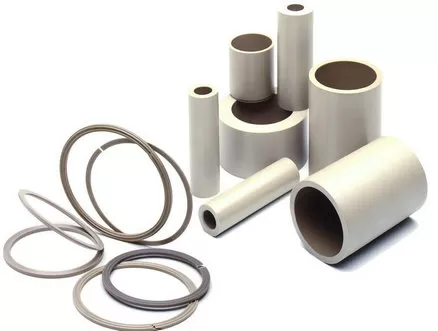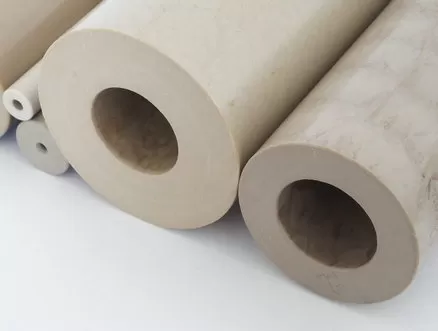
Polyetheretherketone (PEEK), often regarded as one of the most advanced high-performance engineering thermoplastics, has earned a strong reputation for its exceptional combination of mechanical strength, thermal resistance, chemical stability, and wear resistance.
As a semi-crystalline high-performance thermoplastic, PEEK has been used in demanding industries such as aerospace, medical, automotive, and chemical processing since its introduction in the 1980s. However, like any single material, unfilled PEEK has certain performance limitations. PEEK composite materials address these limitations by combining PEEK with reinforcing fibers, functional fillers, nanoparticles, or other materials to further improve specific properties.
PEEK composites therefore provide a broader range of performance characteristics and can be designed for applications where conventional engineering plastics may not provide sufficient strength, stiffness, wear resistance, thermal stability, or functional performance.
This article introduces the major PEEK composite systems, their key properties, and their potential applications.
The versatility of PEEK composites comes from the wide range of materials that can be combined with the PEEK matrix. Depending on the reinforcement or modification method, PEEK composites can generally be divided into several major categories.
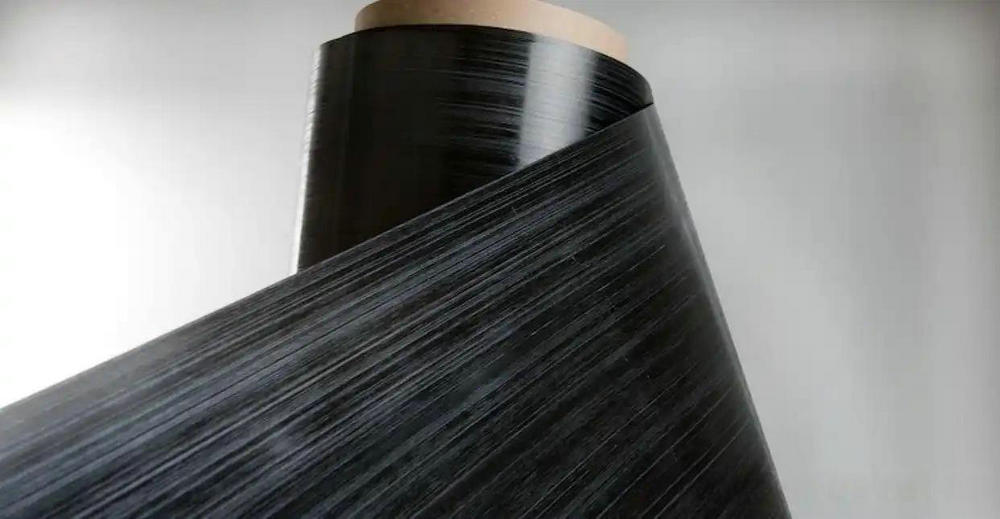
Carbon fiber reinforced PEEK (CF/PEEK) is one of the most widely used high-performance PEEK composite systems.
A typical 30% carbon fiber reinforced PEEK grade can provide significantly higher mechanical strength and stiffness than unfilled PEEK. According to the source material, tensile strength can reach approximately 200–300 MPa, while the modulus can exceed 20 GPa.
At the same time, CF/PEEK retains the high-temperature resistance and chemical resistance of the PEEK matrix. The addition of carbon fiber can significantly improve stiffness, wear resistance, dimensional stability, and fatigue performance.
Because of its high strength-to-weight ratio, carbon fiber reinforced PEEK can also be considered for replacing selected metal components where weight reduction is an important design objective.
Glass fiber reinforced PEEK (GF/PEEK) provides a different balance between mechanical performance and material cost.
Its mechanical properties generally fall between those of unfilled PEEK and carbon fiber reinforced PEEK. The source material gives a tensile strength of approximately 150–200 MPa and a modulus of around 15–18 GPa.
GF/PEEK also provides excellent electrical insulation properties, making it suitable for applications where mechanical strength, thermal resistance, and electrical insulation are required simultaneously.
Aramid fiber reinforced PEEK (AF/PEEK) combines the strength and toughness of aramid fibers with the inherent performance of the PEEK matrix.
This combination can provide excellent impact resistance and tear resistance, making AF/PEEK particularly suitable for components exposed to complex mechanical loading and impact conditions.
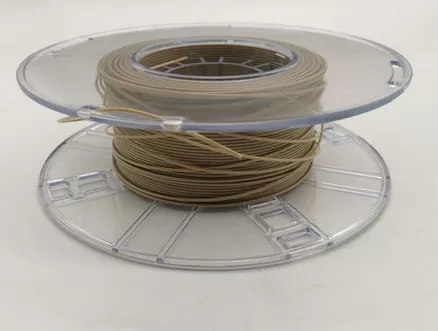
With increasing interest in sustainable materials, plant fiber reinforced PEEK and basalt fiber reinforced PEEK have also become areas of research.
Plant fibers such as bamboo and hemp can be combined with PEEK to explore more environmentally oriented composite solutions, while basalt fibers can provide additional mechanical and thermal performance.
Potential applications include automotive interior components, building materials, and other applications where both performance and sustainability are important considerations.
In addition to conventional fiber reinforcement, nanoscale fillers can be incorporated into PEEK to introduce specific functional properties.
Graphene is known for its excellent electrical conductivity, thermal conductivity, and mechanical strength.
When graphene is incorporated into PEEK, it can improve the overall mechanical and functional performance of the polymer. In particular, graphene-reinforced PEEK can provide enhanced electrical conductivity compared with conventional PEEK.
This makes graphene/PEEK composites interesting for applications such as electromagnetic shielding and static charge dissipation.
Carbon nanotubes (CNTs) have an extremely high aspect ratio and excellent mechanical and electrical properties.
Even relatively small amounts of carbon nanotubes can significantly influence the electrical conductivity, thermal conductivity, and flame-retardant behavior of PEEK composites.
The source material indicates that adding approximately 1-3% carbon nanotubes can increase electrical conductivity by 2-3 orders of magnitude while maintaining relatively good processability.
Ceramic particles such as silicon carbide and alumina can also be incorporated into PEEK.
These fillers can further improve wear resistance, high-temperature performance, and dimensional stability. Such composite systems are particularly relevant to demanding components such as seals, bearings, and other parts operating under severe wear or thermal conditions.
Another approach is to combine PEEK with metals such as copper or aluminum.
According to the source material, these composites can be produced by melt blending metal powders with PEEK. The resulting material aims to combine the processing advantages of thermoplastics with selected electrical and thermal conductivity characteristics associated with metals.
Potential applications include electronic packaging, thermal management components, and other applications where both polymer processing characteristics and enhanced thermal or electrical performance are required.
PEEK composites combine the inherent properties of the PEEK matrix with the specific advantages of reinforcing materials or functional fillers.
This allows engineers to tailor the material for applications requiring a particular combination of thermal, mechanical, chemical, tribological, electrical, or weight-related performance.
PEEK composites can operate across a wide temperature range. The source material specifies a long-term service temperature of up to approximately 260°C, while maintaining useful mechanical performance even at temperatures approaching 300°C.
This makes PEEK composites suitable for demanding environments such as engine compartments, high-temperature mechanical systems, and other applications where conventional engineering plastics may reach their temperature limits.
PEEK is known for its high resistance to a wide range of chemicals, and many PEEK composite systems retain much of this chemical resistance.
The source material states that PEEK composites can withstand almost all chemical media except highly aggressive substances such as fuming sulfuric acid. Their chemical stability at elevated temperatures also makes them attractive for chemical processing, pharmaceutical equipment, food-processing systems, and applications involving repeated sterilization.
PEEK and its composites offer excellent wear resistance and low-friction performance. The source material gives a friction coefficient as low as approximately 0.2 for certain systems.
The addition of carbon fiber can further improve wear resistance. This makes reinforced PEEK particularly useful for bearings, guide components, seals, bushings, and other parts exposed to continuous sliding or friction.
PEEK-based materials are also used in medical applications because of their biocompatibility. The source material identifies applications such as spinal fusion cages and bone screws.
For safety-critical applications, certain PEEK composite formulations can also provide flame-retardant characteristics, including UL94 V-0 performance, together with low smoke and toxicity characteristics.
These properties make appropriately formulated PEEK composites relevant to medical, electrical/electronic, and aerospace applications.
One of the most attractive features of carbon fiber reinforced PEEK is its high strength-to-weight ratio.
The source material states that carbon fiber reinforced PEEK has a density significantly lower than metals while offering high mechanical strength. In suitable applications, replacing selected metal components with PEEK composites can produce substantial weight reductions.
This lightweighting potential is particularly relevant to automotive and aerospace applications, where reducing component mass can contribute to improved energy efficiency and overall system performance.
Copyright © PEEKCHINA | Taizhou Ark International Trade Co.,Ltd. All Rights Reserved |
Sitemap
| Powered by



 EN
EN