Humanoid robots are becoming more compact, precise, and highly integrated. As development moves from demonstrations toward practical applications, material selection is becoming increasingly important. While metals such as aluminum, steel, titanium, and magnesium remain essential for major load-bearing structures, many smaller components inside a humanoid robot require a different combination of properties.
This is where PEEK (polyether ether ketone) becomes an interesting engineering material.
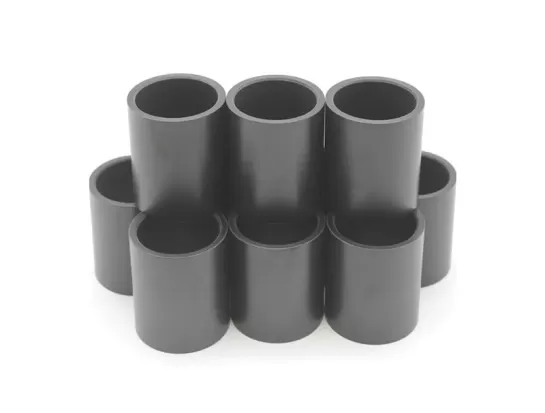
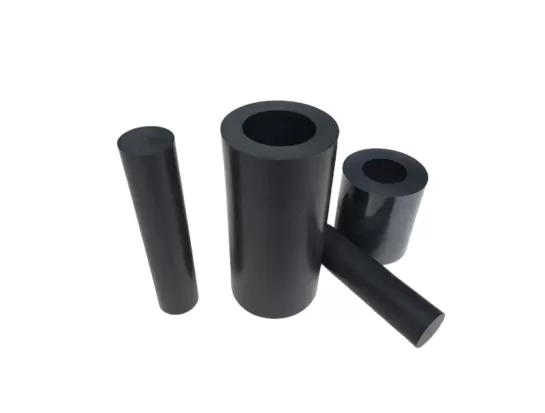
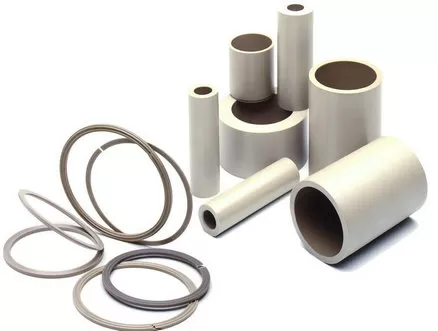
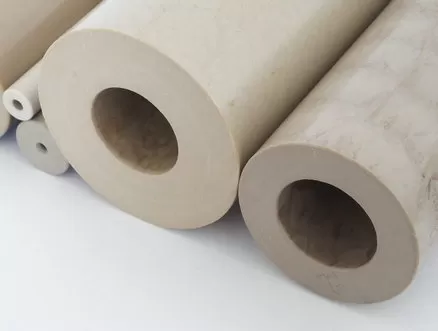
PEEK is a high-performance thermoplastic engineering polymer widely used in demanding industries such as aerospace, medical devices, automotive, semiconductor equipment, chemical processing, electronics, and precision machinery. Its combination of mechanical strength, wear resistance, chemical resistance, electrical insulation, dimensional stability, and high-temperature performance makes it suitable for selected robot components.
However, PEEK is not intended to replace metal everywhere. Its value comes from using it where its specific properties can solve a particular engineering problem.
What Is PEEK?
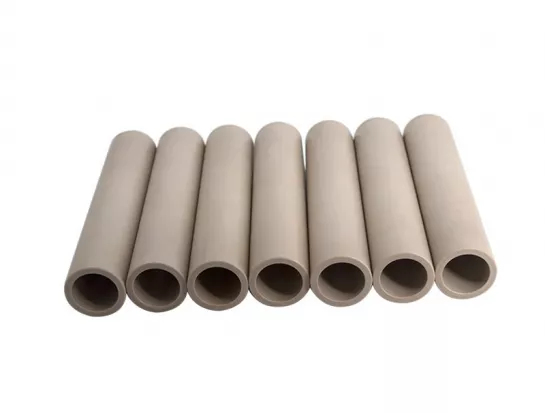
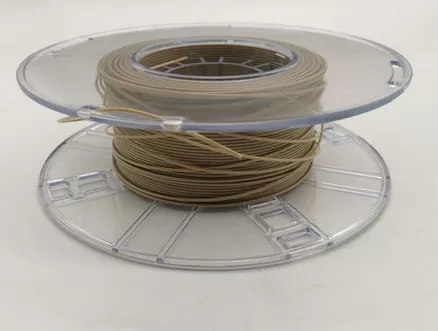
PEEK is a high-performance engineering thermoplastic rather than a conventional low-cost plastic. Its melting point is around 340°C, while its continuous service temperature can typically reach approximately 250–260°C. It also offers good wear resistance, chemical resistance, electrical insulation, dimensional stability, and mechanical performance, while being lighter than many common metals.
Different PEEK grades can provide different performance. Virgin PEEK, glass-fiber-reinforced PEEK, carbon-fiber-reinforced PEEK, wear-resistant modified PEEK, and conductive PEEK can differ in strength, stiffness, friction, wear resistance, processing behavior, and cost.
Therefore, robot engineers should select a PEEK grade according to the actual requirements of the component, including load, temperature, friction, speed, dimensional tolerance, electrical insulation, service life, and production volume.
Why Do Humanoid Robots Need Plastics?
The increasing use of engineering plastics does not mean that humanoid robots are moving away from metal. Metals are still essential for frames, joint housings, shafts, high-load transmission components, and other major structures.
The reason polymers are attractive is that many small robot components do not require the maximum strength of metal.
Weight is particularly important. A heavier robot requires more joint torque, increases inertia, and can affect battery consumption and dynamic response. Even small reductions in component weight can become meaningful when multiplied across many joints.
Friction and noise are also important. Humanoid robots contain numerous moving interfaces, including gears, bushings, guides, bearings, and cable systems. Metal-to-metal contact can require careful lubrication and surface treatment and may contribute to wear and mechanical noise.
Electrical insulation is another consideration. Batteries, motors, sensors, encoders, control boards, and wiring are tightly integrated inside the robot. Some components need to provide mechanical support while also electrically isolating nearby systems.
PEEK can therefore provide a useful combination of low weight, wear resistance, low friction, electrical insulation, and dimensional stability.
Where Can PEEK Be Used in Humanoid Robots?
The exact application depends on the design of each robot. Without specific manufacturer BOMs or technical documentation, these should be considered potential applications rather than claims about a particular commercial robot.
Gears, Bushings, and Sliding Components
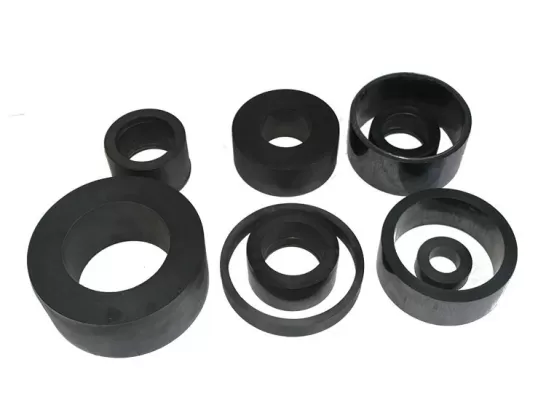
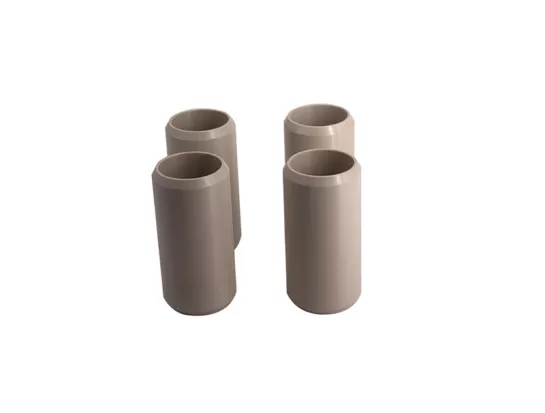
A robot joint contains many components beyond the motor and housing, including reducers, bearings, encoders, seals, shafts, cables, and internal structural parts. Some smaller gears, bushings, sleeves, guides, and sliding components may be suitable for PEEK or modified PEEK.
The potential benefits include lower weight, good wear resistance, reduced friction, and lower local mechanical noise.
High-load joints require much more careful evaluation. Hip, knee, ankle, and shoulder mechanisms experience complex loads, impacts, vibration, and temperature changes. Critical load-bearing transmission components should not be replaced with PEEK simply because it is lightweight and durable. Strength, stiffness, fatigue, creep, impact resistance, and service life must all be verified.
Components in Robotic Hands
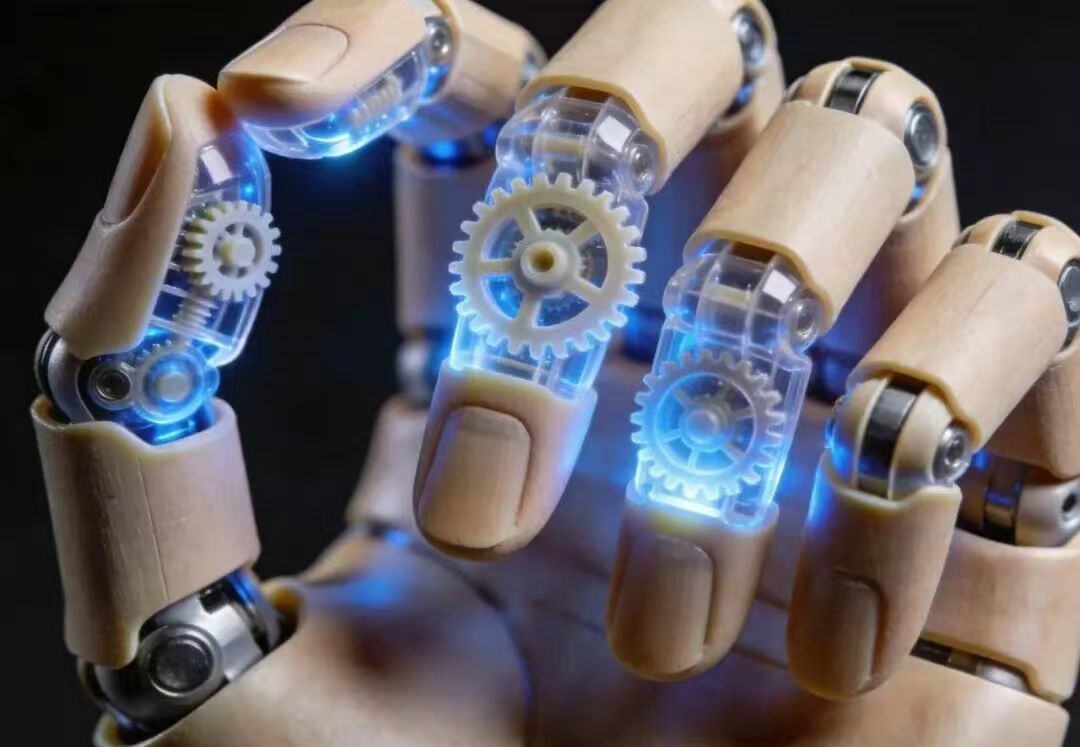
Humanoid hands have extremely limited internal space and contain many small moving parts, including joints, linkages, pulleys, gears, tendon mechanisms, sensors, and cable guides.
PEEK may be considered for selected small gears, pulleys, bushings, guides, insulating supports, and other internal parts. Reducing the weight of these components can help lower moving inertia, while wear resistance and low friction can support long-term operation.
For service-oriented humanoid robots, noise can also be important. PEEK cannot eliminate all mechanical noise, but material selection can influence noise at certain friction and transmission interfaces.
Bearing Cages, Spacers, and Other Small Parts
Some of the most important material decisions may involve components that are almost invisible from the outside.
Bearing cages, spacers, washers, bushings, seals, guides, and friction components can influence clearance, positioning accuracy, noise, and maintenance requirements.
Humanoid robots repeatedly accelerate, stop, reverse, and vibrate. Therefore, these components must be evaluated under realistic combinations of load, speed, surface condition, lubrication, temperature, and environmental exposure.
Electrical Insulation and Sensor Supports
PEEK can also be considered for selected insulating brackets, connector structures, cable fixing parts, sensor mounting components, and supports around electronic modules.
These components can provide both mechanical support and electrical isolation. In a highly integrated robot, problems such as cable wear, bracket deformation, or insulation failure can eventually affect overall system reliability.
What Problems Can PEEK Solve?
The potential role of PEEK in humanoid robotics can be summarized in five areas: lightweighting, wear resistance, low friction and noise, electrical insulation, and dimensional stability.
Its lower density compared with many metals can help reduce the weight of selected moving components. This can be particularly valuable in hands, wrists, end effectors, and compact joint mechanisms.
Its wear resistance can benefit gears, bushings, guides, and sliding parts exposed to repeated movement. However, wear performance depends not only on the PEEK grade but also on the mating material, surface roughness, load, speed, lubrication, temperature, and environment.
PEEK's electrical insulation properties can help separate mechanical and electrical systems in compact robot assemblies. Its dimensional stability can also be useful for precision components where changes in clearance or geometry could affect assembly and motion accuracy.
PEEK and the Future of Humanoid Robot Materials
The growing interest in PEEK reflects a broader change in humanoid robot material systems.
Future robots are unlikely to rely on one material. Aluminum, steel, titanium, magnesium, carbon-fiber composites, ceramics, conventional engineering plastics, and high-performance polymers will each have their own roles.
Main structures will continue to require strong metals and composites. High-load transmission components will demand high strength and fatigue resistance. Meanwhile, dexterous hands and compact mechanisms will place greater emphasis on lightweighting, wear resistance, low friction, low noise, insulation, and dimensional stability.
As humanoid robots move from demonstrations toward thousands of hours of practical operation, these small internal components will become increasingly important.
A poorly selected bushing can increase wear and clearance. An unstable cable guide can reduce cable life. An unreliable insulating component can create electrical risks. A noisy small gear can affect the overall user experience. Inconsistent processing can also lead to assembly variation and reliability problems.
This is where PEEK can create real value.
The goal is not to replace every metal component with PEEK. The goal is to put the right material in the right location.
When properly selected and validated, PEEK can help humanoid robots achieve lower weight, better wear performance, reduced friction and noise, reliable electrical insulation, and improved dimensional stability.
PEEK may not be the most visible material inside a humanoid robot, but in the right application, these small components can make a significant difference to how the robot moves, sounds, performs, and operates over the long term.
Copyright © PEEKCHINA | Taizhou Ark International Trade Co.,Ltd. All Rights Reserved |
Sitemap
| Powered by



 EN
EN