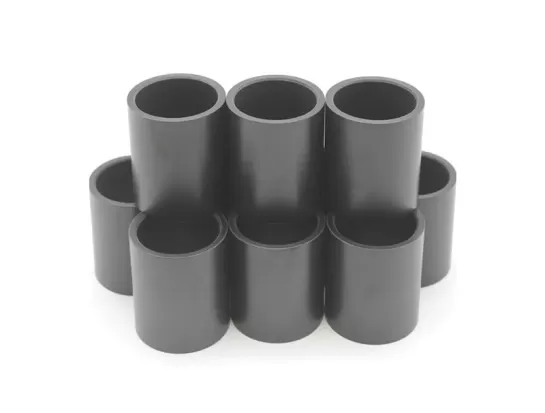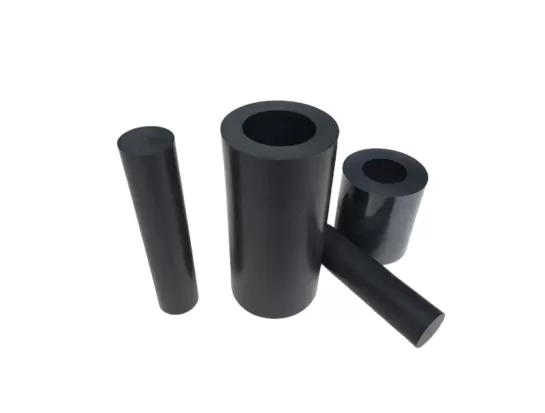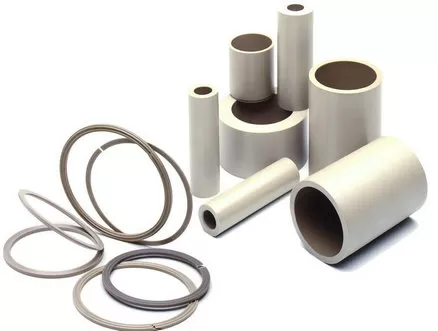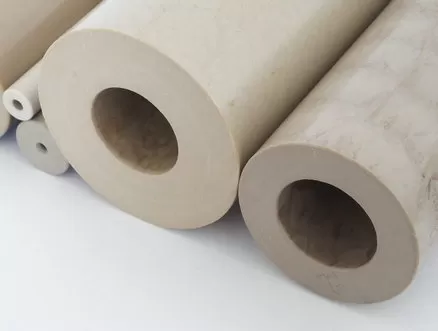
PEEK (Polyether Ether Ketone) is a high-performance engineering plastic widely used in medical devices, analytical instruments, aerospace, oil & gas, food processing, and semiconductor industries. Due to its critical applications, customers often ask for PEEK certificates before approving materials or finished components.
But what exactly are PEEK certificates? Are they mandatory? And which certificates really matter for your application?
This article provides a clear and practical explanation.
A PEEK certificate is not a single universal document. Instead, it refers to a set of compliance documents, test reports, and quality certifications that verify a PEEK material or PEEK component meets specific regulatory, industry, or customer requirements.
PEEK certificates typically fall into three categories:
Material compliance certificates
Quality and traceability certificates
Application-specific certifications
A Certificate of Analysis (COA) confirms the actual tested properties of a specific production batch, such as:
Density
Tensile strength
Flexural strength
Melt flow rate (MFR)
Color or filler content (CF30, GF30, etc.)
COAs are essential when customers require batch traceability and consistent performance.
A Certificate of Conformance (COC) declares that the supplied PEEK material or part conforms to a referenced specification, such as:
ASTM D6262
ISO standards
Customer-defined technical drawings
COCs are widely used for industrial, aerospace, and oil & gas projects.
For medical and food-contact applications, PEEK materials may comply with:
FDA 21 CFR 177.2415 – Food contact
FDA Master File (MAF) – Medical device reference
ISO 10993-1 – Biocompatibility evaluation
It is important to note:
FDA does not "certify" PEEK materials—suppliers provide compliance statements based on testing and regulatory alignment.
ISO certificates apply to the manufacturer, not the material itself. Common examples include:
ISO 9001 – Quality management system
ISO 13485 – Medical device manufacturing
These certificates demonstrate that the supplier follows controlled, auditable production processes.
For harsh offshore environments, PEEK materials may be tested according to:
NORSOK M-710
This certification is critical for seals, valve parts, and gaskets exposed to chemicals, pressure, and high temperatures.
Some PEEK grades are qualified against:
ASTM standards
OEM-specific aerospace specifications
Military or aviation material standards
These are usually required for structural or safety-critical components.
Not necessarily.
| Application | Certificate Requirement |
| General machining | COA / COC |
| Medical devices | FDA / ISO 10993 |
| Food processing | FDA food contact |
| Oil & gas | NORSOK M-710 |
| Aerospace | OEM / ASTM standards |
The required PEEK certificates depend on end use, market regulations, and customer specifications.
PEEK certificates provide:
Material traceability
Regulatory confidence
Risk reduction for end products
Faster customer approval
Support for audits and validation
For OEMs and distributors, certificates are often as important as the material itself.
When sourcing PEEK materials or machined parts, choose suppliers who can:
Provide batch-specific COA & COC
Support FDA & ISO documentation
Offer technical datasheets
Maintain long-term traceability records
This ensures smoother qualification and fewer compliance risks.
PEEK certificates are not just paperwork—they are a critical bridge between material performance, regulatory compliance, and customer trust.
Understanding which certificates are required helps engineers, purchasers, and quality teams select the right PEEK material for the right application.
Copyright © PEEKCHINA | Taizhou Ark International Trade Co.,Ltd. All Rights Reserved |
Sitemap
| Powered by



 EN
EN