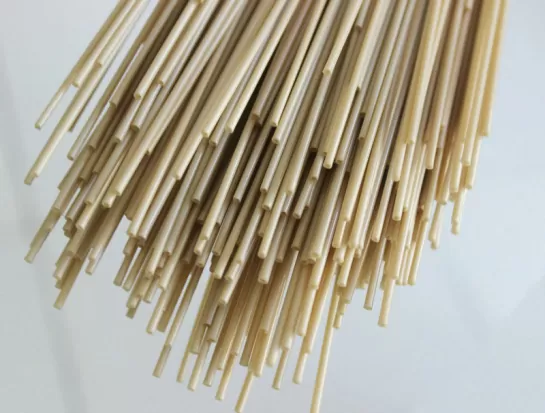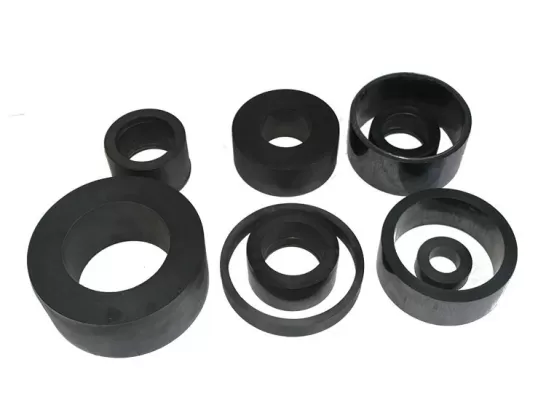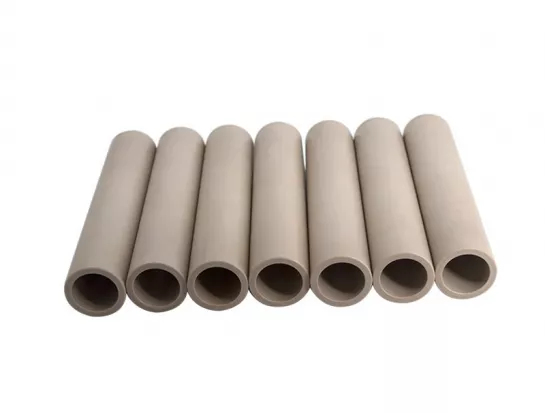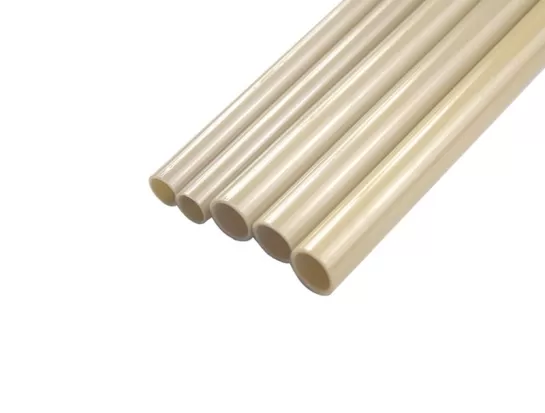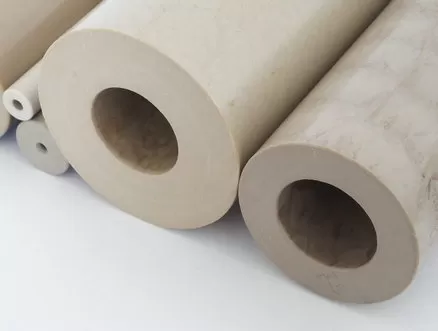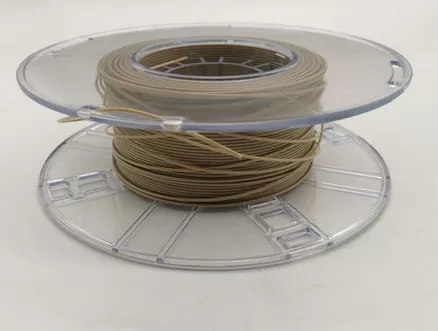
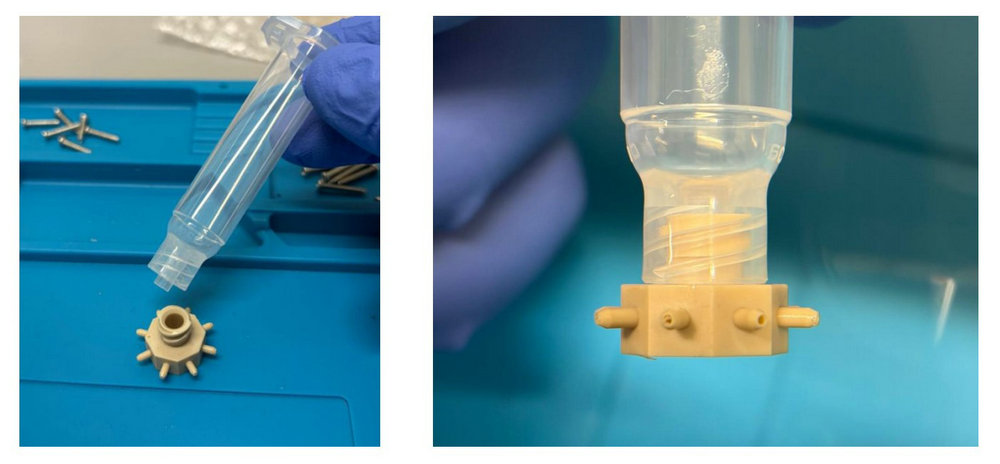
Luer fittings are small components, but they play an important role in medical fluid and gas management systems. They provide a standardized connection between syringes, catheters, tubing, valves, filters, and other medical or laboratory components. When the application requires high chemical resistance, dimensional stability, repeated sterilization, and reliable sealing, PEEK Luer fittings become an attractive engineering solution.
A Luer fitting is a small-bore connector designed to provide a secure connection between components used for fluid or gas transfer. Traditional Luer connections use a standardized conical mating interface. A Luer Slip fitting relies primarily on the tapered interference fit, while a Luer Lock fitting adds a mechanical locking mechanism to help prevent accidental disconnection.
The Luer taper is approximately 6%, and the male and female components are designed to mate along their conical surfaces. This geometry allows a relatively small connector to achieve a reliable connection without requiring a large sealing structure.
Modern medical applications need to consider the ISO 80369 series, particularly ISO 80369-7 for Luer connectors intended for intravascular and hypodermic applications. The standardization is not only about dimensional compatibility; it is also related to reducing the risk of unintended misconnections between different medical applications.
Therefore, a Luer fitting should not be viewed simply as a small threaded adapter. Its taper, internal passage, locking mechanism, dimensions, surface condition, and material properties all contribute to the final performance of the connection.
Many Luer fittings are manufactured from conventional medical polymers such as PP, PC, ABS, or other engineering plastics. These materials can be appropriate for many disposable or cost-sensitive applications.
PEEK becomes more interesting when the application requires a combination of mechanical strength, chemical resistance, temperature resistance, dimensional stability, and long-term reliability.
PEEK has excellent resistance to many chemicals, solvents, oils, and aggressive process environments. This is particularly useful for Luer fittings used in analytical instruments, laboratory equipment, chemical handling systems, and medical devices exposed to demanding fluids.
A Luer fitting may be small, but it can experience mechanical loads during assembly, disassembly, tightening, pressure cycling, and handling.
The locking threads are especially important. If the polymer is too soft, excessive tightening can deform the connection. If the taper changes shape under pressure, leakage may occur.
PEEK is a high-performance thermoplastic capable of continuous service at temperatures substantially higher than many conventional medical plastics.
This characteristic can become important when a Luer fitting must tolerate elevated-temperature cleaning, sterilization, or demanding process conditions.
For a Luer fitting, dimensional stability is critical. PEEK offers good dimensional stability when properly processed and machined. This makes it suitable for applications where the connector geometry needs to remain consistent over repeated use or under changing temperature conditions.
Compared with several other engineering plastics, PEEK has relatively low moisture absorption. This can be beneficial for precision components because moisture-related dimensional changes can influence tight interfaces.
PEEK is electrically insulating and considerably lighter than metals such as stainless steel. These characteristics can be useful in diagnostic instruments, analytical equipment, catheter systems, laboratory equipment, and specialized fluid-control assemblies.
Although medical applications are one of the most obvious uses, PEEK Luer fittings can also be considered for other precision fluid-handling applications.
Potential applications include:
Catheter and tubing assemblies
Syringe and infusion components
Diagnostic equipment
Laboratory instruments
Analytical systems
HPLC and chromatography systems
Chemical fluid handling
Sampling systems
Research equipment
Precision valves and fluid-control assemblies
The correct material should always be selected according to the actual fluid, pressure, temperature, sterilization method, regulatory requirements, and expected service life.
This is one of the most important questions when selecting a manufacturer.
PEEK itself is machinable, but small precision PEEK components can be considerably more challenging than ordinary PEEK parts.
The difficulty comes from the combination of material behavior and connector geometry.
A typical PEEK Luer fitting may contain several precision features at the same time:
Internal or external Luer taper
Internal fluid channel
Luer Lock thread
External thread or mounting thread
Sealing surface
Shoulder or flange
Thin-wall sections
Small radii
Sharp dimensional transitions
These features may need to be produced within a single small component.
The tapered interface is arguably the most critical feature of the connector.
A male Luer and female Luer must mate correctly along their conical surfaces. The taper angle, diameter, length, roundness, concentricity, and surface quality can all affect the connection.
Luer Lock fittings introduce another critical feature: the locking mechanism.
Fine threads in PEEK require careful control because the material behaves differently from metal during cutting.
If machining parameters are too aggressive, excessive heat or cutting forces can affect dimensional accuracy. If the tool is worn, the thread profile can gradually change.
PEEK has a relatively low thermal conductivity compared with metals. Heat generated during machining therefore does not dissipate in the same way as it does in metal machining.
The machining strategy therefore needs to balance:
cutting speed + feed rate + tool geometry + depth of cut + workholding + cooling + machining sequence.
A good manufacturer does not simply apply metal machining parameters to PEEK.
PEEK is softer than metal, but that does not mean ordinary tooling can always deliver the best results.
Tool geometry and sharpness have a direct influence on:
Surface finish
Burr formation
Dimensional accuracy
Heat generation
Tool life
Thread quality
Taper quality
For reinforced PEEK grades such as carbon-fiber-filled or glass-fiber-filled PEEK, tool wear becomes an even more important consideration because the reinforcement can be abrasive.
For a precision medical Luer fitting, the manufacturer should therefore establish machining parameters according to the specific PEEK grade rather than treating all PEEK materials as identical.
A smooth-looking surface does not necessarily mean that a Luer fitting has a suitable functional surface.
The internal taper and fluid passage can influence:
Leakage
Fluid resistance
Cleaning
Particle retention
Sealing
Connection force
Repeated mating performance
For this reason, surface roughness should be controlled according to the functional requirement rather than simply judged visually.
In some precision Luer machining applications, the tapered surface is manufactured and inspected to very tight dimensional and surface requirements to achieve reliable sealing.
Sterilization can be an important factor when selecting materials for reusable or medical components.
PEEK's high temperature resistance makes it attractive for demanding environments, but the actual suitability depends on the specific sterilization process.
Potential considerations include:
Steam sterilization
Autoclave exposure
Ethylene oxide
Gamma irradiation
Other validated sterilization methods
Repeated sterilization can affect polymers differently depending on temperature, radiation dose, exposure time, geometry, and material formulation.
Therefore, a manufacturer should evaluate the complete component rather than making a general statement that "PEEK is sterilizable."
Because the component is small and the interface is highly functional, inspection should cover more than basic external dimensions.
A professional quality-control process may include:
Material inspection
Confirm the PEEK grade, material batch, and relevant documentation.
Dimensional inspection
Check critical diameters, lengths, wall thicknesses, threads, and mating features.
Taper inspection
Verify the Luer taper geometry and dimensional relationship.
Surface inspection
Evaluate critical sealing and fluid-contact surfaces.
Leak testing
Verify that the assembled connection meets the required leakage performance.
Mechanical testing
Depending on the application, evaluate separation, unscrewing, or other mechanical performance.
Visual inspection
Check for burrs, cracks, machining marks, contamination, or other defects.
ISO 80369 testing includes mechanical performance evaluations such as resistance to separation and resistance to unscrewing, illustrating why Luer connectors require more than simple dimensional inspection.
Copyright © PEEKCHINA | Taizhou Ark International Trade Co.,Ltd. All Rights Reserved |
Sitemap
| Powered by



 EN
EN