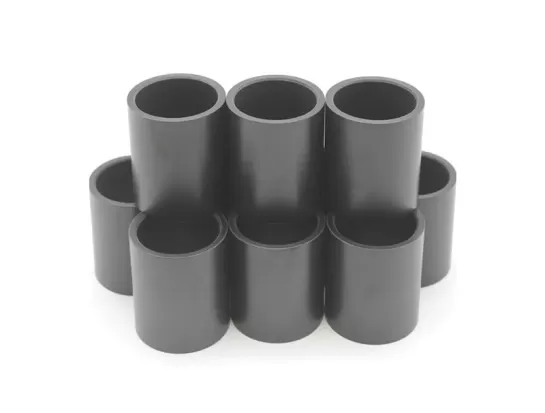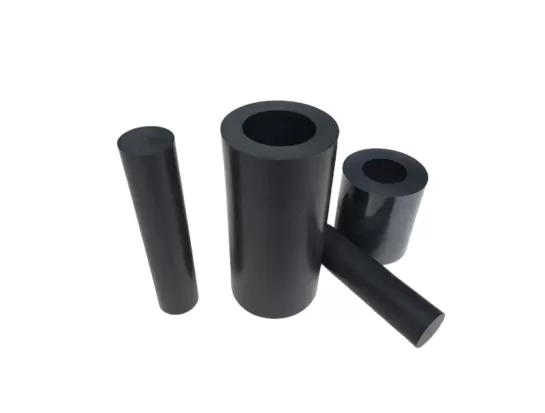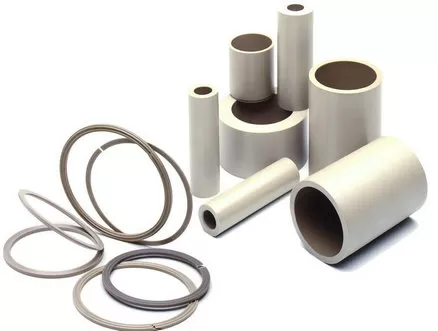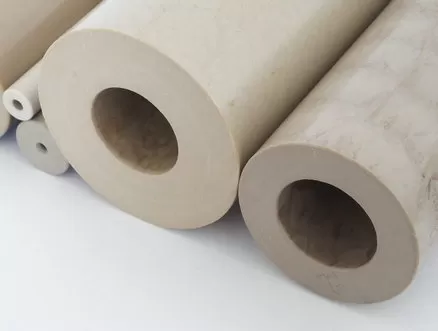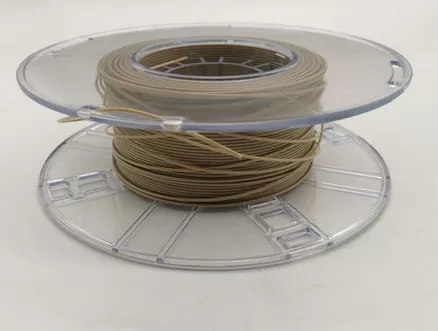
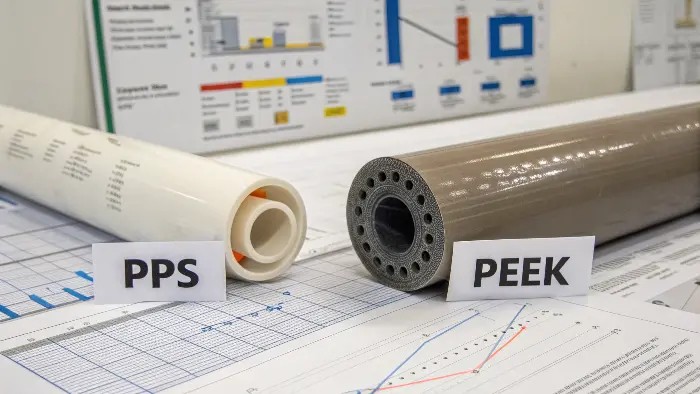
PEEK and PPS have long been recognized as two important high-performance engineering plastics. Both offer a combination of thermal resistance, chemical stability, mechanical performance, and dimensional reliability that conventional engineering plastics often cannot match.
However, excellent performance has traditionally come with a high price.
For many years, the biggest challenge for PEEK was not whether the material could meet demanding engineering requirements, but whether its cost could be justified in a larger number of applications. PPS has had a somewhat different problem. While PPS resin has become increasingly available, high-end PPS products such as specialty films have remained technically challenging and relatively concentrated in a small number of suppliers.
This situation is changing.
According to the supplied industry analysis, advances in raw material localization, catalyst technology, continuous production, manufacturing scale, and downstream processing are gradually changing the cost structure of both PEEK and PPS. More importantly, these changes could do more than reduce prices. They could create new application opportunities in humanoid robotics, electric vehicles, semiconductors, 3D printing, 5G communications, medical products, and precision manufacturing.
PEEK is an unusual engineering polymer because it combines high mechanical strength with excellent chemical resistance, wear resistance, fatigue performance, and high-temperature capability.
These characteristics make PEEK attractive for demanding applications, but its production is significantly more complicated than that of conventional engineering plastics.
One of the most important cost factors is DFBP, a key raw material used in PEEK production. The supplied analysis estimates that direct material costs can account for approximately 60%–72.76% of total PEEK production costs, with DFBP representing around 70% of direct material input.
This means that the economics of PEEK are closely connected to the availability and price of DFBP.
Historically, imported DFBP was reported at approximately RMB 180,000–220,000 per ton. With the development of domestic production technologies, the reported price has moved toward approximately RMB 120,000–140,000 per ton. The source also describes new production routes that can reduce production costs compared with traditional overseas processes.
Catalyst technology provides another potential source of savings.
Traditional PEEK production can involve relatively expensive catalyst systems. According to the supplied analysis, new nickel-cobalt bimetallic catalyst technologies have the potential to reduce catalyst-related costs by approximately 60%.
These developments are important because raw material and catalyst costs do not operate independently. When several major cost components decline at the same time, the effect on the overall production economics can be much greater than the impact of any single improvement.
The next major change is production technology.
Traditional PEEK production has often relied on batch processes with relatively limited production capacity per unit. The supplied source describes a transition toward continuous production technologies, with new processes targeting substantially larger individual production capacity.
The source cites individual continuous production units with capacities of approximately 5,000 tons per year, compared with historical production units that could be below 1,000 tons annually.
This matters because high-performance polymer production contains significant fixed costs.
When a production line operates at a larger scale, equipment, energy systems, labor, quality control, and other overhead costs can be distributed across a larger quantity of material. At the same time, continuous processing can improve production stability and efficiency.
The overall result can be described as a combination of raw material localization, process optimization, catalyst innovation, and economies of scale.
That combination could fundamentally change the price structure of PEEK.
The supplied analysis reports that imported PEEK prices historically reached approximately RMB 300,000–900,000 per ton depending on grade and market conditions. Domestic prices are reported at approximately RMB 350,000–400,000 per ton, while some manufacturers are targeting a long-term cost level around RMB 200,000 per ton.
If such cost reductions continue, PEEK could gradually move from a highly specialized premium polymer toward a more broadly accessible engineering material.
And that distinction is extremely important.
A cheaper PEEK does not simply mean that existing customers pay less.
It changes the engineering calculation.
When PEEK is extremely expensive, engineers tend to reserve it for applications where its performance is absolutely necessary. They may select metals or less expensive engineering plastics for applications where PEEK could technically provide better performance but cannot meet the cost target.
Once the price reaches a more competitive level, the decision changes.
PEEK can then be evaluated not only for its performance but also for the total system benefits it may provide.
This is particularly interesting in robotics.
The supplied industry analysis estimates that a Tesla Optimus Gen2 could consume approximately 6.9–7.2 kg of PEEK, while the Unitree H1 could use approximately 3.2 kg. At a PEEK price of RMB 350,000 per ton, this corresponds to estimated material costs of roughly RMB 5,000 and RMB 2,200 per robot respectively.
If PEEK prices decline toward RMB 200,000 per ton, the material cost per robot could fall further.
More importantly, the potential value of PEEK in humanoid robots goes beyond weight reduction.
PEEK and PEEK-based composites can provide a combination of wear resistance, low friction, fatigue resistance, chemical resistance, and dimensional stability. These properties can make them attractive for gears, bearing components, joint components, bushings, structural parts, and other precision mechanical systems.
A lighter component may also influence the design of the surrounding system. Lower component weight can potentially reduce mechanical loads and contribute to lower actuator requirements.
Therefore, the economic value of PEEK may extend beyond the price of the polymer itself.
This is one reason why a major decline in PEEK cost could have an impact far greater than the percentage reduction in the material's selling price.
PPS is following a different development path.
Compared with PEEK, PPS has a lower material cost and has already achieved considerable production scale. The supplied source reports approximately 185,000 tons of domestic effective PPS capacity in 2025, with utilization of around 82.2% and a domestic self-sufficiency rate of approximately 78%.
Domestic PPS resin prices are reported at approximately RMB 28,000–66,000 per ton, around 25%–30% below comparable imported products.
This shows that PPS has already moved much further toward large-scale localization than PEEK.
But the most interesting opportunity is not necessarily PPS resin.
It is high-performance PPS film.
Producing a polymer resin and producing a high-quality functional film are two very different manufacturing challenges. PPS film requires control over processing conditions, stretching, heat setting, dimensional stability, and other parameters.
According to the supplied analysis, high-end PPS film has historically faced significant barriers related to patents, equipment, process technology, and manufacturing know-how.
That is why downstream localization can be just as important as resin localization.
Several domestic technology routes are now being developed for PPS film, targeting applications such as new energy vehicles, electrical insulation, aerospace, 5G communications, and flexible electronic materials.
If these technologies achieve stable mass production, the PPS industry could move from a resin-centered market toward a broader specialty-material ecosystem.
It is tempting to view PEEK and PPS simply as competing materials.
In reality, they may become increasingly complementary.
PEEK generally occupies a higher performance and higher price position. PPS offers a lower-cost alternative where its performance is sufficient.
This creates a useful material-selection principle:
PEEK for maximum performance; PPS for optimized performance-to-cost efficiency.
This distinction becomes particularly important in electric vehicles.
The development of 800V EV platforms is increasing demand for materials capable of handling high voltage, elevated temperatures, thermal cycling, chemical exposure, and demanding insulation requirements.
According to the supplied source, PPS consumption in new energy vehicles can exceed 2.5 kg per vehicle, significantly higher than the amount typically used in conventional internal-combustion vehicles.
The reason is straightforward: electric vehicles introduce batteries, electric motors, power electronics, high-voltage connectors, and other systems that require advanced electrical and thermal performance.
PEEK can satisfy many extreme performance requirements, but using PEEK everywhere would not necessarily be economically efficient.
PPS provides an attractive alternative for applications where extreme PEEK-level performance is unnecessary.
The supplied analysis describes PPS as providing more than 80% of PEEK's performance in relevant comparisons while costing only a fraction as much, depending on the application and material grade.
This creates a substantial opportunity for PPS in high-volume automotive applications.
The transformation of PEEK and PPS reflects a broader trend in advanced manufacturing.
For years, high-performance polymers were limited by high raw material costs, specialized production equipment, relatively small production volumes, technology barriers, and limited supplier competition.
As these barriers gradually decline, the economics begin to change.
The supplied industry analysis describes this as a transition in which PEEK could move from historically very high price levels toward approximately RMB 350,000–400,000 per ton, with longer-term cost targets potentially reaching around RMB 200,000 per ton. PPS, meanwhile, is continuing to expand its domestic supply base while moving toward higher-value downstream products.
If these trends continue, the impact could extend well beyond the polymer industry.
Cheaper PEEK could encourage new designs in robotics, semiconductor equipment, medical devices, additive manufacturing, and precision components.
More competitive PPS could accelerate the adoption of advanced electrical insulation, EV components, communication equipment, filtration systems, and other industrial products.
The most important change is therefore not simply lower PEEK prices or lower PPS prices.
It is the possibility of changing the relationship between performance and cost.
For decades, engineers have often had to choose between high performance and economic efficiency.
The next generation of PEEK and PPS manufacturing may make that trade-off less restrictive.
Copyright © PEEKCHINA | Taizhou Ark International Trade Co.,Ltd. All Rights Reserved |
Sitemap
| Powered by



 EN
EN