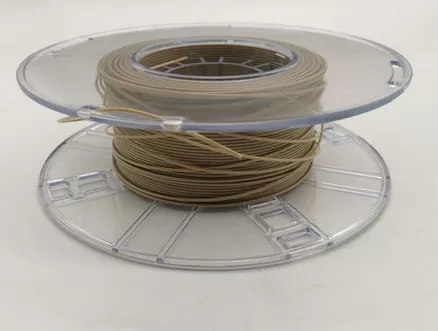
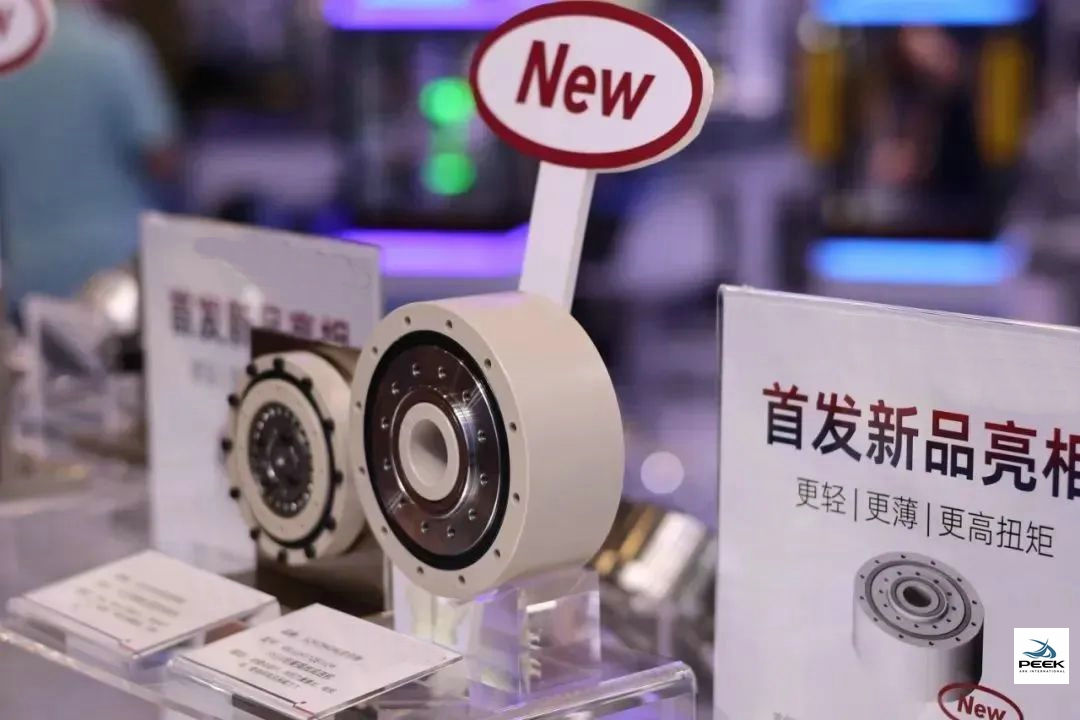
Humanoid robots rely on highly integrated joint modules to achieve precise motion control, high torque density, and compact structural design. Among various transmission solutions, harmonic drives are widely adopted due to their advantages of high reduction ratio, minimal backlash, and excellent positioning accuracy.
A typical harmonic drive consists of three core components: a wave generator, a flexspline, and a circular spline. Through elastic deformation of the flexspline, harmonic drives can deliver large transmission ratios within a limited volume, making them particularly suitable for humanoid robot joints such as shoulders, elbows, wrists, hips, and ankles.
However, conventional harmonic drives are predominantly manufactured from steel or aluminum alloys. As humanoid robots evolve toward higher degrees of freedom, lower energy consumption, and improved dynamic response, the limitations of metallic harmonic drives—especially weight, inertia, noise, and lubrication dependence—become increasingly evident.
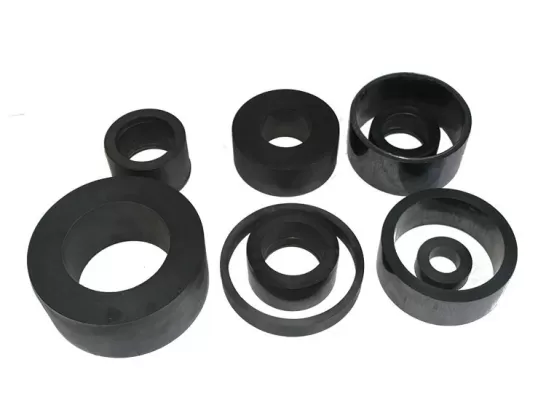
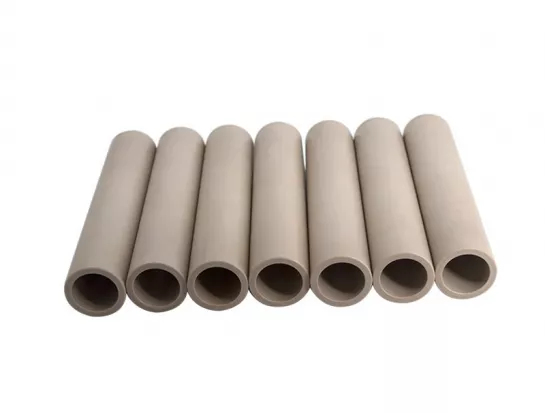
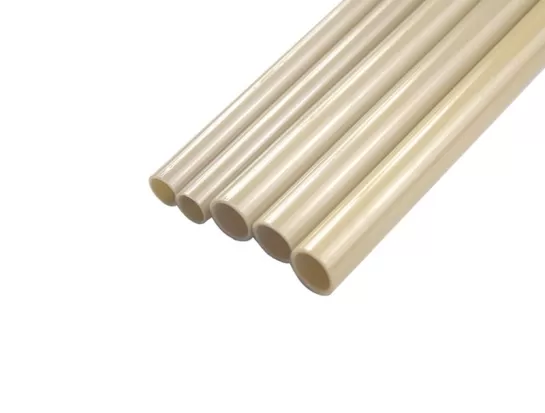
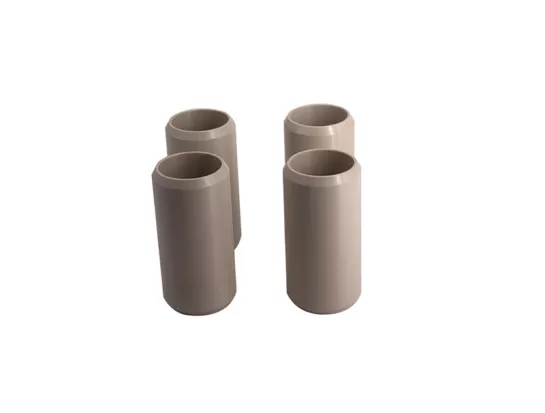
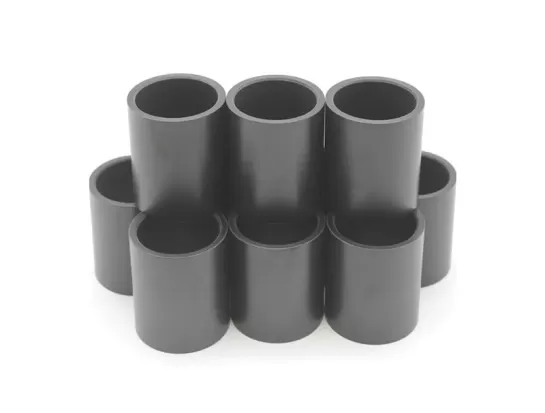
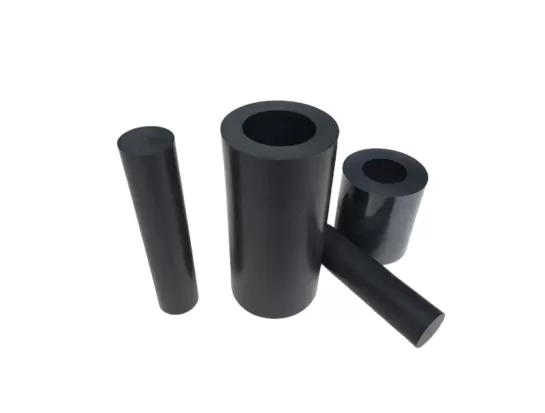
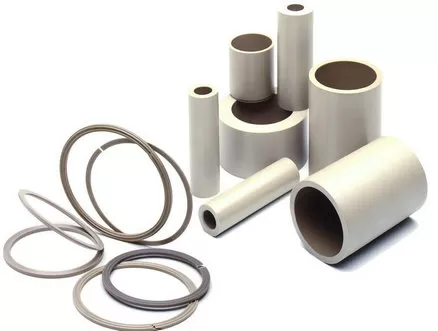
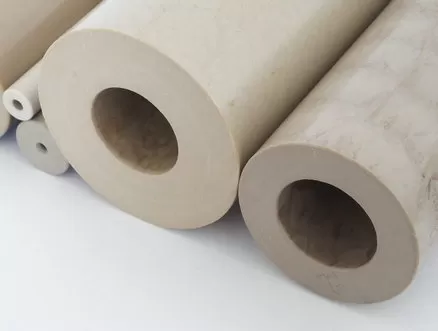
This has driven interest in advanced engineering plastics, particularly PEEK (Polyether Ether Ketone), as an alternative material for harmonic drive components.
PEEK is a high-performance semi-crystalline thermoplastic widely used in aerospace, medical devices, and precision mechanical systems. From a materials engineering perspective, several intrinsic properties of PEEK make it suitable for harmonic drive applications:
Low density with high specific strength
PEEK has a density of approximately 1.3–1.5 g/cm³, significantly lower than steel. When reinforced with carbon fiber or other fillers, PEEK offers high stiffness and strength relative to its weight.
Excellent fatigue and creep resistance
Harmonic drives operate under continuous cyclic loading. PEEK maintains dimensional stability and mechanical integrity under long-term stress, which is critical for flexspline components.
Low friction coefficient and self-lubricating behavior
PEEK and PEEK-based composites exhibit favorable tribological performance, reducing friction losses and wear between meshing components.
Thermal and chemical stability
PEEK retains mechanical performance at elevated temperatures and shows excellent resistance to oils, greases, and most industrial chemicals.
These characteristics enable PEEK to function not merely as a structural plastic, but as a functional load-bearing transmission material.
When PEEK is applied to harmonic drive components—particularly the flexspline, gear teeth, or structural housings—several engineering benefits emerge:
Replacing metal components with PEEK can reduce the mass of a harmonic drive by approximately 40–60%, depending on design and reinforcement. Lower rotating and reciprocating mass directly reduces joint inertia, allowing:
Faster acceleration and deceleration
Improved dynamic response
Lower motor torque requirements
These benefits are especially valuable for humanoid robots performing frequent start-stop motions or balance adjustments.
PEEK inherently provides better vibration damping than metals. In harmonic drives, this results in:
Reduced meshing noise
Smoother torque transmission
Improved acoustic performance in service robots or human-interactive environments
Noise reduction is increasingly important as humanoid robots move closer to daily human environments.
Traditional harmonic drives require precise lubrication to control wear and efficiency. PEEK’s tribological properties allow:
Lower lubrication volume
Extended maintenance intervals
Potential operation under boundary or dry-lubrication conditions
This simplifies joint module design and improves long-term reliability.
In humanoid robots, joint actuators must balance torque capacity, precision, efficiency, and lifespan. PEEK harmonic drives contribute positively in several areas:
High torque-to-weight ratio at the joint level
Improved energy efficiency, supporting longer battery life
Stable precision under repeated load cycles, critical for fine motor control
Lower thermal accumulation, benefiting continuous operation
While metal harmonic drives still dominate extremely high-torque applications, PEEK-based harmonic reducers are particularly well suited for medium-load joints, distributed actuation architectures, and compact humanoid platforms.
Advances in PEEK composite formulation, precision machining, and gear design optimization are steadily expanding the feasible load envelope of polymer-based harmonic drives. Carbon-fiber-reinforced and tribologically modified PEEK grades further enhance stiffness, wear resistance, and dimensional stability.
As humanoid robot production moves toward higher volumes, PEEK harmonic drives also offer potential advantages in:
Design integration and part consolidation
Reduced secondary machining and surface treatments
Improved scalability for mass manufacturing
These factors position PEEK harmonic drives as a strategic solution for next-generation humanoid robot joint modules.
PEEK harmonic drives represent a material-driven evolution in humanoid robot transmission design. By combining lightweight construction, favorable tribological behavior, and long-term mechanical stability, PEEK enables joint systems that are more efficient, responsive, and suitable for human-centric environments.
As humanoid robotics continues to advance, PEEK-based harmonic reducers are expected to play an increasingly important role in balancing performance, weight, and system-level efficiency.
Copyright © PEEKCHINA | Taizhou Ark International Trade Co.,Ltd. All Rights Reserved |
Sitemap
| Powered by



 EN
EN