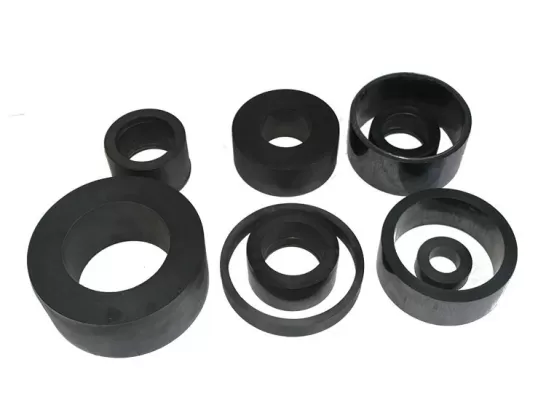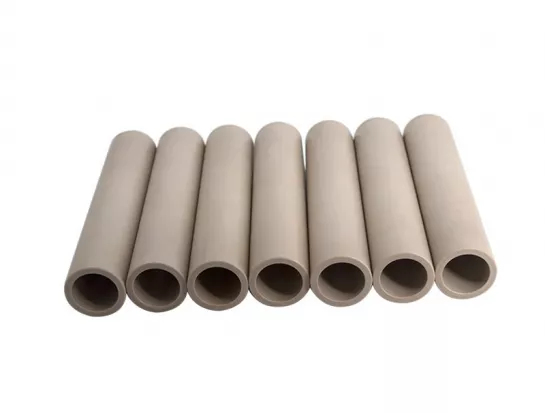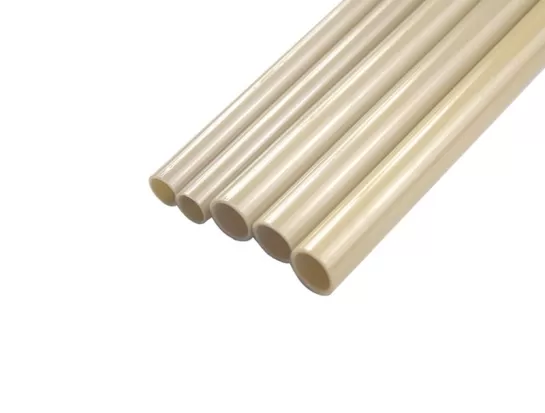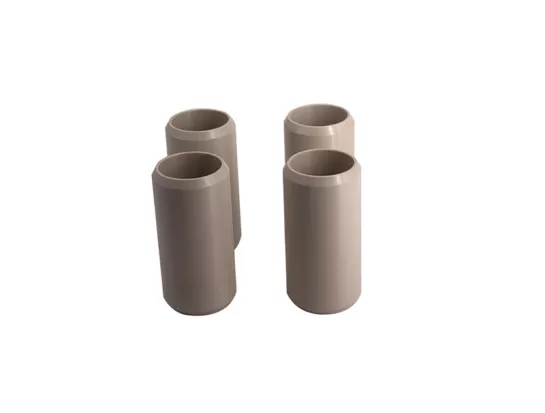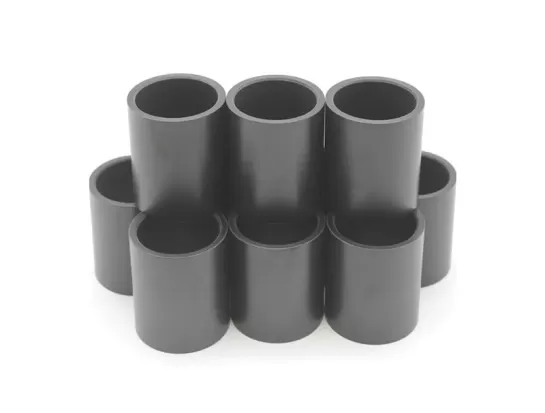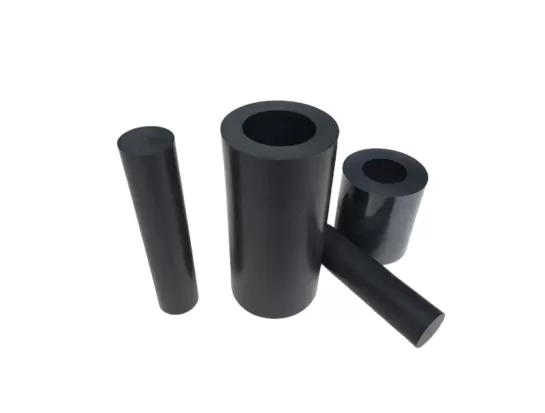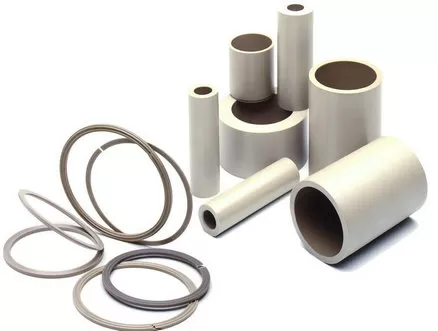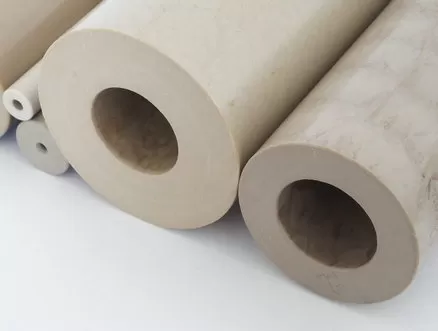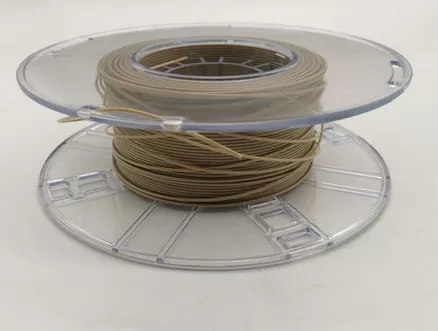
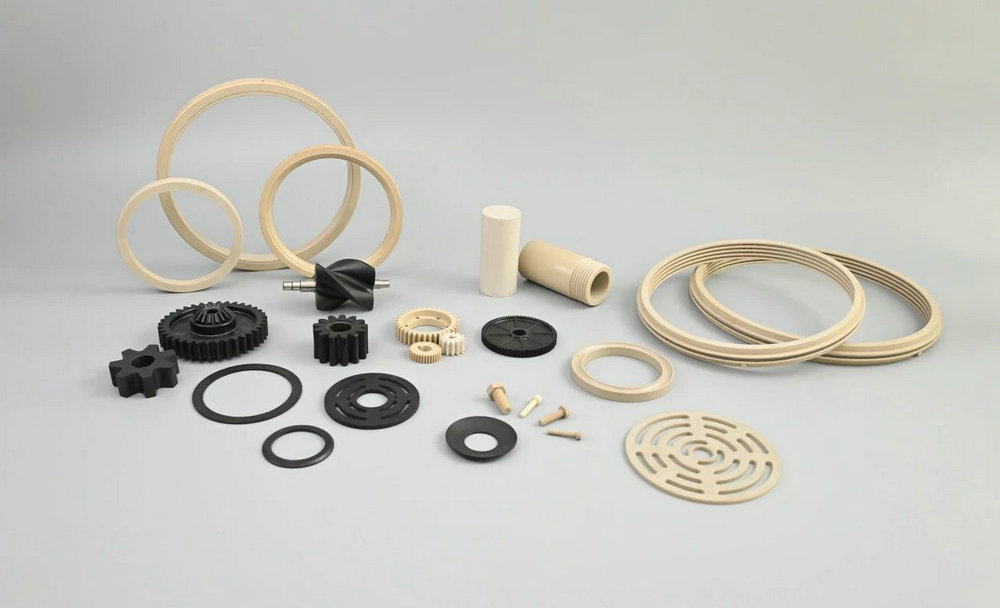
Polyetheretherketone (PEEK) is one of the world's most advanced high-performance engineering thermoplastics. Thanks to its outstanding mechanical strength, chemical resistance, thermal stability, and wear performance, PEEK has become a preferred material in aerospace, medical, semiconductor, automotive, oil & gas, and industrial applications.
Whether you're searching for the polyetheretherketone polymer formula, polyetheretherketone polymer structure, PEEK chemical composition, or comparing CF PEEK composite and GF PEEK composite, this guide explains everything you need to know.
Polyetheretherketone (PEEK) belongs to the polyaryletherketone (PAEK) family of semi-crystalline engineering plastics. It combines excellent mechanical properties with exceptional resistance to high temperatures and aggressive chemicals.
Unlike conventional engineering plastics, PEEK can continuously operate at temperatures up to 260°C, while maintaining excellent dimensional stability and mechanical performance.
Key characteristics include:
High mechanical strength
Excellent wear resistance
Outstanding chemical resistance
Low moisture absorption
Excellent fatigue resistance
High radiation resistance
Biocompatibility for medical applications
Excellent electrical insulation
The polyetheretherketone polymer formula is commonly written as:
(C19H12O3)n
where:
C = Carbon
H = Hydrogen
O = Oxygen
n = Number of repeating polymer units
This repeating molecular structure gives PEEK its outstanding combination of stiffness, toughness, and thermal stability.
The polyetheretherketone polymer structure consists of alternating aromatic rings connected by ether (-O-) and ketone (-CO-) functional groups.
A simplified repeating unit can be represented as:
–O–Ph–O–Ph–CO–Ph–
Where:
Ph represents a phenylene (benzene) ring.
Ether groups (-O-) provide flexibility and processability.
Ketone groups (-CO-) increase rigidity and heat resistance.
Aromatic rings provide exceptional mechanical strength and chemical stability.
This unique molecular architecture is the primary reason why PEEK outperforms many traditional engineering plastics.
The chemical composition of PEEK is entirely based on carbon, hydrogen, and oxygen atoms arranged in a highly stable aromatic backbone.
Typical elemental composition is approximately:
| Element | Approximate Content |
| Carbon (C) | 76% |
| Hydrogen (H) | 4% |
| Oxygen (O) | 20% |
Unlike many engineering plastics, PEEK contains no halogens, plasticizers, or heavy metal additives, making it suitable for demanding industrial and medical environments.
Many engineers search for PEEK chemical composition when evaluating material compatibility.
PEEK's molecular backbone contains:
Aromatic benzene rings
Ether linkages
Ketone groups
This combination provides:
High thermal stability
Low creep
Excellent fatigue resistance
Outstanding hydrolysis resistance
Superior chemical resistance
PEEK remains stable when exposed to:
Acids
Bases
Hydrocarbons
Steam
Oils
Fuels
Organic solvents
Only a few highly concentrated oxidizing acids can significantly attack PEEK under specific conditions.
CF PEEK composite refers to Carbon Fiber Reinforced PEEK, typically containing 30% carbon fiber.
Carbon fibers dramatically improve:
Stiffness
Tensile strength
Wear resistance
Creep resistance
Thermal conductivity
Dimensional stability
Aerospace brackets
Bearings
Compressor components
Automotive transmission parts
Semiconductor equipment
Oil & gas components
High-load gears
Lower thermal expansion
Excellent fatigue life
Superior friction performance
Reduced weight compared with metals
GF PEEK composite refers to Glass Fiber Reinforced PEEK, usually containing 30% glass fiber.
Compared with virgin PEEK, GF PEEK offers:
Higher rigidity
Better compressive strength
Improved dimensional stability
Lower material cost than carbon-filled grades
Structural supports
Pump housings
Electrical insulation components
Industrial fixtures
Valve bodies
Mechanical brackets
Excellent strength-to-weight ratio
Improved creep resistance
Better impact performance than some carbon-filled grades
Good electrical insulation
| Property | Virgin PEEK | CF PEEK Composite | GF PEEK Composite |
| Strength | Excellent | Outstanding | Very High |
| Stiffness | High | Extremely High | High |
| Wear Resistance | Excellent | Outstanding | Very Good |
| Electrical Insulation | Excellent | Reduced | Excellent |
| Thermal Conductivity | Low | Higher | Moderate |
| Dimensional Stability | Excellent | Outstanding | Excellent |
| Weight | Lowest | Slightly Higher | Slightly Higher |
| Typical Use | General Engineering | High Load Components | Structural Parts |
The unique polyetheretherketone polymer structure directly determines its outstanding performance.
The aromatic backbone provides:
High melting point (~343°C)
Continuous operating temperature up to 260°C
Exceptional mechanical strength
Excellent radiation resistance
Outstanding chemical resistance
Meanwhile, the ether groups improve toughness and processability, while ketone groups increase rigidity and thermal stability.
This balanced molecular design makes PEEK one of the highest-performing thermoplastics available today.
Thanks to its exceptional chemical composition, PEEK is widely used in:
Aerospace components
Medical implants
Orthopedic devices
Semiconductor manufacturing
Electric vehicles (EVs)
Oil & gas equipment
Chemical processing
Food processing machinery
Industrial pumps
Bearings and bushings
High-performance gears
Valve seats and seals
Electrical connectors
CF PEEK and GF PEEK composites further expand these applications where additional stiffness, wear resistance, or dimensional stability is required.
Understanding the polyetheretherketone polymer formula, polyetheretherketone polymer structure, and PEEK chemical composition helps engineers select the right material for demanding applications.
While virgin PEEK offers an excellent balance of properties, CF PEEK composite provides maximum stiffness and wear resistance for high-load environments, whereas GF PEEK composite delivers improved structural strength with excellent electrical insulation.
As industries continue demanding lighter, stronger, and more durable materials, Polyetheretherketone (PEEK) remains one of the most reliable engineering polymers available.
Copyright © PEEKCHINA | Taizhou Ark International Trade Co.,Ltd. All Rights Reserved |
Sitemap
| Powered by



 EN
EN