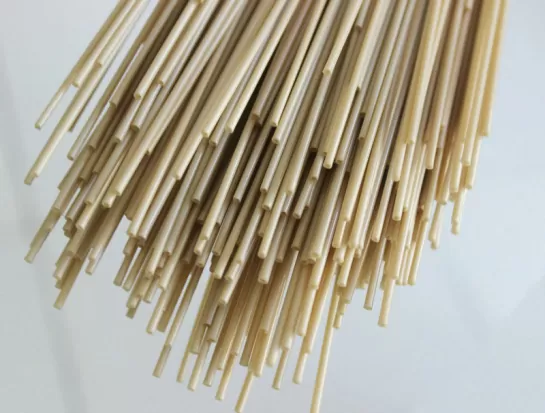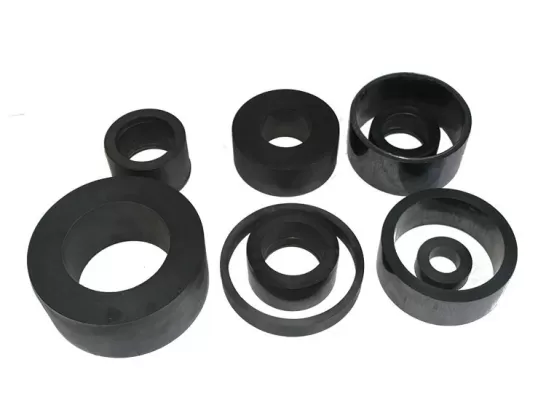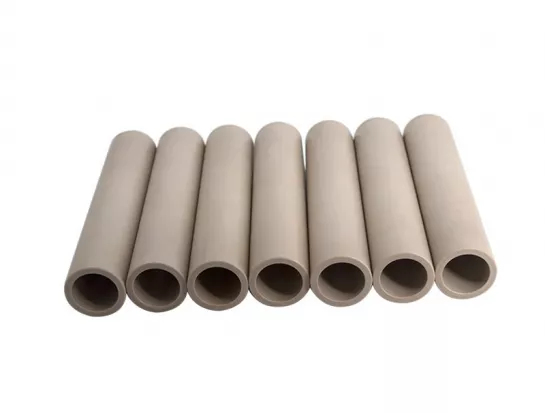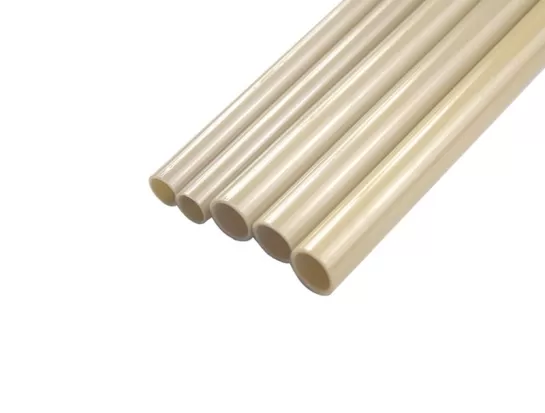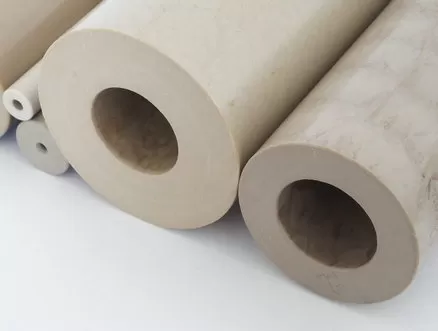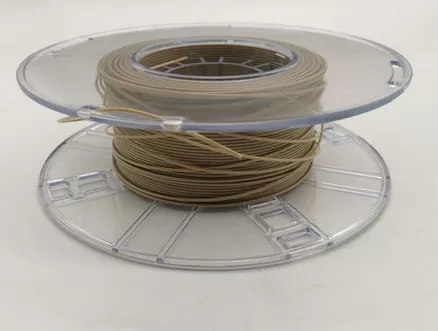
Polyetheretherketone (PEEK), also known as PEEK, may sound like a simple polymer name, but from the perspective of polymer chemistry, it represents one of the most sophisticated molecular designs.
The uniqueness of PEEK is not only its ability to withstand temperatures above 300°C, but that it achieves something rare among engineering plastics: extreme heat resistance while remaining a processable thermoplastic.
Most polymers lose their mechanical strength and become soft at temperatures above 200°C. However, PEEK can maintain its shape and performance at much higher temperatures while still being processed through injection molding, extrusion, and machining.
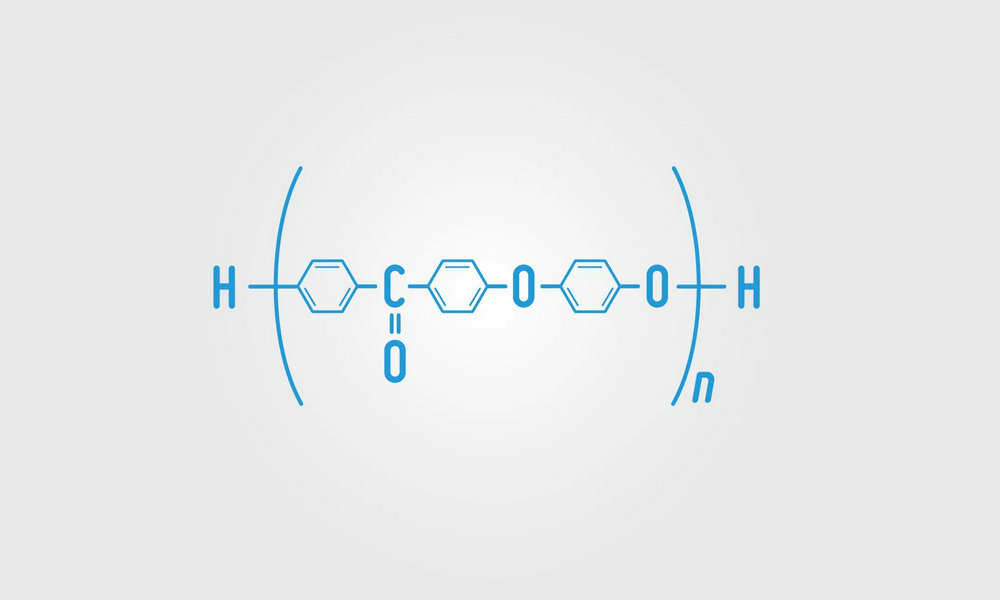
The secret lies in its molecular structure — the precise arrangement of ether-ether-ketone groups within the polymer chain.
The repeating unit of PEEK consists of:
Aromatic benzene rings
Ether bonds (-O-)
Ketone groups (C=O)
The molecular chain can be described as:
Phenyl ring – Ether bond – Phenyl ring – Ether bond – Phenyl ring – Ketone group
This structure creates a unique balance between rigidity and flexibility.
The benzene rings act as rigid structural units, providing high strength and thermal stability. The ether bonds provide controlled flexibility, allowing the molecular chain to move and making PEEK processable. The ketone groups introduce polarity and enhance crystallization behavior.
This combination allows PEEK to achieve excellent performance without becoming impossible to manufacture.
The excellent performance of PEEK mainly comes from three chemical effects.
The benzene rings make the molecular chain highly rigid. Because the chain segments cannot rotate freely, a large amount of energy is required for molecular movement.
As a result, PEEK maintains excellent mechanical properties even at elevated temperatures.
Without ether bonds, the polymer chain would become too rigid and difficult to process.
The ether groups act like flexible hinges inside the molecular structure. They reduce excessive rigidity and allow PEEK to melt before decomposition.
This is why PEEK can be processed as a high-performance thermoplastic, unlike some other heat-resistant polymers such as polyimide (PI), which require special processing methods.
The carbonyl groups in PEEK create strong molecular interactions and promote crystallization.
During cooling, PEEK molecular chains can arrange into crystalline structures, improving:
Chemical resistance
Wear resistance
Dimensional stability
Thermal performance
PEEK is one of the few polymers that combines extremely high temperature resistance with thermoplastic processing capability.
Typical properties include:
Melting temperature: approximately 343°C
Glass transition temperature (Tg): approximately 143°C
Continuous service temperature: up to 250–260°C
The reason PEEK can be processed is that its melting temperature remains below its decomposition temperature. This creates a valuable processing window where the material can melt without significant degradation.
This balance between heat resistance and processability is one of the biggest advantages of PEEK.
PEEK is a semi-crystalline polymer. Its final performance depends greatly on the balance between crystalline and amorphous regions.
Cooling conditions during processing directly influence its properties.
Fast cooling results in:
Higher toughness
Better flexibility
Higher transparency
However, chemical resistance and dimensional stability may decrease.
Slow cooling or annealing results in:
Higher strength
Better wear resistance
Improved chemical resistance
Higher thermal stability
Therefore, controlling processing parameters such as mold temperature, cooling rate, and annealing conditions is essential for producing high-performance PEEK parts.
PEEK became widely adopted in aerospace because it can withstand:
High temperatures
Fuel exposure
Mechanical stress
Weight reduction requirements
Compared with metals, PEEK provides lower weight, excellent chemical resistance, and electrical insulation.
Typical applications include:
Aircraft tubing
Wire insulation
Sealing components
Lightweight structural parts
PEEK has become an important material for medical implants, especially spinal fusion devices.
Compared with titanium, PEEK has a much closer elastic modulus to human bone, helping reduce stress shielding effects.
Advantages include:
Excellent biocompatibility
Radiolucency for clearer medical imaging
Long-term mechanical stability
Applications include:
Spinal cages
Bone fixation devices
Surgical components
Modern semiconductor manufacturing requires materials that can withstand aggressive chemicals such as acids and cleaning solutions.
PEEK is widely used in:
Semiconductor fixtures
Wafer handling components
Chemical-resistant seals
Valves and connectors
Its excellent chemical resistance allows it to perform in environments where many conventional plastics fail.
Many people consider PEEK as a single material, but industrial PEEK includes different grades designed for different applications.
Provides:
High purity
Balanced mechanical properties
Excellent chemical resistance
Provides:
Higher stiffness
Better wear resistance
Improved dimensional stability
Commonly used for:
Bearings
Gears
Aerospace components
Provides:
Higher strength
Better load resistance
Improved dimensional stability
Modified PEEK composites with PTFE, graphite, or other fillers can further improve friction performance and wear resistance.
With the rapid development of advanced industries, PEEK continues to expand into new applications.
Future opportunities include:
Humanoid robots
Low-altitude aircraft
Electric vehicles
Semiconductor equipment
Advanced medical devices
Carbon fiber reinforced PEEK composites are especially promising because they combine the lightweight advantages of composites with the efficient processing capability of thermoplastics.
The true value of PEEK does not come from a single outstanding property. Instead, it comes from achieving an ideal balance between:
Heat resistance
Chemical stability
Mechanical performance
Processability
Through the precise arrangement of ether and ketone groups in its molecular structure, PEEK has become one of the most valuable high-performance thermoplastics in modern engineering.
Copyright © PEEKCHINA | Taizhou Ark International Trade Co.,Ltd. All Rights Reserved |
Sitemap
| Powered by



 EN
EN