In advanced electronic packaging and thermal management, engineers are constantly looking for materials that combine three key characteristics:
High thermal conductivity similar to metals
Excellent electrical insulation like ceramics
Easy processing and reliability typical of engineering plastics
Finding a material that meets all these requirements simultaneously is extremely challenging.
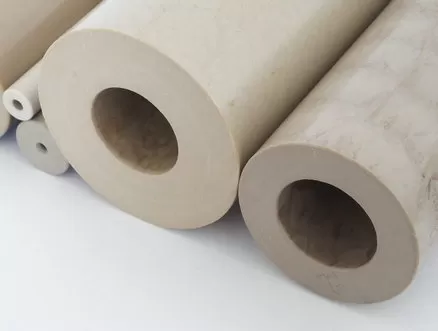
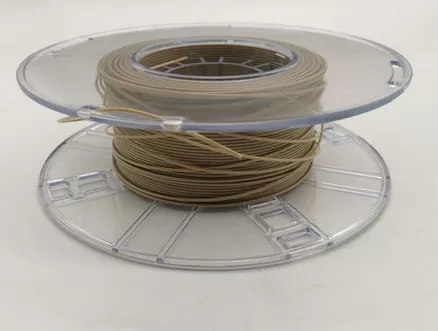
Polyether Ether Ketone (PEEK), often called the "gold standard of engineering plastics",is widely used in aerospace, new energy vehicles, and high-end electronics due to its exceptional properties:
High temperature resistance
Excellent mechanical strength
Outstanding chemical stability
Intrinsic electrical insulation
However, despite these advantages, PEEK has a critical limitation — very low thermal conductivity.
PEEK is a semi-crystalline aromatic thermoplastic polymer with a dense molecular structure. While this structure provides excellent mechanical performance and stability, it also restricts heat transfer.
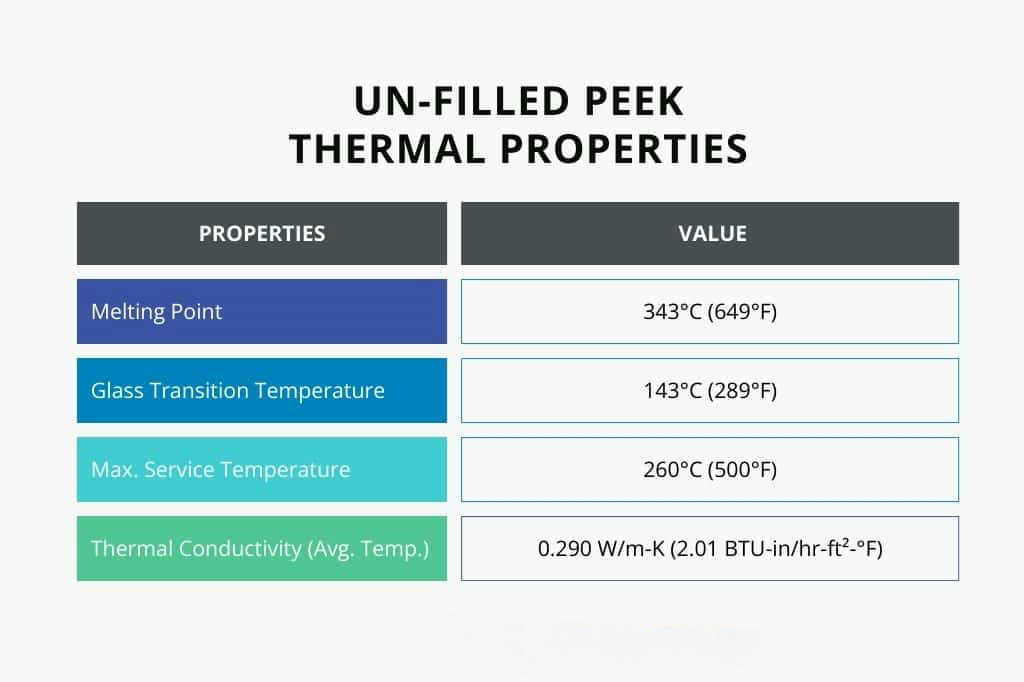
Heat in polymers is mainly carried by phonons, but in PEEK the phonon transport path is extremely short. As a result, the intrinsic thermal conductivity of pure PEEK is only:
~0.21 W/(m·K)
For high-power electronic devices such as:
CPUs
LEDs
IGBT modules
this low thermal conductivity becomes a serious limitation. If heat cannot be removed efficiently, device temperatures increase rapidly, leading to performance degradation and reliability issues.
Therefore, developing PEEK composites with both high thermal conductivity and electrical insulation has become an important research focus.
Improving the thermal conductivity of PEEK is difficult for two main reasons.
Adding high thermal conductivity fillers such as boron nitride (BN) is a common strategy. However, PEEK has very high melt viscosity, which makes it difficult to disperse fillers uniformly using conventional melt blending methods.
As a result:
Fillers tend to agglomerate
Continuous thermal conduction networks cannot form
Even with 30 wt% BN filler, thermal conductivity only increases to about 1.01 W/(m·K).
A more effective way to create oriented thermal pathways is electrospinning, which can align fillers along polymer fibers.
However, electrospinning requires a polymer solution, and PEEK is almost insoluble in common solvents. This makes solution-based microstructure design extremely difficult.
Thus, the key challenge becomes:
How can we build an ordered thermal conduction network without destroying PEEK's intrinsic properties?
To overcome this limitation, researchers developed an innovative approach:
Temporarily modify PEEK to make it soluble, construct the filler network, then restore it to its original structure.
This method allows the advantages of solution processing while preserving the final properties of PEEK.
Researchers first synthesized a soluble polymer precursor called PEEKt (poly aryl ether ketimine).
In this structure, the ketone group (C=O) in PEEK is replaced with ketimine (C=N) groups, allowing the polymer to dissolve in solvents such as NMP.
Functional fillers were introduced into the PEEKt solution:
Boron nitride nanosheets (fBNNSs)
Multi-walled carbon nanotubes (fMWCNTs)
During electrospinning, the electric field and shear forces align the fillers along the fiber direction. CNTs act as bridges, connecting BN nanosheets to form an interconnected thermal conduction network.
The electrospun fibers are then treated in 10 wt% sulfuric acid at 100°C for 24 hours.
During this process:
The ketimine groups convert back to ketone groups
The polymer returns to the standard PEEK molecular structure
Importantly, the fiber structure and filler orientation remain intact.
Finally, the composite fiber membranes are hot-pressed into dense sheets, forming a stable thermal conduction network.
This integrated process — electrospinning + hydrolysis + hot pressing — results in remarkable performance improvements.
With 25 wt% boron nitride, in-plane thermal conductivity reaches:
5.09 W/(m·K)
(about 24× higher than pure PEEK)
When 1 wt% CNTs are added as thermal bridges, conductivity further increases to:
6.02 W/(m·K)
(about 28.7× higher than pure PEEK)
Despite the improved thermal conductivity, the composite maintains excellent insulation:
Volume resistivity: ~10¹⁶ Ω·cm
This is far above the insulation standard of 10⁹ Ω·cm, because CNT content is below the electrical percolation threshold.
The composites retain the outstanding thermal stability of PEEK.
The 5% weight loss temperature (T5%) exceeds 556°C, and filler addition slightly improves stability by restricting polymer chain motion.
These new PEEK composites combine:
High thermal conductivity
Excellent electrical insulation
Outstanding thermal stability
Strong mechanical performance
This makes them ideal for demanding thermal management applications.
The material can be used as thermal interface films or insulating heat dissipation pads to improve LED lifetime and efficiency.
In electric vehicles and rail systems, IGBT modules require materials that provide both heat dissipation and electrical insulation. These composites could serve as alternatives to traditional ceramic substrates.
With increasing power density in 5G and advanced computing devices, the material can be used for:
Chip thermal interface materials
RF module packaging
Electronic heat spreaders
The combination of lightweight properties and thermal performance makes the material suitable for aerospace electronic systems.
Through a novel soluble precursor – electrospinning – structural recovery strategy, researchers have developed a new approach to overcome the low thermal conductivity of PEEK.
This technology demonstrates how microstructure engineering and reversible molecular modification can dramatically enhance the performance of high-performance polymers.
For industries seeking materials that combine thermal conductivity, electrical insulation, and mechanical reliability, advanced PEEK composites represent a promising solution for next-generation electronic thermal management.
Copyright © PEEKCHINA | Taizhou Ark International Trade Co.,Ltd. All Rights Reserved |
Sitemap
| Powered by



 EN
EN