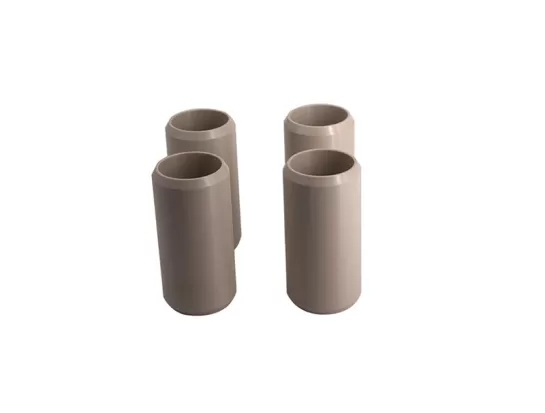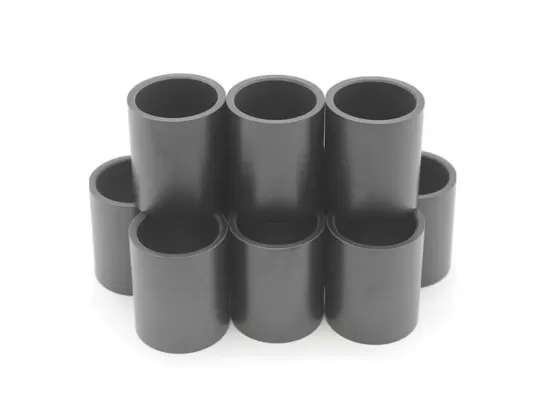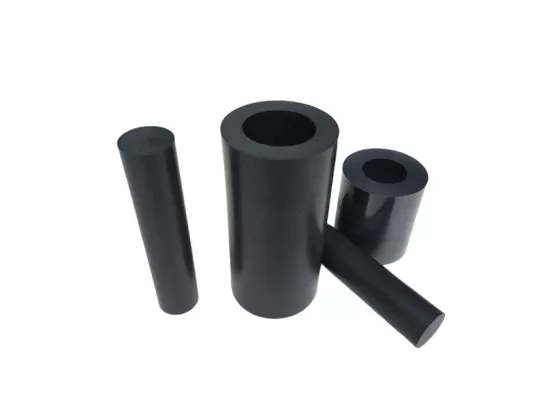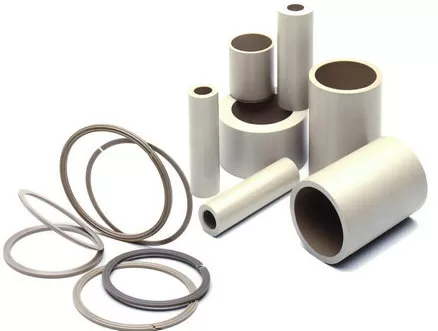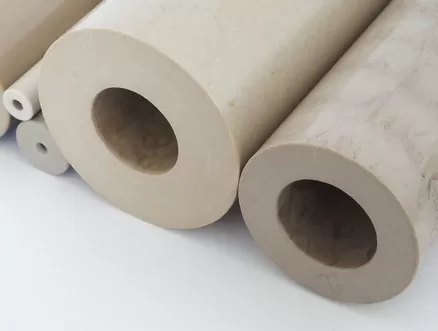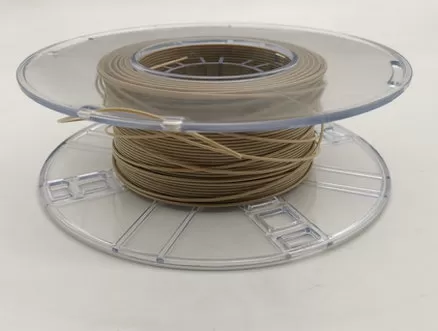

Professionals involved in PEEK part procurement and injection molding processes have likely considered using recycled material to reduce raw material costs. Virgin PEEK resin commands a premium price, and many processing facilities blend recycled edge trim and regrind pellets to lower per-part quoting. However, focusing only on the raw material price difference can easily obscure hidden downstream losses.
PEEKChina draws on real-world PEEK injection molding experience to objectively break down the cost-saving potential and production risks of recycled material.
Based on the Guangdong plastics raw material market, cleanly sorted, single-cycle recovered PEEK regrind can be priced 30%-45% lower than virgin PEEK resin. Multi-cycle regenerated mixed regrind offers an even larger price gap. Looking solely at the raw material procurement stage, blending regrind does quickly reduce per-part material expenditure - but this is only the surface-level accounting figure.
Here is a comparison reference:
Material Type | Unit Price Reduction | Application Limitations | Long-Term Comprehensive Loss |
Single-cycle clean runner regrind | ~30% | General thick-wall non-precision industrial parts | Slightly increased setup loss, minor yield decline |
Multi-cycle regenerated mixed regrind | 40%-45% | Only non-precision, non-cleanliness structural parts | Large dimensional variation, significant scrap rate increase |
Virgin PEEK | 0 | Semiconductor, medical, precision automation parts | Batch stability, low rework and downtime loss |
Most procurement teams only calculate the single-cycle raw material purchase price difference without accounting for hidden expenditures: defective part rework, production line downtime, customer claims, and premature product replacement. Over the long term, using recycled material can actually increase overall production costs.
1. Mechanical Property Degradation - Shortened Part Service Life
Each time PEEK goes through a high-temperature injection molding and re-pelletization cycle, its molecular chain undergoes degradation. Tensile and fatigue resistance decline progressively; after three recycling cycles, strength can drop 8%-12%. For automation equipment wear slides and guide bushings subject to continuous reciprocating motion, parts containing regrind can develop cracks and accelerated wear within months. In medical and semiconductor applications, fatigue failure of parts directly compromises equipment operational stability.
2. Dimensional Precision Loss - Batch Defects in Precision Assembly
High-end equipment PEEK parts typically require tolerances of ±0.01mm. Regrind contains internal impurities and inconsistent crystallinity between batches, causing large shrinkage variation after injection molding. Dimensional deviation within the same batch can exceed specifications. One equipment manufacturer in the Pearl River Delta reported that using regrind to produce wafer carrier pads resulted in height variation exceeding 0.03mm across parts from the same mold — assembly misalignment rendered the entire batch unusable, with all material and processing costs lost.
3. Impurity Release - Compliance and Quality Risks in High-End Industries
Regrind sorting cannot completely eliminate metal debris, other plastic contaminants, and processing lubricant residues. At high molding temperatures, trace metal ions and volatile small molecules are released. Semiconductor vacuum chamber parts made with regrind can generate particle contamination on wafers. Medical device parts containing recycled material cannot pass biocompatibility testing and are unsuitable for sterilization or direct-contact instrument components, failing industry material selection standards.
4. Increased Molding Defects - Setup Adjustment and Scrap Cost Escalation
Regrind flow properties are unstable, leading to bubbles, weld lines, and black specks during injection molding. This requires frequent temperature and pressure parameter adjustments, extending production cycles. Contaminants clog fine mold flow channels, necessitating frequent mold cleaning stops that compress effective capacity and drive up labor and equipment overhead costs.
Limited regrind use acceptable (clean runner regrind, ratio controlled within 10%):
General automation equipment thick-wall support blocks
Industrial protective blocks with no cleanliness or precision requirements
Applications without sustained high-temperature cycling or precision assembly needs
Regrind strictly prohibited:
Semiconductor equipment: Wafer transfer, vacuum chambers, insulation isolation precision parts with hard requirements for low outgassing and low particulate
Medical devices: Surgical instruments, diagnostic equipment functional parts requiring cleanliness and repeated sterilization resistance
Aerospace and high-precision inspection tooling: Long-term thermal cycling with stringent dimensional stability and creep resistance requirements
Q1: Is it risky to grind and reuse clean PEEK runners from our own molds?
A1: If your runners are free of other plastic contamination, small-batch single-cycle blending carries relatively low risk. However, performance still degrades after multiple cycles. Precision parts should not use regrind. General industrial parts can use controlled ratios with added drying and filtration steps before production.
Q2: Our client has a limited budget and wants low-cost PEEK parts. Beyond regrind, what reliable alternatives exist?
A2: Source virgin standard-grade material directly from the manufacturer. Optimize mold cooling and gate design to reduce runner waste and improve yield, lowering overall per-part cost. Dongguan Chenghe Plastic Mold Co., Ltd. relies on bulk direct raw material procurement combined with integrated mold-and-molding processes to improve per-part cost efficiency without using any recycled material.
Q3: If a supplier doesn't disclose whether regrind is blended in, how can you tell?
A3: If parts within the same batch show color variation, black specks, or micro-bubbles, and dimensional changes are significant after thermal cycling, recycled material is likely present. Reputable suppliers can provide COA (Certificate of Analysis) test reports for each raw material batch, enabling grade traceability.
To control production costs without relying on regrind to compress raw material unit prices, industry-proven optimization approaches are better suited for high-end manufacturing clients:
Direct raw material sourcing model: Eliminates distributor markups, stabilizes virgin material procurement costs
Upfront mold design optimization: Reduces runner waste generation, lowers material waste
Temperature- and humidity-controlled dedicated PEEK injection molding lines: Stabilizes yield rates, reduces scrap losses
Integrated mold-and-molding processes: Improves overall per-part cost efficiency without recycled material
PEEKChina leverages bulk direct raw material procurement and integrated mold-and-molding processes to optimize per-part cost without using recycled material - delivering both cost efficiency and quality assurance for precision PEEK applications.
Copyright © PEEKCHINA | Taizhou Ark International Trade Co.,Ltd. All Rights Reserved |
Sitemap
| Powered by



 EN