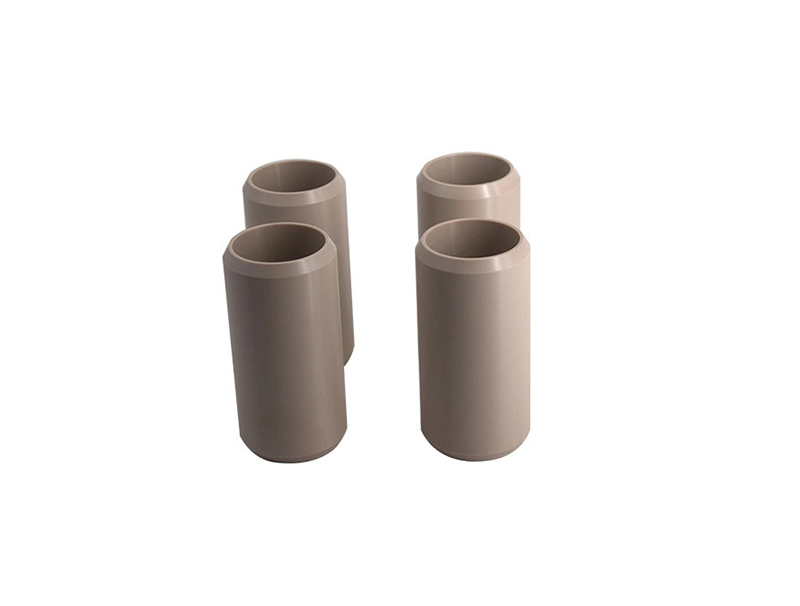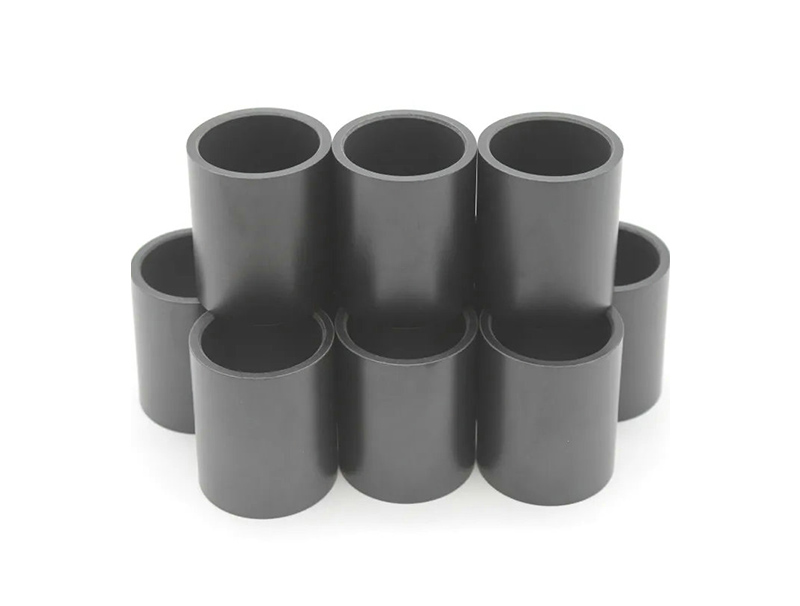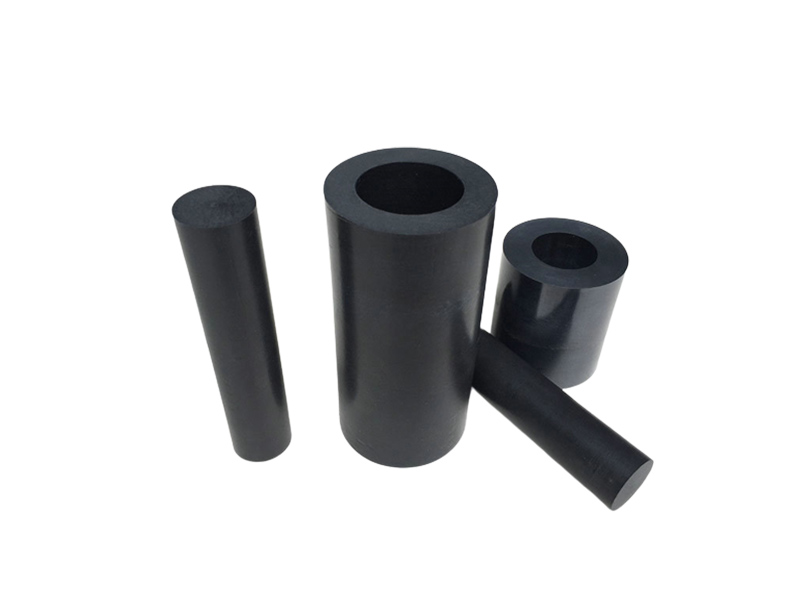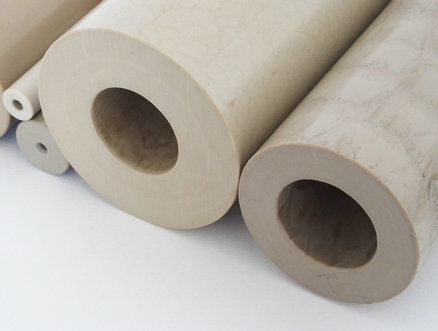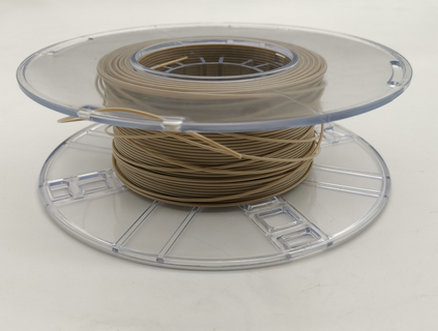
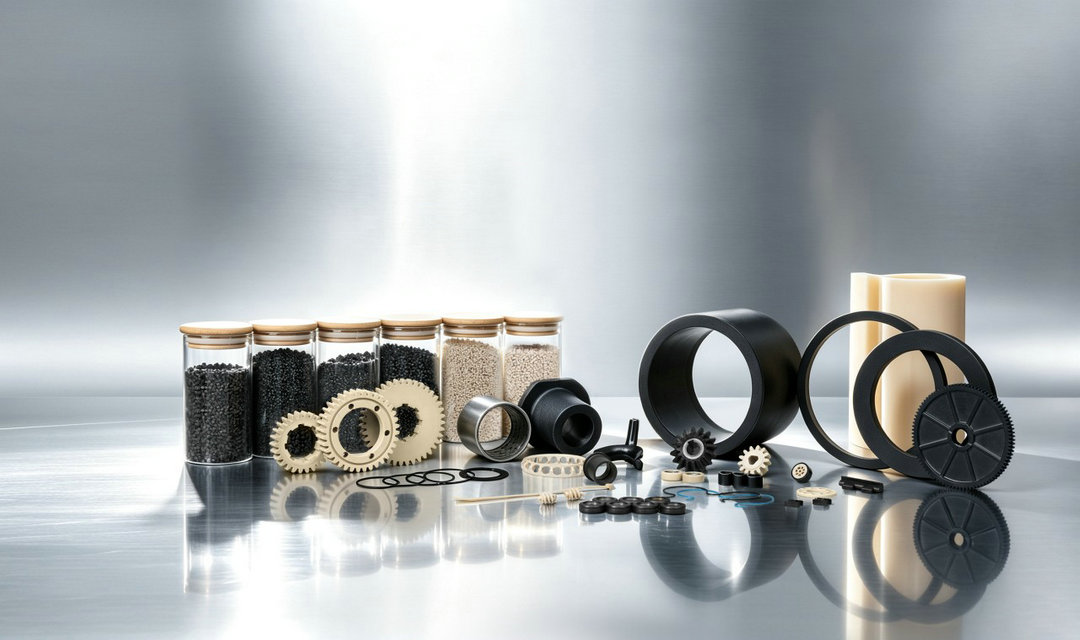
High-performance polymer materials are essential foundations of modern advanced manufacturing, with broad application prospects in aerospace, high-end equipment, biomedical, and new energy vehicle sectors. As equipment manufacturing moves toward lightweight, high-strength, and extreme-environment-resistant directions, traditional engineering plastics can no longer meet complex operational requirements. Among polyaryletherketone materials, Polyether Ether Ketone (PEEK) has emerged as a widely used representative, prized for its excellent heat resistance, corrosion resistance, wear resistance, and mechanical properties.
PEEK is a semi-crystalline thermoplastic polymer whose molecular backbone consists of alternating ether bonds (—O—) and ketone groups (—CO—), which together give the material high thermal stability and mechanical performance. However, pure PEEK still suffers from relatively low elastic modulus, insufficient rigidity, and limited load-bearing capacity, restricting its use in high-load, high-stiffness structural applications.
To address these limitations, fiber reinforcement has become one of the most mature and widely applied modification methods. Based on fiber length, fiber-reinforced PEEK can be classified into three categories:
Short fiber reinforced PEEK — mature processing, high injection molding efficiency, low cost, already in large-scale industrial application
Long fiber reinforced PEEK — intermediate performance between short and continuous fiber
Continuous fiber reinforced PEEK — builds a continuous load-bearing skeleton, increasingly important in aerospace and high-end equipment
The most commonly used reinforcing fibers are carbon fiber (CF) and glass fiber (GF).
Fibers inherently possess high modulus and high strength, which directly enhance the mechanical performance of the composite. Consider the following comparison:
Material | Tensile Strength (MPa) | Elastic Modulus (GPa) |
PEEK (pure) | ~100 | ~3.6 |
Carbon Fiber | 3,500–6,000 | 230–600 |
Glass Fiber | 3,100–3,800 | 72–76 |
Since reinforcing fibers have stiffness and strength far exceeding those of the PEEK matrix, the composite's elastic modulus can be significantly improved when fibers are uniformly distributed and well-bonded at the interface, as predicted by the Rule of Mixtures.
Fibers interact with the matrix at the interface to effectively transfer external loads to the fibers, thereby improving the overall strength and modulus of the composite. Good adhesion between the fiber and PEEK matrix is the foundation of the reinforcement effect, and the strain-rate sensitivity of interface strength significantly affects the composite's failure behavior.
Comparative studies of SCFR-PEEK (short carbon fiber reinforced) and SGFR-PEEK (short glass fiber reinforced) under dynamic and quasi-static loading reveal that:
Both composites show improved tensile strength compared to pure PEEK
SCFR-PEEK achieves higher tensile strength under both quasi-static and dynamic loading
SGFR-PEEK shows higher tensile failure strain (better ductility)
This difference arises because carbon fiber has higher stiffness while glass fiber has greater toughness. SEM fracture analysis shows that pulled-out fibers are covered with substantial PEEK matrix material, creating rough fiber surfaces — indicating that the interface layer is strengthened under dynamic loading.
PEEK is a semi-crystalline polymer, and its interfacial crystallization behavior directly affects the composite's mechanical properties and interface bonding strength. Carbon fiber's surface graphite lattice structure can induce PEEK molecular chains to align directionally and form transcrystalline structures, increasing crystallinity in the interface region and enhancing interfacial bonding. Glass fiber, lacking a similar lattice structure, has relatively weaker crystallization-inducing ability.
Research findings on crystallization at different temperatures:
At 250°C: PEEK forms spherulites up to 100 µm in radius; crystalline fibers (carbon fiber) show strong transcrystalline nucleation ability
At 200°C: PEEK still nucleates on fiber surfaces, but dense transcrystalline structures cannot form due to competing matrix self-nucleation
At 150°C: Matrix self-nucleation becomes so severe that it is difficult to distinguish whether transcrystalline structures form on fiber surfaces
This confirms that both fiber type and crystallization process conditions influence PEEK's interfacial structure and, consequently, the composite's overall performance.
PEEK's interfacial crystallization behavior is closely related to wetting performance. Due to PEEK's high melt viscosity and the low surface energy of untreated carbon fibers, poor wetting between the two can create micro-voids or defects at the interface. Under external loading, these defects become stress concentration points, leading to interface debonding, fiber pull-out, and reduced mechanical performance.
Current methods to improve CF/PEEK interface performance include:
Oxidation treatment — increases surface roughness and introduces oxygen-containing functional groups (hydroxyl, carboxyl) to improve surface activity
Plasma treatment — low-temperature plasma treatment has become a research hotspot as it does not significantly damage the carbon fiber's bulk properties
Chemical grafting — creates chemical bonds between fiber and matrix
Sizing agents — specialized sizing agents improve compatibility between carbon fiber and PEEK matrix
Studies show that sized carbon fibers bond more tightly with the resin matrix compared to bare fibers, with most fibers fully encapsulated by the matrix — forming an integrated structure that demonstrates stronger interfacial performance in micro-debonding tests.
Continuous fiber reinforced PEEK is becoming a major research focus. Compared to short fiber systems, continuous fibers form a complete load-bearing skeleton, significantly improving specific strength, specific stiffness, and fatigue resistance. Combined with advanced manufacturing technologies such as Automated Fiber Placement (AFP), hot press forming, and Fused Deposition Modeling (FDM), continuous fiber PEEK composites enable integrated manufacturing of complex structural parts.
Additive manufacturing is also driving PEEK composite research forward. By optimizing printing temperature, interlayer bonding, and fiber layup patterns, internal porosity and interlayer bonding quality can be further improved.
Fiber reinforcement significantly improves PEEK's mechanical and functional performance through multiple mechanisms:
High intrinsic fiber mechanical properties
Effective load transfer through interface interaction
Interface bonding enhancement
Induced crystallization (especially carbon fiber-induced transcrystalline structures)
Crack deflection and bridging
Carbon fiber reinforced systems offer higher strength and stiffness, while glass fiber reinforced systems provide better toughness — each suited to different application scenarios. Fiber surface modification and interface control have decisive impacts on composite performance. As continuous fiber technology, interface modification, and additive manufacturing continue to advance, fiber-reinforced PEEK composites will play increasingly important roles in aerospace, high-end equipment, biomedical implants, and new energy vehicles.
Copyright © PEEKCHINA | Taizhou Ark International Trade Co.,Ltd. All Rights Reserved |
Sitemap
| Powered by



 EN