Wear resistance is one of the most critical performance parameters when selecting materials for bearings, bushings, seals, valve components, and dynamic mechanical parts. Polyether ether ketone (PEEK) is widely recognized as a high-performance thermoplastic with excellent mechanical strength, chemical resistance, and thermal stability. However, when subjected to continuous sliding or high PV (pressure × velocity) conditions, the wear behavior of PEEK depends heavily on its formulation.
This article provides an in-depth analysis of PEEK wear resistance, explains the fundamental wear mechanisms, and highlights how advanced composite grades such as ARKPEEK-CF30 and ARKPEEK-MOD significantly enhance wear performance in demanding applications.
Wear resistance refers to a material’s ability to resist material loss caused by friction, abrasion, or repeated mechanical contact. In polymer systems like PEEK, wear behavior is governed by several interacting factors:
Mechanical strength and hardness
Ability to form a stable transfer film
Thermal conductivity at the contact interface
Compatibility with the mating surface
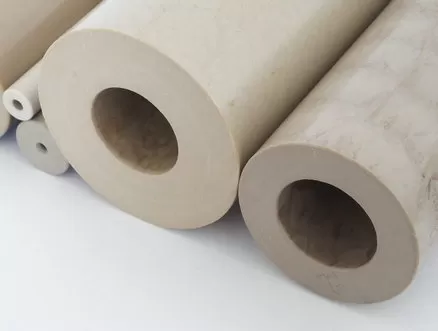
PEEK's semi-crystalline molecular structure gives it good intrinsic wear resistance compared with many engineering plastics, but unfilled PEEK is not always sufficient for long-term sliding applications.
Neat (unfilled) PEEK offers:
Good dimensional stability
Moderate coefficient of friction
Stable performance at elevated temperatures
However, under dry sliding or high-load conditions, unfilled PEEK can exhibit relatively higher wear rates. For applications involving continuous motion, engineers often turn to reinforced or modified PEEK grades to extend service life and reduce maintenance requirements.
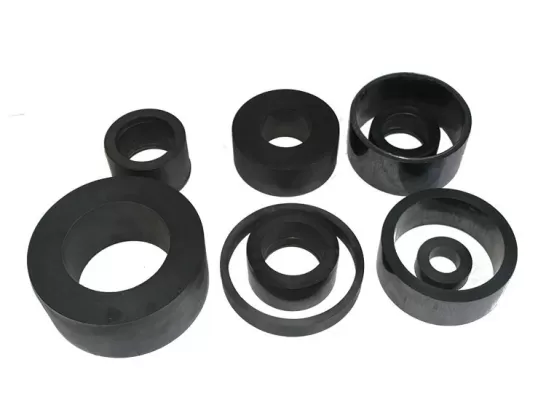
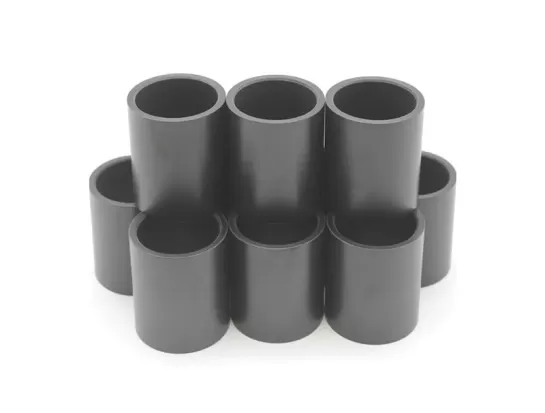
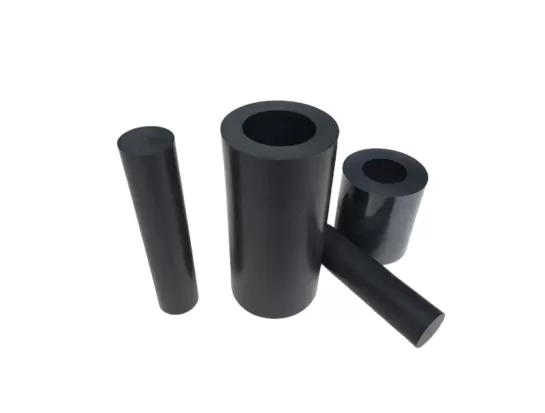
ARKPEEK-CF30 is a PEEK composite reinforced with 30% carbon fiber, designed specifically to improve wear resistance and load-bearing capability.
Significantly reduced wear rate compared to unfilled PEEK
Higher stiffness and compressive strength, ideal for high PV conditions
Improved thermal conductivity, allowing heat to dissipate more efficiently from the sliding interface
Excellent dimensional stability, reducing deformation that can accelerate wear
In tribological systems where structural rigidity is essential — such as thrust washers, bearing cages, valve seats, and robotic joint components — ARKPEEK-CF30 delivers consistent wear performance and long service life.
Note: Because carbon fibers can be abrasive to softer mating surfaces, ARKPEEK-CF30 is best paired with hardened metals or ceramic counterfaces.
While carbon fiber reinforcement improves strength and wear resistance, friction reduction is equally important. This is where ARKPEEK-MOD excels.
ARKPEEK-MOD is a tribologically optimized PEEK compound containing solid lubricants such as PTFE, graphite, and other wear-reducing additives.
Ultra-low wear rates under dry sliding conditions
Reduced coefficient of friction, minimizing heat generation
Stable transfer film formation, protecting both the PEEK component and the mating surface
Smooth running behavior, ideal for precision and low-noise systems
ARKPEEK-MOD is particularly well suited for:
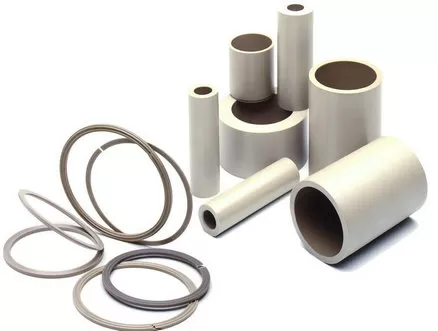
Sliding bearings and bushings
Sealing rings and wear rings
Pump and valve components
Medical and analytical instrument parts requiring clean, stable wear behavior
Compared with carbon-fiber-only grades, ARKPEEK-MOD prioritizes friction control and surface protection, making it ideal for continuous sliding applications.
| Property | ARKPEEK-CF30 | ARKPEEK-MOD |
| Primary wear advantage | High load & structural wear resistance | Ultra-low wear & low friction |
| Reinforcement type | 30% carbon fiber | Solid lubricants (PTFE, graphite, etc.) |
| Best for | High PV, rigid components | Continuous sliding, low friction systems |
| Counterface sensitivity | Requires harder mating materials | Gentle on mating surfaces |
In many complex systems, both grades may be used in different locations depending on load and motion requirements.
Both ARKPEEK-CF30 and ARKPEEK-MOD retain excellent wear performance across a wide temperature range. PEEK’s inherent thermal stability allows continuous operation up to approximately 250°C, making these materials suitable for harsh industrial environments, including chemical processing, aerospace, and high-temperature automation equipment.
Humidity, lubrication, and surface finish of the mating part can further influence wear behavior and should be evaluated during material selection.
Wear resistance of PEEK composites is commonly evaluated using pin-on-disk or ball-on-disk testing. When comparing wear data, it is essential to ensure identical test conditions, including:
Load and speed
Counterface material
Surface roughness
Environmental conditions
ARKPEEK-CF30 and ARKPEEK-MOD consistently demonstrate superior wear performance compared with unfilled PEEK under equivalent test parameters.
PEEK is a strong foundation material for wear-resistant applications, but composite engineering unlocks its full tribological potential.
ARKPEEK-CF30 offers outstanding wear resistance under high loads and demanding mechanical conditions.
ARKPEEK-MOD delivers exceptional low-wear and low-friction performance for continuous sliding systems.
By selecting the right ARKPEEK grade based on load, motion, and counterface requirements, engineers can significantly extend component life, reduce downtime, and improve overall system reliability.
Copyright © PEEKCHINA | Taizhou Ark International Trade Co.,Ltd. All Rights Reserved |
Sitemap
| Powered by



 EN
EN