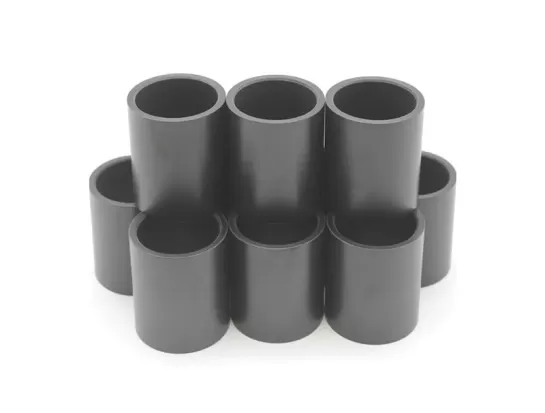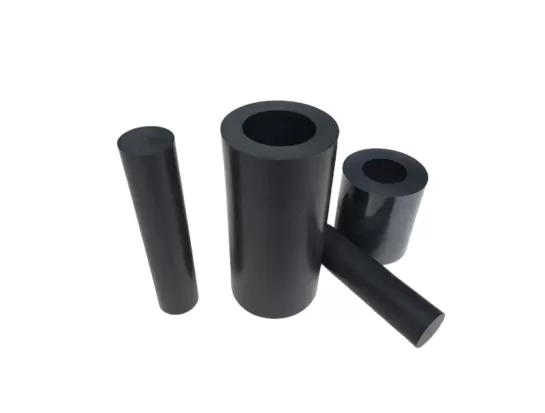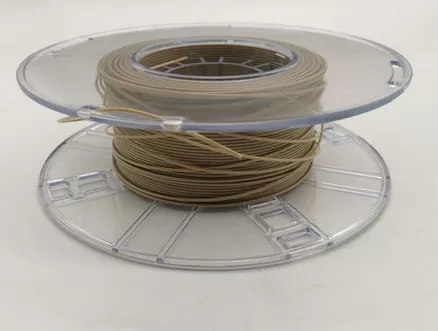
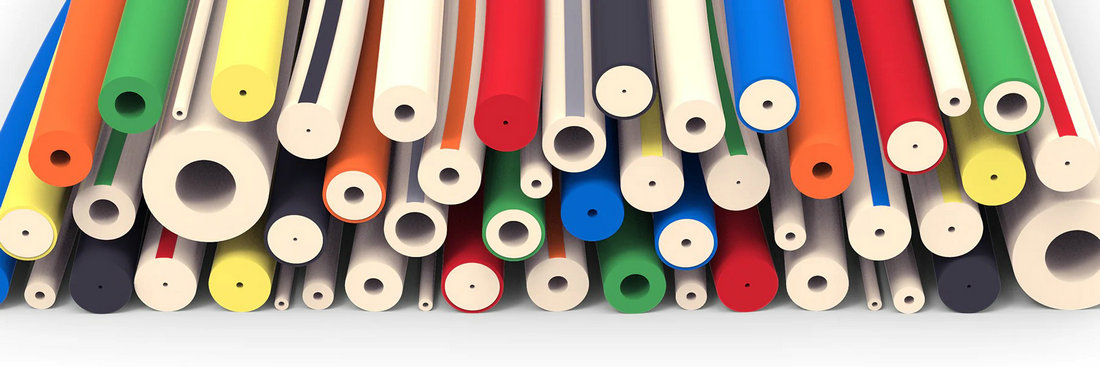
In high-performance industries, material selection determines system reliability, chemical compatibility, and long-term cost efficiency. PEEK tubing has become a preferred solution in analytical instrumentation and advanced industrial machining due to its exceptional thermal stability, chemical resistance, and mechanical strength.
This guide explains the two major categories of PEEK tubing:
Small-diameter precision tubing for HPLC and analytical instruments
Large-diameter custom tubing for machining applications
Whether you are sourcing 1/16" capillary tubing or thick-wall extruded tubes for CNC processing, this article provides a technical and procurement-focused overview tailored for B2B buyers.
PEEK (Polyether Ether Ketone) is a high-performance engineering thermoplastic widely used in demanding environments. Compared to PTFE or stainless steel tubing, PEEK offers a unique combination of:
Continuous use temperature up to 260°C (500°F)
Excellent chemical resistance
High pressure tolerance
Outstanding dimensional stability
Low extractables and low metal ion contamination
Lightweight alternative to metal tubing
Because of these properties, PEEK tubing is commonly used in analytical chemistry, medical systems, semiconductor manufacturing, oil & gas, and aerospace components.
Small-diameter PEEK tubing is primarily used in:
High-performance liquid chromatography (HPLC)
UHPLC systems
Chromatography instruments
Microfluidic systems
Laboratory diagnostic equipment
In these applications, tubing must maintain precise internal diameters, withstand high pressures, and avoid contamination of sensitive samples.
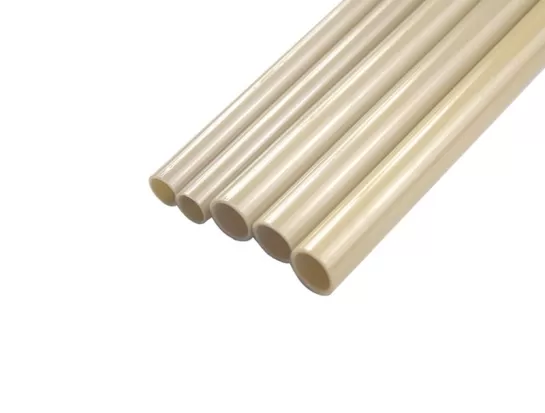
The most common configuration:
Outer Diameter (OD): 1/16"
Inner Diameter (ID): 0.005" – 0.040"
Ultra-smooth inner bore
Tight dimensional tolerance
Compatible with standard HPLC fittings
Popular search terms in this segment include:
1/16 PEEK tubing
HPLC PEEK tubing
PEEK capillary tubing
High pressure PEEK tubing
Low dead volume tubing
Depending on ID and wall thickness, 1/16" PEEK tubing can withstand:
5,000 – 10,000 psi (application dependent)
Suitable for UHPLC high-pressure systems
Smaller internal diameters provide higher pressure resistance, making them ideal for modern analytical systems operating at extreme pressures.
PEEK tubing provides several advantages in analytical applications:
Metal-free fluid path (no ion leaching)
Excellent compatibility with aggressive solvents
Reduced sample adsorption
Lightweight and flexible
Easier installation and cutting
For laboratories concerned with trace metal contamination, PEEK is often the preferred alternative to stainless steel.
While capillary tubing dominates laboratory use, large-diameter PEEK tubing serves a completely different industrial market.
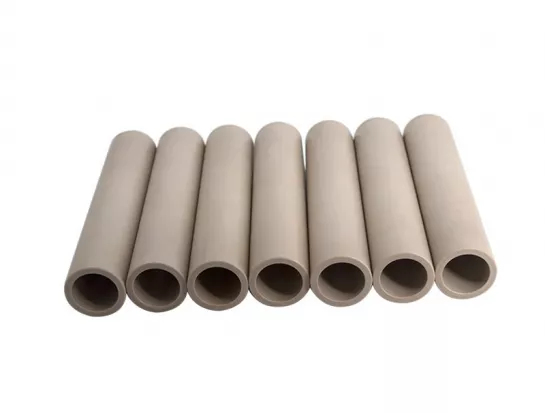
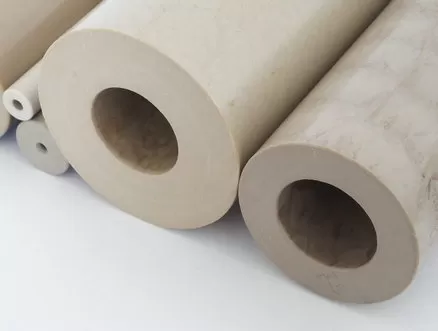
These tubes are typically:
Custom OD and ID
Thick wall construction
Available in natural, black, or reinforced grades
Supplied for CNC machining into finished components
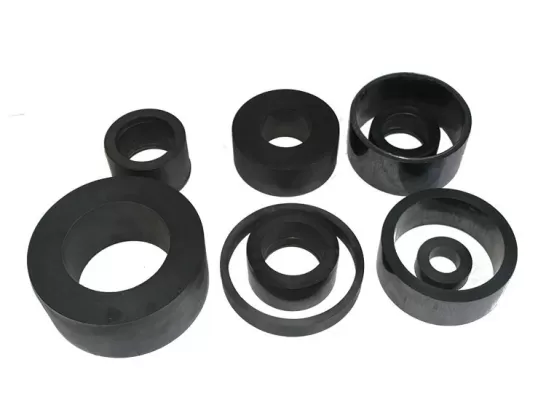
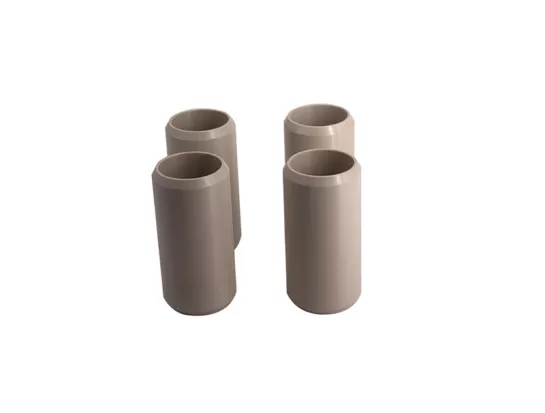
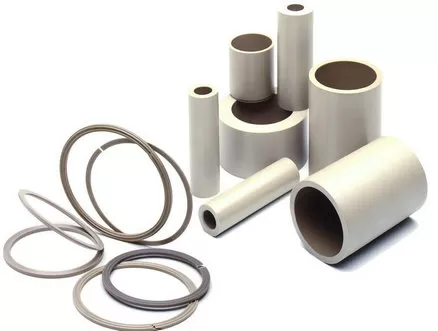
Instead of fluid transfer, these tubes are often machined into:
Rings
Bushings
Sleeves
Seals
Structural components
Large PEEK tubes are widely used in:
Semiconductor manufacturing
Oil & Gas systems
Medical device components
Aerospace structures
Robotics and automation
For example, aerospace and medical OEMs often specify PEEK due to its high strength-to-weight ratio and thermal stability.
Depending on load requirements, machining-grade tubing may include:
Carbon fiber reinforced PEEK (CF30)
Glass fiber reinforced PEEK (GF30)
Modified wear-resistant PEEK grades
Reinforced tubing offers:
Increased stiffness
Lower thermal expansion
Improved wear resistance
Higher mechanical strength
This makes large-diameter PEEK tubing suitable for high-load mechanical environments.
For B2B buyers, customization is often more important than material properties alone.
Typical supplier capabilities include:
Custom OD/ID extrusion
Precision tolerance control
Cut-to-length service
CNC machining support
Small batch and mass production
Global export packaging
Unlike commodity plastics, PEEK tubing often requires engineering consultation to optimize wall thickness, mechanical strength, and machinability.
| Property | PEEK Tubing | PTFE Tubing |
| Max Temperature | 260°C | 200°C |
| Mechanical Strength | Very High | Low |
| Pressure Resistance | Excellent | Moderate |
| Wear Resistance | High | Low |
| Structural Machining | Yes | Limited |
While PTFE remains suitable for low-pressure chemical transfer, PEEK is preferred in high-pressure, structural, and load-bearing applications.
When selecting PEEK tubing, consider:
Application type (fluid transfer vs machining)
Required pressure rating
Operating temperature
Chemical exposure
Tolerance requirements
Reinforcement needs
Regulatory requirements (medical / semiconductor)
Technical consultation is strongly recommended for high-pressure analytical systems and load-bearing mechanical parts.
A reliable supplier should provide:
Extensive stock of 1/16" HPLC tubing
Custom large-diameter extrusion capability
Reinforced PEEK options
Technical material data sheets
Stable global supply chain
Engineering support
As global demand for high-performance polymers grows, working with a specialist ensures consistency in material quality and dimensional accuracy.
PEEK tubing is not a single product category - it serves two distinct markets:
Precision small-diameter capillary tubing for HPLC and analytical systems
Large-diameter custom tubing for CNC machining and industrial applications
By understanding the performance requirements of each segment, engineers and procurement managers can select the optimal solution for reliability, durability, and long-term cost efficiency.
If you are sourcing 1/16" HPLC PEEK tubing or require custom large-diameter PEEK tubes for machining, partnering with an experienced manufacturer ensures both technical performance and supply stability.
Copyright © PEEKCHINA | Taizhou Ark International Trade Co.,Ltd. All Rights Reserved |
Sitemap
| Powered by



 EN
EN