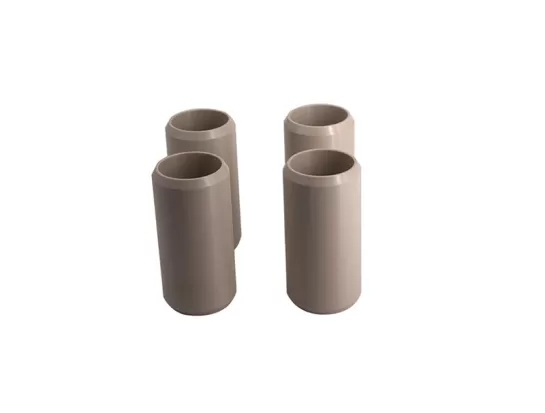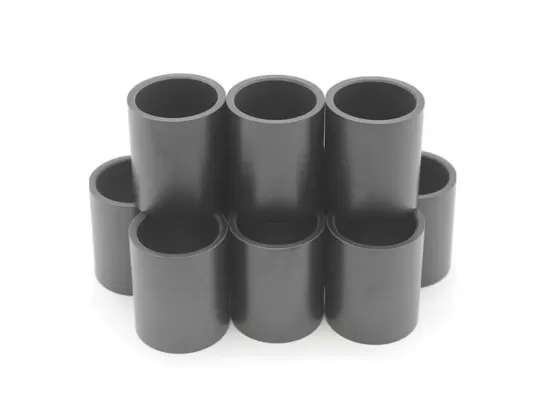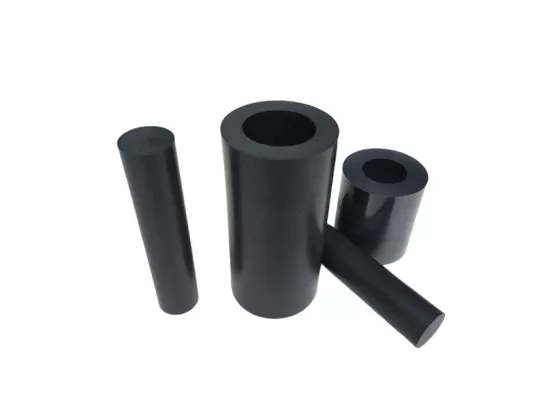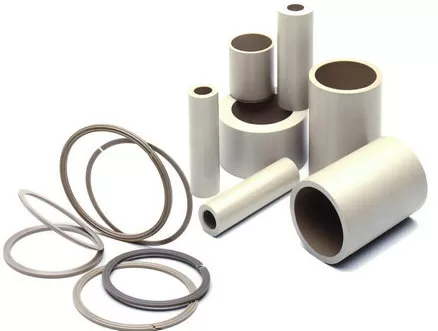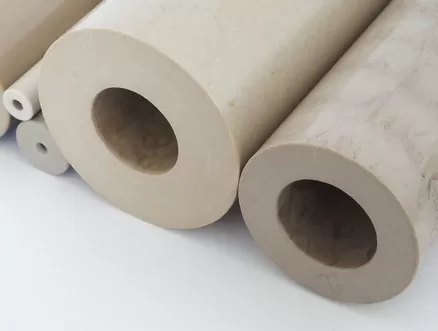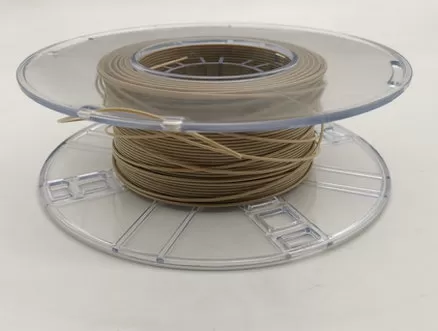
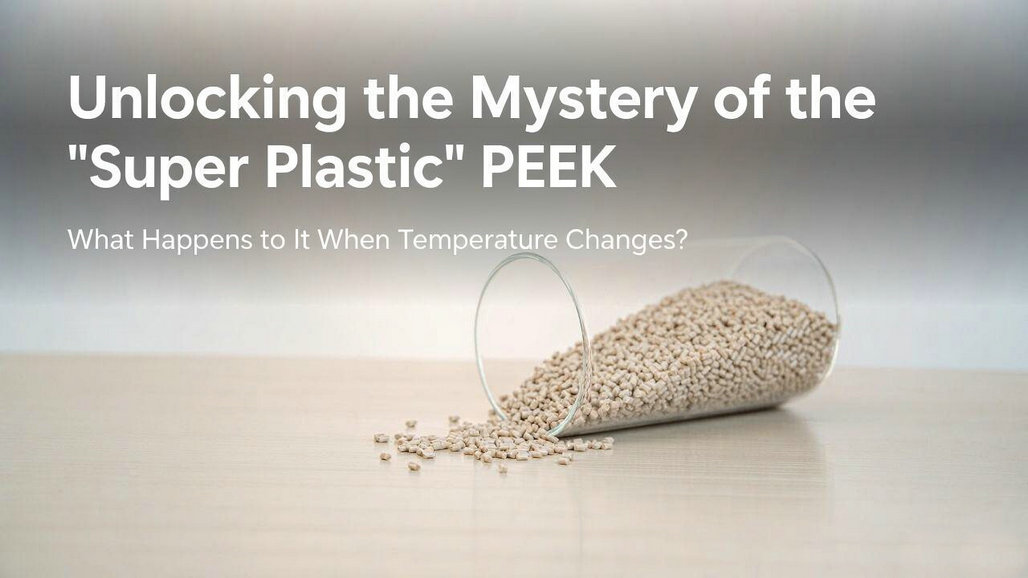
In the world of materials science, polyether ether ketone (PEEK) is widely regarded as the "king" of polymers. Thanks to its outstanding heat resistance, mechanical strength, and biocompatibility, this high-performance material is used everywhere from aerospace and automotive to human implants such as orthopedic and dental devices.
Yet even a material this remarkable changes its behavior noticeably as temperature rises. Today, let's take a closer look at how PEEK's "personality" evolves across different temperatures.
When ambient temperature rises but has not yet reached PEEK's melting point, the material undergoes a process similar to "crystal growth and enlargement."
Molecular rearrangement: At higher temperatures, PEEK molecular chains gain energy and become more active. They rearrange into larger, more perfect crystal structures.
A dramatic shift in properties: This directly increases the material's stiffness. Although the material remains elastic, as the crystal structure matures it becomes harder and stronger.
The key to processing: This characteristic is especially important in additive manufacturing such as 3D printing. By precisely controlling the cooling process, scientists can use this thermal history to deliberately tune the material's microstructure, producing unique composite materials tailored to specific needs.
For PEEK, 250 °C is an extremely critical physical threshold.
Conventional cooling behavior: Normally, as temperature rises, PEEK's mechanical properties gradually decline. Above 150 °C—past the glass transition temperature—material stiffness drops noticeably.
The special 250 °C phenomenon: However, as the temperature climbs further toward 250 °C, certain PEEK properties show an unusually steep decline. This marks a violent transition from solid-state behavior toward melt-state behavior.
Although PEEK changes at high temperatures, in medical applications it stays remarkably "calm."
Adapted to body temperature: The human body sits at about 37 °C, far below PEEK's glass transition temperature. In this range, PEEK behaves like a rigid solid, with a very stable physical form.
Handling sudden events: Even in situations such as joint replacement, where frictional heat or impact may occur, PEEK maintains relatively stable mechanical performance and will not soften or fail from minor temperature fluctuations. This is one of the key reasons it is a preferred material for long-term implants.
PEEK not only withstands heat; it also handles extreme physical impact.
Ultra-high strain-rate testing: Scientists conducted an extreme test, ramping the strain rate (the speed of material deformation) from an extremely slow 10⁻⁴ s⁻¹ (similar to slowly squeezing putty) up to a very high 10⁴ s⁻¹ (similar to a high-speed impact).
Stronger the harder it's hit? The results showed that under this extreme compression, PEEK's yield strength increased by about 30%.
Microscopic explanation: Under instantaneous high pressure, the crystal structure inside PEEK does not have time to slip; instead, a "strain hardening" effect occurs, making the material abnormally hard in an instant and able to bear greater force without fracturing.
Even at extremely high strain rates, PEEK's yield strength can increase by about 30%. This is because PEEK's crystalline chains can respond rapidly under instantaneous loading. As with other polymers, raising the strain rate in PEEK is similar to lowering the temperature, producing a stiffer, more elastic response and a lower elongation at break. The microstructure also influences the response of PEEK under high strain rates and large deformation. Such loading can create many interesting micro- and macro-scale thermomechanical phenomena.
Polyether ether ketone (PEEK) is far from an ordinary plastic. It can adapt to its environment at high temperatures by changing its internal structure, remain absolutely stable at room temperature, and even display the counterintuitive trait of becoming harder under pressure. These exquisite thermodynamic and mechanical properties make PEEK an indispensable strategic material in modern industry and high-tech medicine.
Copyright © PEEKCHINA | Taizhou Ark International Trade Co.,Ltd. All Rights Reserved |
Sitemap
| Powered by



 EN