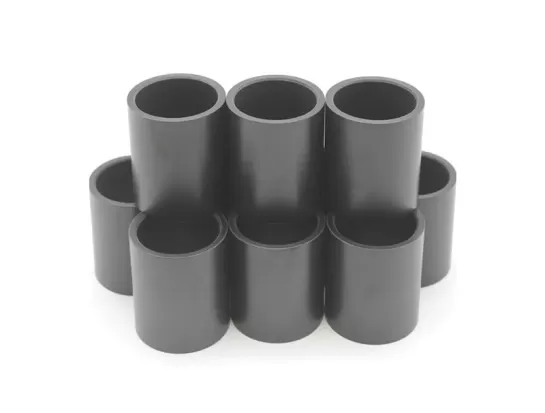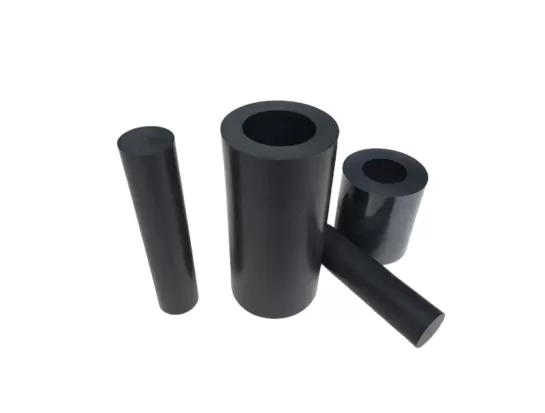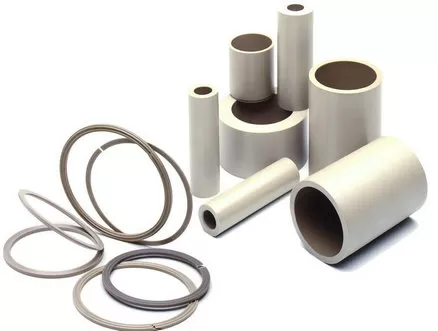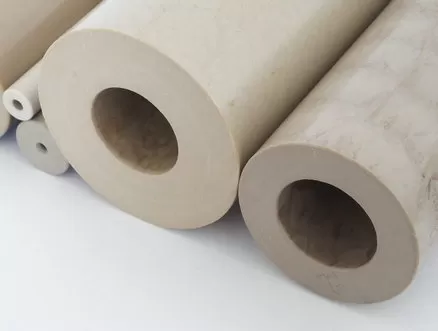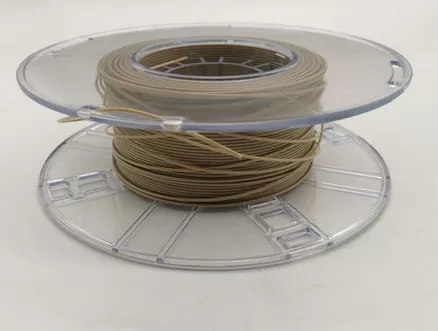
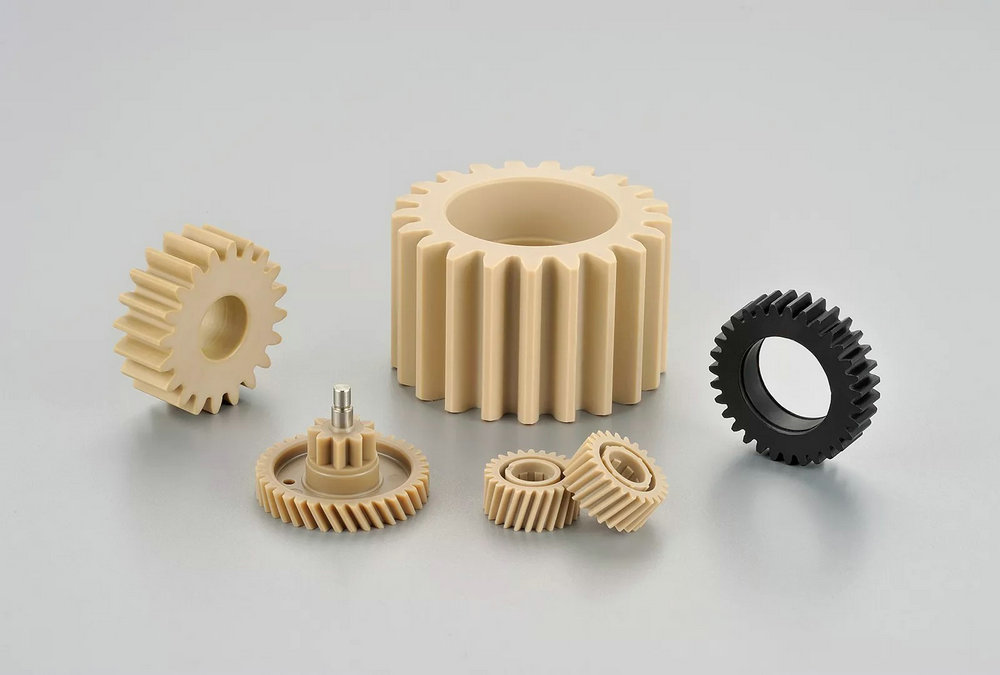
Polyether ether ketone (PEEK) is a high-performance, semi-crystalline thermoplastic widely used in aerospace, medical, semiconductor, automotive, and analytical instrumentation applications. Among the many material parameters used to evaluate PEEK, Melt Flow Rate (MFR) and Elongation at Break are two of the most important indicators of processability, molecular structure, and mechanical behavior.
This article explains how PEEK MFR values are measured, how they vary across commercial grades, and how they relate to elongation at break and crystallinity. ARKPEEK-1000 is used as a representative example of a low-flow, high-molecular-weight PEEK grade.
Melt Flow Rate (MFR) measures the amount of molten polymer that flows through a standardized capillary under defined temperature and load conditions within 10 minutes.
It is expressed as g/10 min.
For PEEK, MFR is typically measured under high-temperature conditions due to its high melting point, most commonly:
380°C / 5 kg
400°C / 2.16 kg
The reported MFR value is entirely dependent on the test condition and standard used (ISO 1133 or ASTM D1238). Therefore, MFR values must always be compared under identical test conditions.
PEEK grades show an exceptionally wide MFR range, reflecting differences in molecular weight and intended processing method.
These grades exhibit low MFR and high melt viscosity, making them ideal for applications requiring maximum toughness, impact resistance, and fatigue performance.
Typical MFR range: 8 – 15 g/10 min (380°C / 5 kg)
Example industry reference:
A well-known low-flow PEEK grade shows an MFR of approximately 8.5 g/10 min at 380°C / 5 kg
Key characteristics:
High molecular weight
Excellent elongation and toughness
Preferred for extrusion, compression molding, and structural parts
High-flow PEEK grades are designed for injection molding of thin-walled or complex geometries.
Typical MFR range: 50 – 140+ g/10 min (380°C / 5 kg)
Example industry reference:
A high-flow injection molding grade may reach ~75 g/10 min under the same test condition
Key characteristics:
Lower melt viscosity
Improved mold filling
Reduced toughness and impact resistance compared to low-flow grades
Across the market, commercial PEEK materials can range from:
~8 g/10 min (very low flow, ultra-high molecular weight)
To >140 g/10 min (very high flow, low molecular weight)
This wide spectrum allows engineers to select PEEK grades precisely matched to processing method and performance requirements.
ARKPEEK-1000 is a 100% virgin, unfilled PEEK grade positioned in the low-flow, high-molecular-weight category.
MFR = 10 g/10 min
This value places ARKPEEK-1000 very close to classic low-flow structural PEEK grades.
High melt viscosity
Strong molecular entanglement
Excellent mechanical integrity
Optimized for:
Extrusion
Compression molding
Injection molding of mechanically demanding parts (with appropriate tooling)
ARKPEEK-1000 prioritizes toughness and durability over extreme flowability.
Elongation at break is the percentage strain a material experiences before fracture in a tensile test. It is one of the most important indicators of ductility and toughness.
In PEEK, elongation at break is governed primarily by:
Molecular weight
Degree of crystallinity
Thermal history and processing conditions
Presence or absence of fillers
Typical range: 30% – 50%
Ductile failure behavior
High resistance to cracking and fatigue
Glass fiber reinforced PEEK: ~2% – 5%
Carbon fiber reinforced PEEK: ~1.5% – 4%
Reinforcement dramatically increases stiffness but significantly reduces elongation and toughness.
For ARKPEEK-1000, elongation at break is:
30% – 50%, depending on degree of crystallinity
As a semi-crystalline polymer, PEEK’s mechanical response is highly sensitive to crystallinity:
Lower crystallinity
Higher elongation
Greater toughness
Better impact resistance
Higher crystallinity
Lower elongation
Higher stiffness
Improved dimensional and thermal stability
Processing parameters such as cooling rate, mold temperature, and post-annealing directly influence crystallinity and therefore elongation performance.
MFR and elongation at break are both indirect indicators of molecular weight, but they influence performance differently:
Lower MFR (higher molecular weight)
Higher elongation
Better toughness
Higher impact resistance
Higher MFR (lower molecular weight)
Easier processing
Higher stiffness and strength
Reduced elongation and toughness
ARKPEEK-1000, with MFR = 10 and elongation up to 50%, represents a balanced high-performance structural PEEK grade.
PEEK materials with low MFR and high elongation, such as ARKPEEK-1000, are commonly used in:
Medical device components
Analytical and fluid handling parts
Semiconductor processing equipment
Aerospace structural components
High-load mechanical parts
Electrical insulation and connectors
These applications demand long-term reliability, fatigue resistance, and mechanical stability.
Melt Flow Rate (MFR) and Elongation at Break are two of the most critical parameters when selecting a PEEK material.
MFR defines processing behavior and molecular weight level
Elongation at break reflects ductility, toughness, and structural resilience
With an MFR of 10 g/10 min and an elongation at break of 30%–50% depending on crystallinity, ARKPEEK-1000 is a representative low-flow, high-molecular-weight PEEK grade optimized for demanding engineering applications where toughness and durability are essential.
Copyright © PEEKCHINA | Taizhou Ark International Trade Co.,Ltd. All Rights Reserved |
Sitemap
| Powered by



 EN
EN