In high-precision industries such as semiconductors, medical devices, and analytical instrumentation, component assembly resembles the inner workings of a fine mechanical watch. Even the smallest dimensional deviation can lead to performance failure. This raises a key question frequently asked by engineers and product designers:
How precise can PEEK injection moulding really be?
While tolerance figures such as ±0.02 mm to ±0.05 mm are often quoted, these numbers alone do not tell the full story. In practice, PEEK injection moulding precision is not a fixed capability, but rather an achievable target defined by the combined control of material behavior, mold engineering, and process stability. A well-developed peek moulding process ensures that this target precision can be reproduced consistently across large production volumes—not just once, but thousands of times.
To understand precision in peek moulding, it is essential to recognize that PEEK is a semi-crystalline engineering thermoplastic. After molding, PEEK parts undergo a controlled and predictable shrinkage process rather than directly matching the mold cavity dimensions.
This shrinkage is influenced by multiple variables, including:
PEEK grade (unfilled, glass fiber reinforced, carbon fiber reinforced)
Mold temperature and thermal balance
Holding pressure and packing time
Cooling rate and crystallization behavior
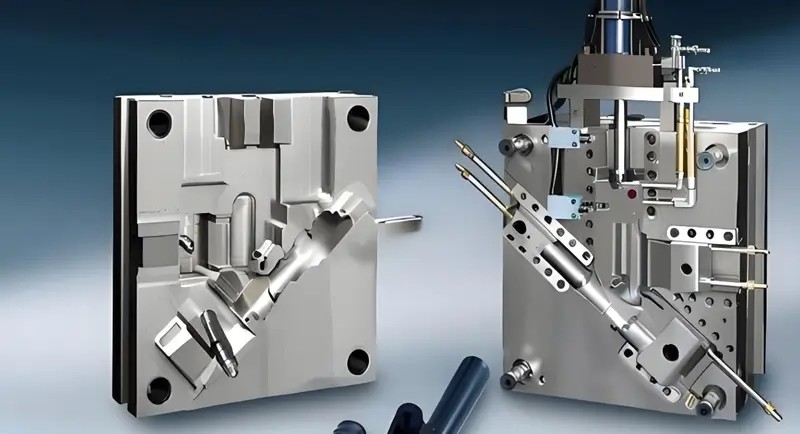
As a result, high-precision PEEK injection molding begins long before production, at the mold design stage. Mold cavities are not designed to final part dimensions, but instead follow a calculated formula:
Target part dimension + anticipated material shrinkage
Accurate shrinkage prediction requires more than machining experience - it demands a strong understanding of polymer rheology and crystallization kinetics. This is why precision peek moulding is as much a materials science discipline as it is a manufacturing process.
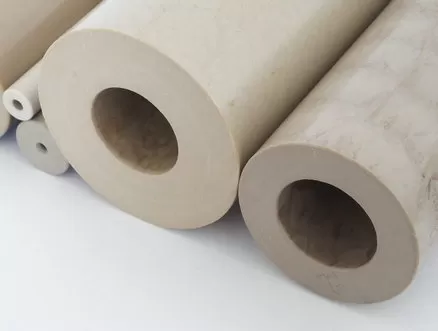
PEEK components are typically manufactured using either PEEK injection moulding or PEEK CNC machining. Both methods can achieve tight tolerances, but their precision mechanisms and economic efficiencies differ significantly.
CNC machining produces parts by cutting solid PEEK stock into final geometry. Its key advantages include:
High design flexibility
Fast prototyping and iteration
Capability for complex 3D contours
This makes CNC machining ideal for prototypes, low-volume production, and early-stage design validation.
However, when consistency across large quantities is required, machining faces inherent challenges. Tool wear, thermal effects, and cumulative production time introduce dimensional drift, making it increasingly difficult and costly to maintain extreme uniformity across large batches.
PEEK injection moulding follows a different precision philosophy: one optimized mold, replicated endlessly. Once a high-precision mold is validated and process parameters are stabilized, every molding cycle produces nearly identical parts.
This level of repeatability is critical for applications such as:
Semiconductor test sockets
Wafer carriers
Medical device housings
High-precision fluid connectors
In these applications, thousands of components must fit perfectly with mating parts. Peek moulding ensures this consistency far more efficiently than subtractive manufacturing.
Additionally, PEEK injection molding enables the economical production of complex features that are difficult or impractical to machine, including:
Micro locking structures
Thin-wall reinforcing ribs
Integrated internal channels
Multi-functional geometries in a single part
By reducing assembly steps and part count, peek moulding improves overall dimensional stability and system-level reliability.
A truly high-precision PEEK injection moulding solution is not defined solely by final inspection results. Instead, it represents a fully controlled manufacturing system—from material selection and mold design to process optimization and statistical consistency.
Industrial ecosystems play a critical role in developing this capability. Regions with strong mold-making traditions and advanced electronics manufacturing clusters benefit from accumulated experience and process data. In such environments, specialized peek moulding manufacturers are able to convert highly detailed customer drawings into stable, repeatable production results with exceptional efficiency.
The true precision limit of PEEK injection moulding is not determined by a single tolerance number. It is defined by how effectively material variability is minimized and process certainty is maximized through engineering discipline.
While CNC machining remains indispensable for customization and innovation, professional PEEK injection molding provides a more reliable, scalable, and cost-effective path for design-stable components requiring high-volume production and outstanding consistency.
With a mature peek moulding process, precision is no longer accidental—it becomes the inevitable outcome of every molding cycle.
Copyright © PEEKCHINA | Taizhou Ark International Trade Co.,Ltd. All Rights Reserved |
Sitemap
| Powered by



 EN
EN