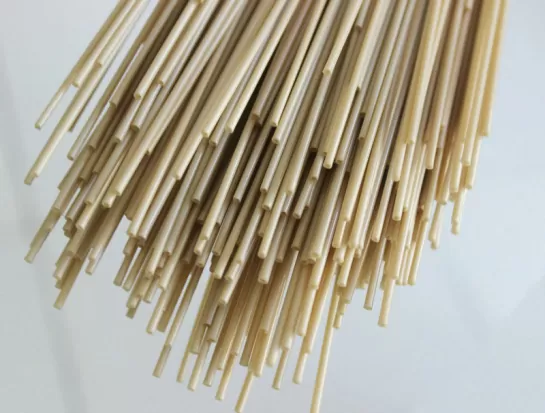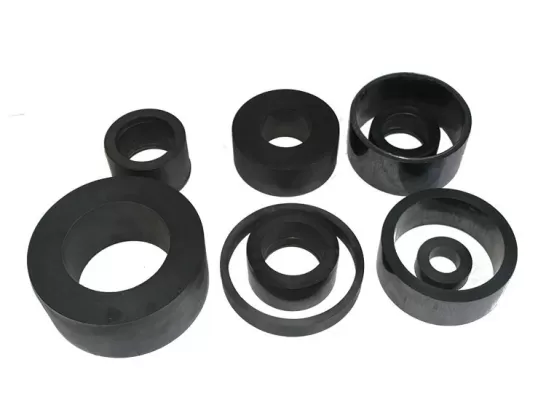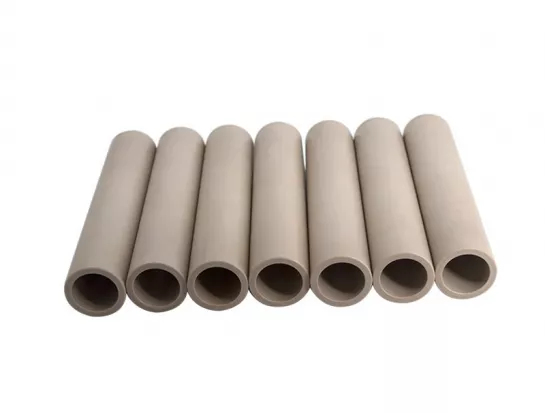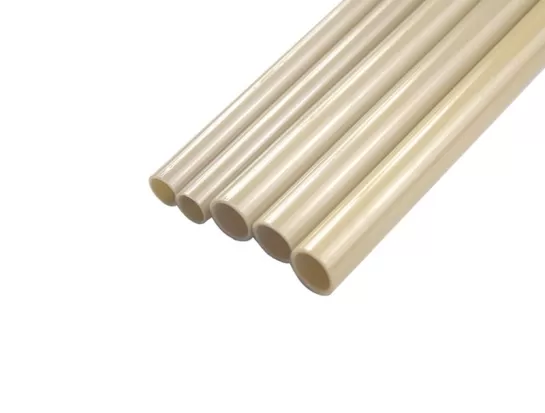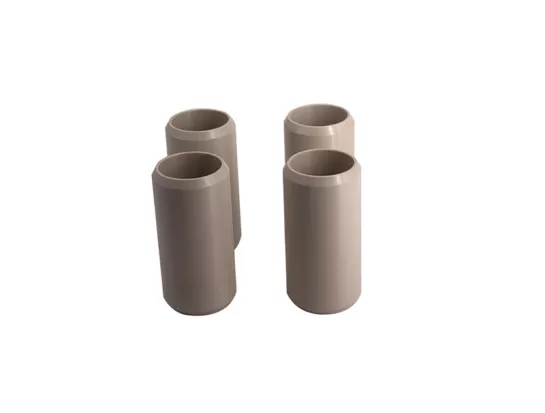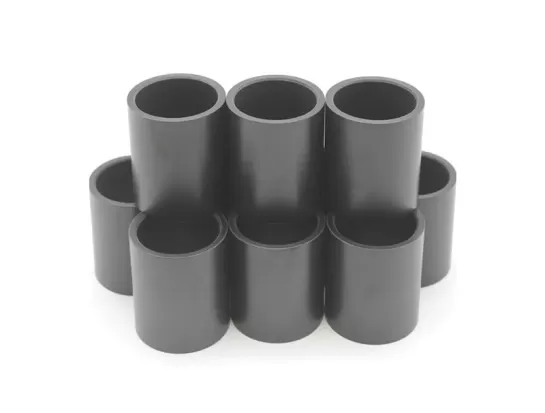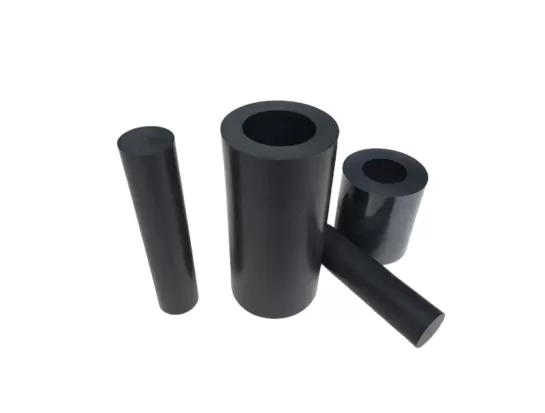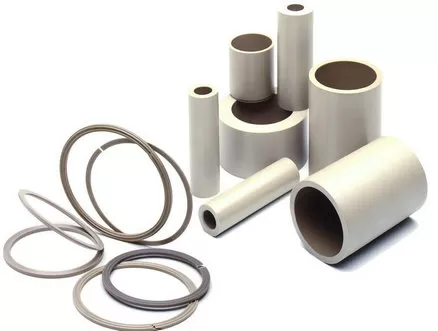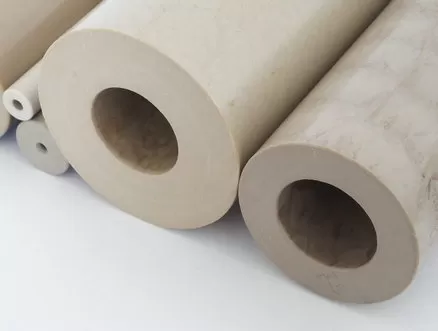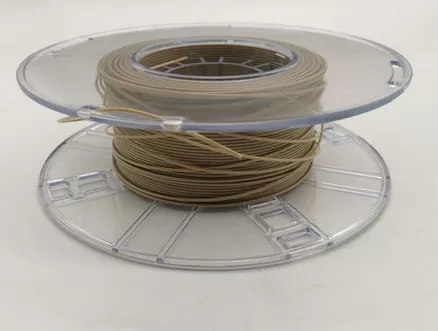
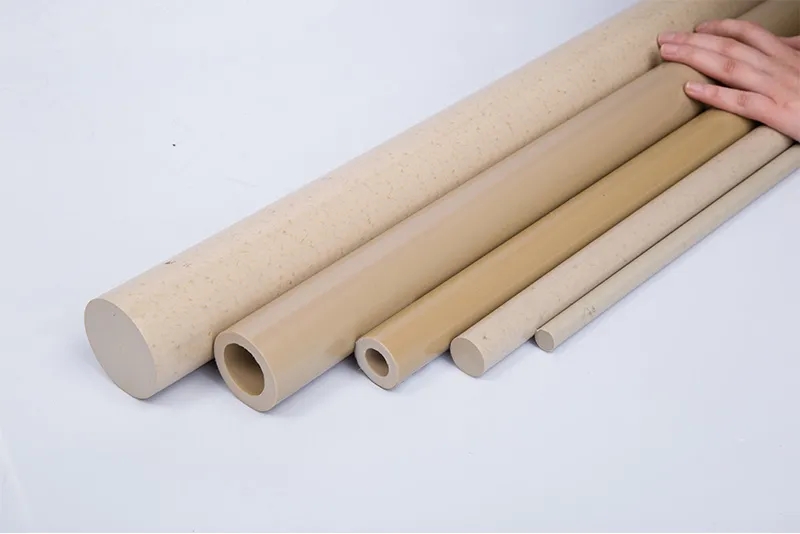
PEEK GF30 is a high-performance, 30% glass-fiber reinforced polyether ether ketone that offers outstanding stiffness, strength, and dimensional stability under continuous high-temperature and high-load conditions. It keeps the core advantages of unfilled PEEK while significantly enhancing mechanical performance and long-term reliability, making it ideal for demanding structural and precision parts.
What Is PEEK and PEEK GF30?
PEEK (polyether ether ketone) is an aromatic, semi-crystalline, high-temperature thermoplastic known for its excellent mechanical strength, high heat resistance, and exceptional chemical resistance. It maintains performance at continuous service temperatures around 250–260 °C, shows low smoke and toxic gas emission, and is widely used in aerospace, oil and gas, medical, and electronics industries.
PEEK GF30 is PEEK that has been reinforced with approximately 30% glass fibers by weight. The glass fibers are dispersed throughout the polymer matrix, forming a composite that is much stiffer, stronger, and more dimensionally stable than unfilled PEEK, especially under heat and long-term load.
Composition and Role of 30% Glass Fiber
Chemically, PEEK consists of repeating ether and ketone groups in its backbone, which give the polymer a rigid chain structure and a relatively high melting point. When glass fibers are introduced at a 30% loading level, they act as reinforcement, carrying a larger share of the mechanical load and restricting deformation of the matrix.
In ARKPEEK-GF30, about 30% of the composition is glass fiber and about 70% is neat PEEK resin. The fibers significantly increase the tensile and flexural modulus, improve creep resistance, and reduce thermal expansion. This combination allows ARKPEEK-GF30 to maintain tight tolerances, resist long-term deformation, and perform reliably in static and dynamic load conditions at elevated temperatures.
Key Advantages After Glass Fiber Reinforcement
Adding 30% glass fiber changes the performance profile of PEEK from a high-end engineering plastic into a structural composite suitable for very demanding environments. Compared with unfilled PEEK, PEEK GF30 generally offers:
Much higher stiffness and strength, enabling thinner and lighter parts without sacrificing rigidity.
Greatly improved creep resistance, so parts can carry high static loads over long periods at elevated temperature with minimal permanent deformation.
Lower coefficient of thermal expansion, leading to superior dimensional stability across a wide temperature range.
Higher heat deflection temperature and stable performance near the upper end of PEEK's temperature capability.
Retention of PEEK's chemical resistance, flame behavior, and low smoke/toxicity profile.
For ARKPEEK-GF30 specifically, these advantages make it suitable for replacing metals or lower-grade plastics where high modulus, precision, and resistance to harsh environments are required.
Product Forms and Typical Applications
PEEK GF30, including ARKPEEK-GF30, is commonly supplied in several semi-finished and finished forms to match different processing and design needs:
Rods: Used for machining bushings, spacers, structural pins, and various precision machined parts.
Plates and sheets: Ideal for structural panels, wear plates, insulating components, and precision mechanical elements.
Tubes and pipes: Used for structural sleeves, high-temperature fluid handling, and mechanical housings.
Custom profiles and molded parts: Injection molded or extruded profiles tailored to specific applications.
Typical application areas include aerospace brackets and supports, oil and gas sealing components and backup rings, high temperature electrical and electronic components, semiconductor process parts, compressor and pump components, and high load structural parts in industrial machinery.
Typical Property
| Property Aspect | Unfilled PEEK | PEEK GF30 |
| Tensile and flexural modulus | High | Much higher |
| Creep resistance | Good | Significantly improved |
| Thermal expansion | Moderate | Clearly reduced |
| Heat deflection temperature | High | Higher / more stable |
| Dimensional stability | Good | Outstanding |
Processing Considerations for PEEK GF30
Although PEEK GF30 can be processed on standard high-temperature thermoplastic equipment, the combination of high processing temperatures and glass fiber reinforcement requires careful control.
For injection molding and extrusion:
High melt and mold temperatures are necessary to fully melt and crystallize PEEK, typically much higher than common engineering plastics.
The glass fibers increase melt viscosity, so injection pressures are generally higher and flow paths should be well balanced.
Glass fibers are abrasive, so screws, barrels, and hot-runner components should be made from wear-resistant materials or have protective coatings to extend equipment life.
Gate and runner designs should promote smooth flow, minimizing abrupt changes in direction that can break fibers and reduce mechanical performance.
For machining ARKPEEK-GF30 semi-finished rods, plates, and pipes:
Use sharp, rigid tooling, preferably carbide or polycrystalline diamond, to handle the abrasive fibers.
Apply conservative cutting speeds and adequate cooling to avoid excessive heat, which can soften the matrix or cause surface damage.
Plan the machining strategy with fiber orientation in mind to minimize delamination, edge chipping, and dimensional variation.
Design Tips for ARKPEEK-GF30 in Applications
When designing parts in ARKPEEK-GF30, good engineering practice maximizes the benefits of the glass-reinforced composite:
Align the main load direction with the predominant fiber orientation where possible to exploit the highest stiffness and strength.
Use ARKPEEK-GF30 for components that require both high modulus and excellent dimensional control at temperatures where standard plastics would creep or warp.
Account for anisotropy in properties such as stiffness and thermal expansion between flow and cross-flow directions, especially in thin-wall or complex molded parts.
Consider ARKPEEK-GF30 as a metal replacement in applications where weight reduction, corrosion resistance, and electrical insulation are valuable.
By combining PEEK's inherent thermal and chemical resistance with 30% glass fiber reinforcement, ARKPEEK-GF30 provides an attractive solution for high-end engineering and structural applications that demand reliability in extreme environments.
Copyright © PEEKCHINA | Taizhou Ark International Trade Co.,Ltd. All Rights Reserved |
Sitemap
| Powered by



 EN
EN