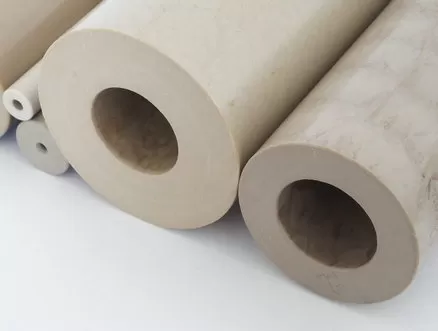
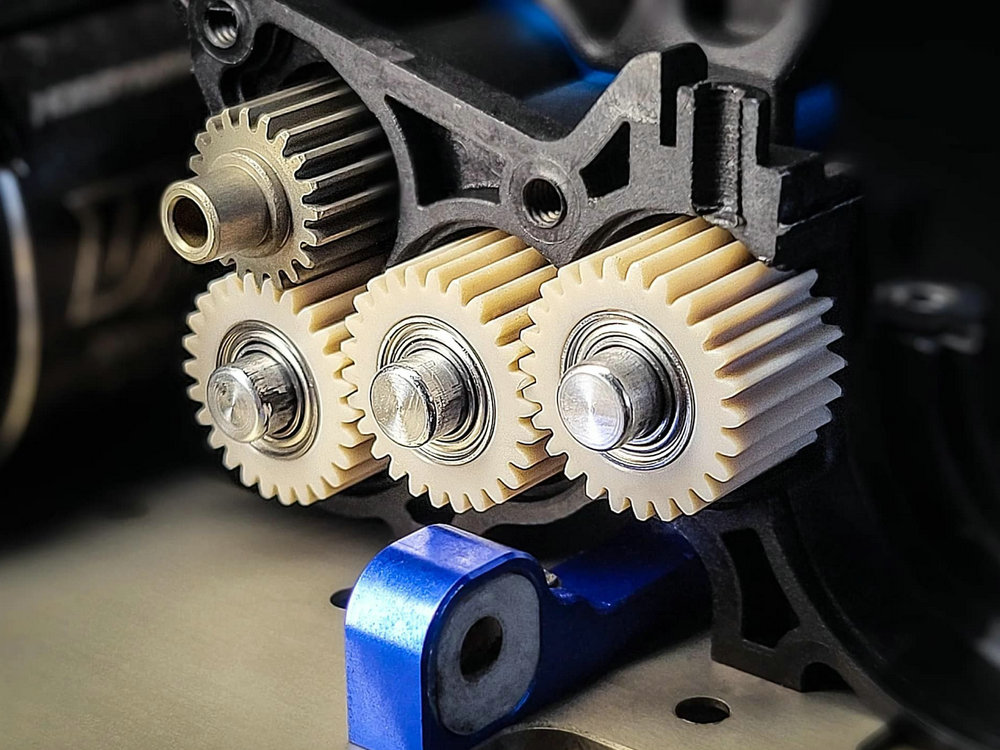
As industries demand lighter, quieter, and more efficient mechanical systems, PEEK (Polyether Ether Ketone) gears are increasingly replacing traditional metal gears in aerospace, automotive, robotics, medical devices, and industrial equipment.
PEEK combines high mechanical strength, excellent wear resistance, chemical stability, and self-lubricating properties, making it one of the most advanced engineering plastics available today. This article explores the major advantages of PEEK gears, common wear mechanisms, and effective methods for improving their service life.
Compared with conventional metal gears, PEEK gears offer several significant advantages.
PEEK has a much lower density than steel and aluminum, helping reduce component weight and rotational inertia. This improves energy efficiency and enables faster acceleration in high-speed systems.
The natural elasticity of PEEK absorbs vibration during gear meshing, resulting in quieter operation and reduced mechanical noise compared with metal gears.
PEEK exhibits excellent self-lubricating characteristics, reducing or even eliminating the need for external lubrication. This minimizes maintenance requirements and avoids contamination from oils or greases.
PEEK resists a wide range of chemicals, including acids, alkalis, fuels, and solvents. This makes it suitable for harsh industrial and chemical-processing environments.
Unlike many engineering plastics, PEEK maintains mechanical strength and dimensional stability at temperatures up to 250°C, allowing reliable operation in demanding thermal environments.
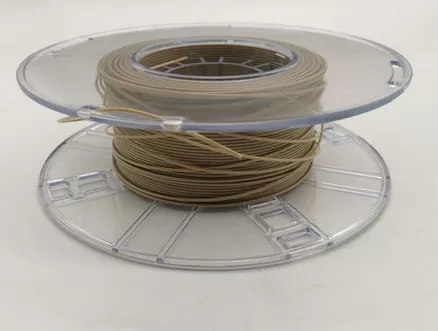
PEEK gears can be manufactured through CNC machining, injection molding, or 3D printing. Injection molding in particular enables complex geometries and cost-effective mass production.
Although PEEK offers excellent durability, wear remains one of the primary causes of gear failure.
Hard particles or rough mating surfaces can gradually remove material from the gear teeth, leading to profile degradation and reduced transmission accuracy.
Continuous sliding contact may cause material transfer between surfaces, increasing friction and accelerating wear.
Heat generated during operation can soften polymer surfaces, reducing load-carrying capability and accelerating material loss.
Under repeated loading cycles, cracks may develop near the tooth root or pitch line, eventually causing tooth breakage.
For this reason, improving the tribological performance of PEEK gears is critical for long-term reliability.
Short carbon fiber (CF) is one of the most common reinforcements used in PEEK composites.
Benefits include:
Higher stiffness
Improved load capacity
Better dimensional stability
Significantly lower wear rates
Carbon fiber reinforced PEEK gears are widely used in high-performance industrial applications.
PTFE (Polytetrafluoroethylene) is a highly effective solid lubricant.
Adding PTFE to PEEK can:
Reduce friction coefficients
Improve self-lubrication
Promote transfer-film formation
Dramatically decrease wear
PTFE-filled PEEK is often selected for dry-running bearings, gears, and sliding components.
Nanoparticles such as SiO₂, ZrO₂, and CuO can improve surface protection and enhance transfer-film stability.
Advantages include:
Lower wear rates
Improved high-speed performance
Better thermal stability
Enhanced durability under heavy loads
Graphite is another effective solid lubricant commonly used in PEEK composites.
Combining graphite with carbon fiber, PTFE, or nanoparticles often creates synergistic effects, delivering both excellent mechanical strength and superior wear resistance.
One of the key factors influencing PEEK wear performance is the formation of a transfer film.
During sliding contact, microscopic material transfers onto the mating surface, creating a thin protective layer. A high-quality transfer film:
Reduces friction
Minimizes direct surface contact
Lowers wear rates
Extends component life
Research shows that continuous and uniform transfer films are essential for achieving the best tribological performance from PEEK gears.
Although fillers improve wear resistance, they can also introduce trade-offs.
High levels of PTFE or other lubricating additives may decrease tensile and flexural strength, reducing gear load capacity.
Fillers increase melt viscosity, making injection molding more challenging and potentially increasing manufacturing costs.
Therefore, engineers must carefully balance wear resistance, mechanical performance, and processability when selecting a PEEK gear material.
Current research focuses on advanced hybrid composites that combine multiple reinforcements such as carbon fiber, graphite, PTFE, and nanoparticles.
The goals are:
Lower friction
Higher wear resistance
Better temperature stability
Greater load capacity
Longer service life
As tribological technology advances, PEEK gears are expected to replace metal gears in an increasing number of high-performance applications.
PEEK gears offer a unique combination of lightweight design, low noise, self-lubrication, chemical resistance, and high-temperature performance. These advantages make them an attractive alternative to traditional metal gears in demanding industrial environments.
By incorporating carbon fiber, PTFE, graphite, and advanced nanoparticles, manufacturers can significantly improve wear resistance and extend gear service life. As materials technology continues to evolve, PEEK gears will play an increasingly important role in next-generation mechanical systems.
Copyright © PEEKCHINA | Taizhou Ark International Trade Co.,Ltd. All Rights Reserved |
Sitemap
| Powered by



 EN
EN