In modern industry, compressors are the "heart of industry." Turbo compressors - especially high-speed centrifugal compressors - serve as core rotating equipment in petrochemicals, refrigeration, air conditioning, and hydrogen energy storage. As demands for rotational speed, pressure, and efficiency continue to rise, traditional metallic materials are hitting new performance ceilings.
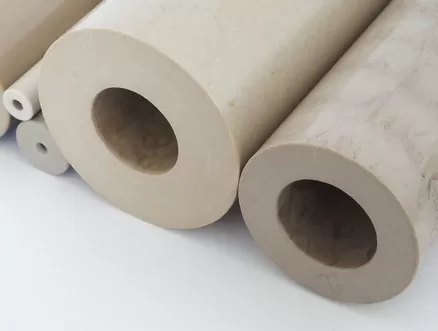
PEEK (polyether ether ketone) - the high-performance polymer often called the "king of specialty engineering plastics" - is playing an irreplaceable role in turbo compressors thanks to its unique combination of high-temperature resistance, high strength, self-lubrication, electrical insulation, and dimensional stability.
PEEK's use in compressors didn't happen overnight. Early applications in reciprocating refrigeration compressors included exhaust limit plates and valve flapper plates, where PEEK reduced inherent frequencies to significantly decrease impact noise while boosting efficiency. In diaphragm compressors, PEEK valve plates leveraged excellent fatigue and high-temperature resistance to extend the replacement cycle of wear parts. These mature applications laid a solid foundation for PEEK's entry into the more demanding world of turbo compressors.
Integrally geared centrifugal compressors feature pinion shaft speeds typically ranging from 15,000 to 70,000 rpm, with operating temperatures reaching above 200°C. These components endure cyclic loading, chemical corrosion from lubricants, and electrostatic discharge risks. Traditional metal thrust bearings are prone to friction-pair seizure, surface fatigue spalling, and even electrical erosion damage from shaft voltage. Conventional polymers struggle to simultaneously meet the requirements for high strength, creep resistance, and low friction.
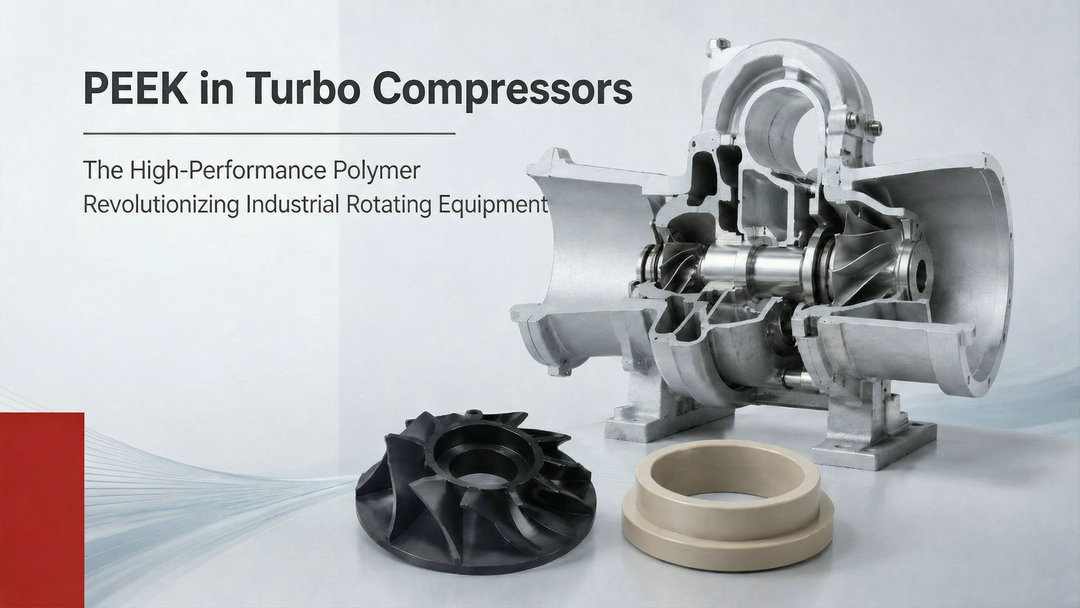
Published patent technologies reveal that PEEK can be deposited onto the surface of thrust bearing substrates in high-speed centrifugal compressors, forming a series of tilting pad inserts. This represents a significant upgrade - PEEK transitions from an "auxiliary sealing component" to a "core power transmission component."
Key advantages of PEEK thrust bearings include:
Elimination of electrical erosion: PEEK's inherent electrical insulation prevents shaft current damage that plagues metal bearings.
Reduced friction and wear: Self-lubricating properties minimize friction-pair seizure risk.
Creep resistance at elevated temperatures: Maintains dimensional stability under sustained loads above 200°C.
Surface fatigue resistance: Outperforms metals under cyclic loading conditions.
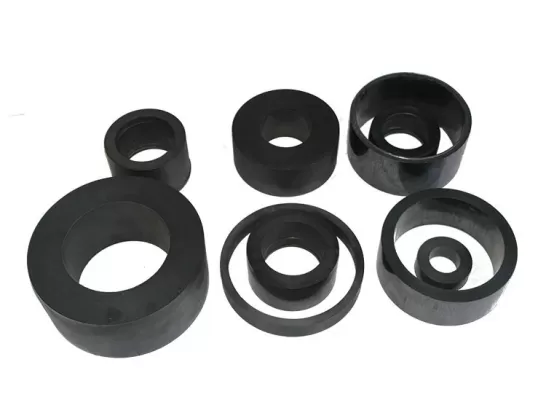
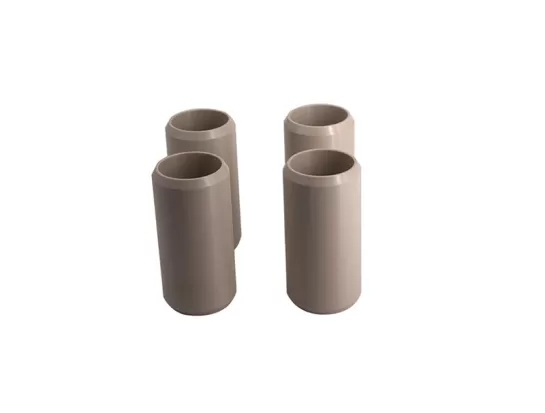
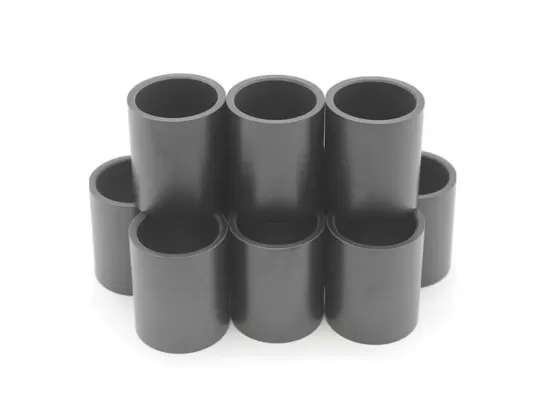
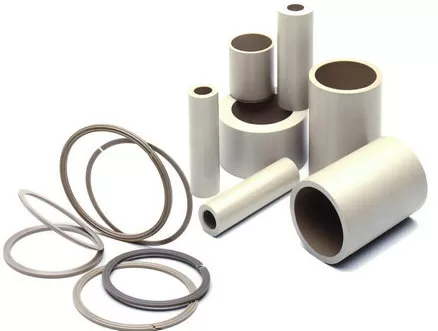
Beyond thrust bearings, PEEK is widely used for internal seal rings, piston rings, and thrust washers in compressors. Comparative studies demonstrate that in high-speed, medium-to-high load applications, PEEK offers the optimal balance of strength and wear resistance. While filled PTFE is suitable for applications demanding ultra-low wear rates, its load-bearing capacity falls short of PEEK.
Carbon fiber reinforced PEEK (CF/PEEK) has been successfully used to manufacture hydrogen centrifugal compressor impellers. The specific strength of CF/PEEK far exceeds that of titanium alloys, enabling impeller tip speeds of up to 688 m/s - compared to approximately 350–400 m/s for traditional metal impellers. This ultra-high rotational speed boosts single-stage pressure ratios from 1.2–1.5 to over 2.5, significantly reducing the number of compression stages and lowering overall equipment cost.
Property | Traditional Metal Impeller | CF/PEEK Impeller |
Tip Speed | 350–400 m/s | Up to 688 m/s |
Single-Stage Pressure Ratio | 1.2–1.5 | >2.5 |
Specific Strength | Baseline | Far higher than titanium |
Stage Count | More stages required | Significantly reduced |
PEEK's success in turbo compressors stems from its unique property portfolio:
High-temperature resistance: Continuous use temperature up to 250°C
High mechanical strength: Tensile strength comparable to some alloys
Self-lubrication: Low friction coefficient without external lubrication
Electrical insulation: Prevents electrostatic discharge and shaft current damage
Dimensional stability: Low coefficient of thermal expansion and moisture absorption
Chemical resistance: Withstands lubricant and process gas chemical attack
Creep resistance: Maintains mechanical properties under sustained stress
As compressor technology continues to evolve, the application boundaries of PEEK and its composite materials keep expanding. From noise-reducing valve plates to high-speed bearings, and now to ultra-high-speed impellers, the trajectory of PEEK in turbo compressors reflects the mutual advancement of materials science and engineering practice.
For engineers facing challenges in friction, wear, or electrical insulation, PEEK-based solutions may well be the key to breaking through performance ceilings.
Copyright © PEEKCHINA | Taizhou Ark International Trade Co.,Ltd. All Rights Reserved |
Sitemap
| Powered by



 EN